Share:


Table of Contents
A referral program is a strategic initiative that incentivizes existing customers to bring in new shoppers by offering rewards for successful referrals. This approach not only enhances customer loyalty but also leverages the trust that comes from personal recommendations, ultimately driving sales while maintaining cost control.
- A referral program rewards existing customers for introducing new customers, typically through unique links or codes.
- Successful programs require a compelling reward structure that balances attractiveness for the referrer and affordability for the store.
- Timing and ease of sharing are crucial; asking for referrals shortly after a positive experience can significantly boost participation.
- Implementing tiered rewards can encourage ongoing engagement, as customers are motivated to share more to unlock greater benefits.
- Placing referral links in high-traffic areas of the customer journey, such as thank-you pages and order confirmation emails, increases visibility and participation.
- Automating the referral process, including tracking and reward distribution, streamlines operations and enhances customer experience.
Paid ads keep getting more expensive, and the customers they bring in don’t always come back. Meanwhile, your happiest buyers are already telling friends about your store. A referral program gives them a reason to do it more often and a link that makes it easy.
Most referral program ideas you’ll find online are written for SaaS tools, banks, and phone carriers. Free storage, account credits, and cash bonuses work for them. For a store watching its margins, not so much.
In this article, we have created a list of 15 best referral program ideas for online stores. This will help you get started with setting up a referral program for your eCommerce store.
Let’s get started.
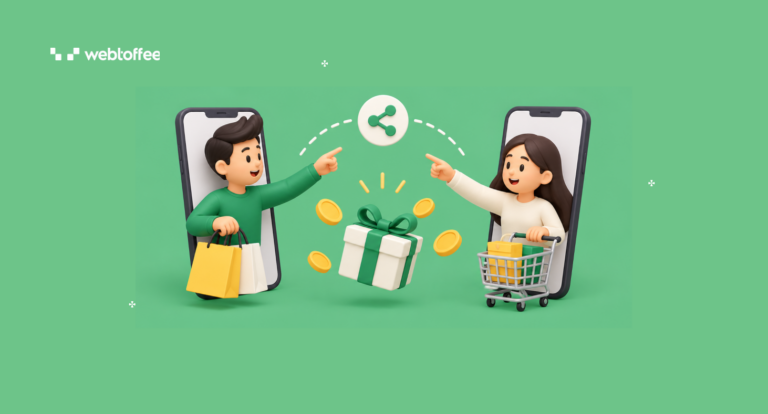
A referral program is a structured way to reward existing customers for bringing new customers to your store. Each customer gets a unique link or code to share. When someone uses it to place an order, the store gives a reward to the referrer, the referred customer, or both.
It’s word of mouth with a system behind it. People already recommend stores they like. A referral program makes sharing easier, gives customers a reason to do it, and shows you which referrer brought in which order.
Every referral program has three parts:
- The referrer is the existing customer who shares a personal link or code by email, text, or social media.
- The referred customer is the new shopper who clicks that link and places a first order, often with an incentive like 10% off, a free gift, or $10 in store credit.
- The reward is what the referrer earns once that order is completed. It’s usually store credit, a coupon, or a gift card.
Most stores reward both sides. The referred customer has a reason to try your store, and the referrer has a reason to share again. For you, that means new customers who arrive already trusting your store, at a cost you control.
Most referral programs that stall have a reasonable idea behind them. They fall down in execution. For an online store, the results usually depend on three things.
- The reward: The reward has to be big enough that the referrer bothers to share, and still affordable once you account for your margin. Store credit and coupons tend to work well. You pay at cost rather than at retail, and the referrer has to come back to your store to use them. A good gut check: if you wouldn’t post about the reward yourself, your customers won’t either.
- Friction: Each extra step means fewer people complete the referral. The referrer should get one link they can copy in a single click. The referred customer should see their discount already applied at checkout, without having to type in a code.
- Timing: People are most willing to recommend a store right after a good experience. That might be when the order arrives, after they leave a 5-star review, or after a support issue gets sorted quickly. If you ask during those moments, your referral rate goes up, and you haven’t had to spend a cent more on the reward.
You don’t have to launch all fifteen. Pick one or two that suit your store, get them working, and add more later.
1. Give $10, Get $10 Store Credit
If you don’t have a referral program yet, start with this one. The referrer gets $10 in store credit, and the referred customer gets $10 off their first order. You can explain it in one line, and nobody has to read fine print to understand it.
Most referral programs are two-sided like this, because rewarding both people gives both of them a reason to act. Base the amount on your average order value: $10 feels generous on a $50 cart and barely registers on a $300 one. Set a minimum order value for the referred customer, and release the referrer’s credit only once that order is completed.
2. Pay Referrers in Store Credit, Not Cash
Cash rewards usually get spent somewhere else. Store credit brings the referrer back to your store, and it costs you less than it looks. A $15 credit spent on products with a 40% margin costs you about $9 in goods, and customers often spend more than the credit amount once they’re back in the cart.
So “Earn $15 in store credit” can cost you less than “Earn $10 cash” while sounding like the better deal. Check out our WooCommerce Gift Cards plugin to create and manage store credits.
3. Tiered Rewards That Grow With Every Referral
With a flat reward, customers have no reason to share a second time. Tiers give them one. For example: 10% off for the first referral, 15% for referrals two to four, and a free product at five. Put a cap on the top tier. Without one, a single enthusiastic customer could end up getting half off everything indefinitely.
Progress updates do a lot of the work here. An email saying “One more referral and the free product is yours” often gets people sharing again. This works well for stores with a loyal group of customers who already talk about the brand.
4. Gift Card Rewards for Referrers
A gift card gives the referrer options. They can spend it themselves or pass it to someone else, and it feels more like a present than a discount code does. That matters most for stores selling jewelry, candles, hampers, or anything people buy for others.
Example offer: a $20 gift card once the referred customer’s first order goes over $60. With WooCommerce Gift Cards, you can create the card and send it automatically when the referred order completes, so nobody on your team has to issue rewards by hand.
5. A Free Gift on Referred Customer’s First Order
Running discounts all the time teaches shoppers to wait for one. A free gift lets you skip that. Instead of 15% off, the referred customer gets a free travel-size product, a sample pack, or a buy-one-get-one on a starter item.
The gift’s perceived value is usually higher than what it costs you, and your prices stay the same. Set it up as a free product or BOGO coupon that works only with a referral code and only for new customers. Beauty, food and beverage, and premium brands tend to get the most out of this.
6. Ask Right After Delivery With A Post-Purchase Email
Checkout is too early to ask for a referral, because the customer hasn’t used the product yet. The better moment is a few days after delivery, when the order has arrived, and they’re happy with it. Send the referral email then.
Put the reward in the first line and the link behind a single button. If they haven’t shared after a week, follow up once and leave it there.
7. Put The Referral Link Where Buyers Already Look
If the referral page is linked only from your footer, few customers will find it. Put the link where buyers already look:
- Thank-you page: They’ve just bought and are still excited.
- Order and shipping emails: Customers open these to check on their order.
- My Account: A “Refer a friend” tab showing the link and their reward balance.
None of these placements need extra traffic, because you’re using pages customers already visit. Start with the thank-you page, since it reaches people right when they’re happiest with their purchase.
8. Refer-To-Unlock Popup
Some visitors will leave without buying, and some have just finished buying. A popup can offer either group a referral. On exit intent, it might say: “Not ready yet? Send this to a friend who might be, and you’ll both get $5 off.”
After checkout, it might say: “Share your link and get 10% off your next order.” Release the reward only when the referred customer actually places an order. Otherwise, people can claim it just by clicking share. Keep the popup to one line of copy and one button so it doesn’t get in the way.
9. Double-Reward Windows Around BFCM and the Holidays
Around BFCM and the holidays, people are already shopping for others and swapping recommendations. A temporary double reward takes advantage of that: “$20 instead of $10, until December 2.”The deadline gives people a reason to act now rather than later.
Announce it through an email campaign and an on-site banner, and set the higher reward to expire automatically on the end date. Check your margins before you launch, though. You’ll probably be running other holiday discounts at the same time, and the two can stack faster than you’d expect.
10. Monthly Leaderboard Or Referral Contest
A bit of competition gets people sharing. Each month, the top three referrers win something larger, such as $100 in store credit or a product bundle. Everyone else still gets the standard reward, so nobody walks away empty-handed.
Post the standings in a monthly email to keep the race visible, showing only first names or initials to protect customer privacy. A contest in your program’s first month helps build early momentum. It works especially well for community-driven brands and hobby niches where customers already know each other.
11. Milestone Bonus For Quality Referrals
Rewarding every first order brings in some deal hunters who never come back. This idea pays more for customers who stay. The referrer gets $10 when the referred customer’s first order completes, and another $10 if that customer reorders within 60 days or stays on a subscription for three months.
It encourages referrers to share with people who’ll actually use your products, rather than anyone chasing a coupon. Subscription stores and consumable brands benefit most, since repeat orders are where their revenue comes from.
12. VIP Status And Early Access For Top Referrers
Some customers care more about status than discounts. Give anyone with five or more referrals early access to new drops, members-only products, or free shipping for a year. These perks cost you very little, and the people who earn them are likely to keep promoting your store.
Tag those customers as a segment so they get launch emails a day before everyone else. In fashion, limited-run, and collectible stores, where items sell out, early access can matter more to a customer than any discount you could offer.
13. Donate For Every Referral
Some customers will share more readily when someone else benefits. Donate $5 for each successful referral to a cause the referrer picks. Offer two or three causes at most, because a long list makes it harder to choose.
Show a running total on your referral page so customers can see the impact add up, and publish the monthly donations so the program stays credible. You can also pair the donation with a smaller personal reward.
Mission-driven and eco-focused brands tend to see the strongest response.
14. Bonus For Sharing A Photo Or Review
This gets you a referral and a piece of content from the same customer. Give the standard reward for the referral, plus $5 extra if the referrer shares a photo, unboxing video, or review along with their link.
Collect submissions through a simple form or an email reply, check them, and then issue the bonus credit. The best posts can go on your product pages as social proof, so they keep helping sales long after the referral.
Fashion, home decor, and beauty stores get the most from this.
15. Bring-A-Friend Bundle
Friends often buy together: matching gym gear, a shared hobby, a couple’s order. This idea is built for those purchases. Once the referrer places an order, their friend gets 15% off for the next 48 hours, and the referrer gets 15% back as store credit when the friend buys.
The short window adds urgency, so both purchases happen while the two are still talking about it. It suits apparel, fitness, and hobby gear stores, where people naturally tell each other, “you should get one too.”
Here’s how to set up a referral program in WooCommerce in five steps.
- Pick one goal: Decide what the program is mainly for: more first-time buyers, more repeat orders, or a bigger email list. Each goal leads to a different reward and different metrics, so commit to one before you design anything.
- Choose a reward you can afford: Check the numbers before you announce anything. Take an example store with a $60 average order and a 40% margin, which earns $24 gross profit per first order. A $10 discount for the referred customer costs $10. A $10 store credit for the referrer costs about $6 in goods. That’s $16 in rewards against $24 in profit, so the first order still earns $8, and every repeat order after that is extra.
- Generate unique links or one-time codes: Every referrer needs their own link or code so you can tell who referred whom. Make codes single-use, limit them to new customers, and set a minimum order value. That way, a code that ends up on a coupon site can’t drain your margins.
- Place the link where customers already look: Put it on the thank-you page, in order and shipping emails, and in a “Refer a friend” tab under My Account. You don’t need extra traffic, just visibility on pages customers already open.
- Automate the ask and the reward: Trigger a referral email a few days after delivery, and release rewards automatically once the referred order is completed.
What is a good referral reward for an online store?
Store credit and first-order discounts tend to work well for most stores. Store credit brings the referrer back to buy again, and a discount gives the referred customer a reason to try you. If you sell gifts, a gift card reward can feel more personal than a coupon code.
How much should I give customers for a referral?
Start with your margins. Work out the gross profit on an average first order, then keep the combined cost of both rewards comfortably below that figure. Many stores land somewhere around 10 to 20% of their average order value per side, then adjust based on how many people share.
Should a referral program reward both the referrer and the referred customer?
In most cases, yes. A two-sided reward gives the referrer a reason to share and the referred customer a reason to buy, and most referral programs run this way. One-sided programs can still work when your customers are very loyal, but they usually see fewer referrals.
Can I run a referral program in WooCommerce without a dedicated referral plugin?
WooCommerce doesn’t include a referral program feature out of the box. You can run a small program by hand: create unique coupon codes for each customer and track their use. Once you have more than a few dozen referrers, though, you’ll need a plugin or automation tool to issue codes, track referrals, and send rewards.
A good referral program doesn’t need to be complicated. The best referral program ideas give existing customers a worthwhile reason to share while making it easy for new shoppers to place their first order.
Start with a simple offer that fits your margins, such as store credit, a first-order discount, a gift card, or a free product. Once you know what works, you can experiment with tiered rewards, milestone bonuses, seasonal campaigns, contests, and other ideas from this list.
More importantly, make referrals easy to find and use. Promote your program on thank-you pages, in post-purchase emails, and in customer account pages, and automate rewards wherever possible.
With the right incentive and timing, your existing customers can become one of your most effective channels for bringing new shoppers to your store.


Subcribe to our newsletter