Share:


Table of Contents
Recommerce, or reverse commerce, is a business model focused on the buying and selling of pre-owned, returned, or refurbished products through a circular supply chain. This approach not only allows businesses to recover value from previously sold items but also meets the growing consumer demand for sustainable and affordable shopping options.
- Recommerce extends the lifecycle of products by facilitating their return, refurbishment, and resale rather than ending their value after the first sale.
- It differs from traditional eCommerce, which follows a linear model where products are sold and not reintroduced into the market.
- The recommerce market is projected to grow significantly, with estimates reaching $276 billion in the U.S. by 2028.
- Major companies like Apple and Patagonia are implementing recommerce strategies to capitalize on sustainability trends and consumer preferences.
- Successful recommerce operations rely on a reliable grading system to build trust with buyers regarding the quality of refurbished or used products.
- The model is increasingly popular among younger consumers, particularly those aged 18 to 34, who prioritize affordability and environmental impact in their purchasing decisions.
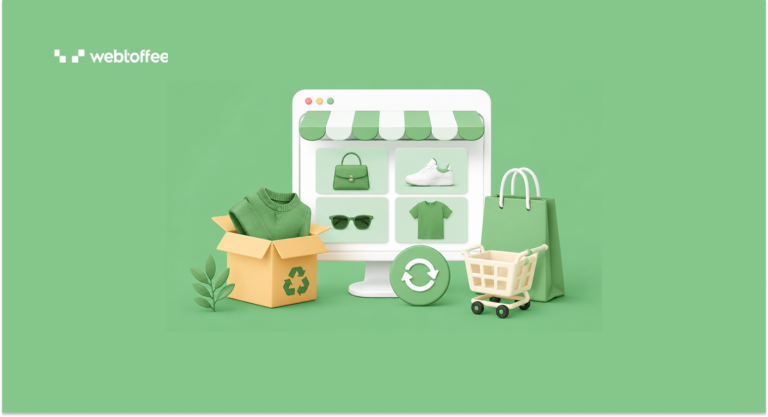
Recommerce is the buying and selling of pre-owned, returned, or refurbished products through a circular supply chain, instead of the usual one-way path from seller to customer.
In this article, we will explain everything you need to know about the recommerce business model, how it differs from regular eCommerce, why several brands are building around it, and what it would actually take to run something like it on your own store.
Let’s get started.
Recommerce is short for “reverse commerce.” Instead of a product’s life ending the moment it’s sold, recommerce sends it back into a loop: it’s returned, traded in, or bought secondhand, then inspected, repaired if needed, and sold again.
The term isn’t new. George F. Colony, of Forrester Research, coined the term back in 2005, referring to tech spending patterns after the dot-com bubble. What’s changed since then is the infrastructure.
Online resale used to mean a Craigslist listing or an eBay auction. Now there are entire platforms, payment flows, and logistics networks built specifically to move used goods back into the market at scale.
Also Read: What is Zero-Click Commerce?
Regular eCommerce is linear. A product moves from manufacturer to retailer to customer, and once it’s sold, the transaction is done. The product might still have years of useful life left, but as far as the business is concerned, that value is gone.
Recommerce adds a return path. A customer sends a product back, trades it in, or lists it for resale, and the retailer (or a resale platform) decides what happens next: repair it, repackage it, resell it, or recycle it. Instead of ending at the first sale, the product’s value gets recaptured and put back into circulation.
Apple’s refurbished store is a clean example. A returned iPhone doesn’t get written off. It gets tested, refurbished if needed, and sold again at a lower price, often with the same warranty as new stock. That’s the same product moving through the loop twice.
Also Read: Quick Commerce for D2C: A Complete Guide
Strip away the industry jargon, and a recommerce operation comes down to four steps.
- Collect: Products come in through returns, trade-ins, buyback programs, or peer-to-peer listings.
- Inspect and grade: Each item gets checked for condition and assigned a grade, which determines whether it’s sold as-is, refurbished, or written off.
- Refurbish or repair, where it’s worth it: Cleaning, replacing parts, and retesting only make sense if the expected resale value covers the labor and parts. Not every returned item clears that bar.
- Resell or recover value: The item goes back on sale as refurbished, open-box, or used, or it gets routed to parts recovery or recycling if it can’t be resold safely.

The businesses that do this well treat grading as the make-or-break step. A consistent, honest grading system is what lets a buyer trust a “refurbished” or “used, good condition” label enough to actually buy.
Recommerce isn’t one channel. Most businesses combine a few of these, depending on the product and how fast the inventory needs to move.
| Model | How it works | Best for |
| Trade-in/buyback | Customer returns a used product for store credit or a discount on a new one | Brands with repeat purchases, like electronics or apparel |
| Refurbish and resell | Returned items are inspected, repaired, and sold again at a lower price | Electronics, appliances, and other durable goods |
| Liquidation | Excess or discontinued stock moves through secondary channels instead of sitting in a warehouse | Retailers clearing aging or seasonal inventory |
| Peer-to-peer marketplace | Individuals list and sell directly to other consumers | Categories with active resale communities, like fashion and furniture |
1. Fashion
ThredUp and Poshmark built entire platforms around secondhand clothing, and brands like Patagonia and Levi’s now run their own buyback and resale programs instead of leaving that market to third parties.
2. Electronics
Back Market specializes in refurbished phones and laptops. Apple has sold refurbished devices directly through its own store since 2016. Both are the same idea: extend the life of a device that would otherwise sit unsold or get scrapped.
3. Furniture
AptDeco and Chairish do for secondhand furniture what ThredUp does for clothing: give a fragmented, hard-to-move category a real online marketplace.
Three things are pushing it at the same time.
- Sustainability pressure is real, not just marketing copy: Less than 15% of textiles get recycled, according to EPA figures cited by Visa’s research on the topic. Recommerce is one of the few models that keep products in use rather than sending them to a landfill.
- Younger buyers are driving it: Visa’s consumer research (surveying 7,000 consumers across seven countries) found that half of all consumers take part in at least one recommerce activity every year, and 18 to 34-year-olds are the largest group across nearly every category.
- The market is genuinely large, even accounting for inflated projections: Statista puts the US recommerce market at $188 billion in 2023, projected to reach $276 billion by 2028. That’s one clearly scoped figure. You’ll see much bigger numbers floating around for global or apparel-specific markets, so it’s worth checking exactly what’s being measured before quoting one.
What is recommerce?
Recommerce, or reverse commerce, is the buying and selling of previously owned, returned, or refurbished products through a circular supply chain, rather than a one-way sale from retailer to customer.
Why does recommerce matter?
It lets businesses recover value from returns and used inventory rather than writing them off, while giving customers access to quality products at a lower price and with a smaller environmental footprint.
What’s the difference between recommerce and eCommerce?
Regular eCommerce is linear: a product moves from seller to customer, and the transaction ends there. Recommerce adds a return path, so the product can be returned, repaired, or refurbished, and resold.
What are examples of recommerce?
ThredUp and Poshmark for secondhand clothing, Back Market and Apple’s refurbished store for electronics, and AptDeco and Chairish for furniture are all recommerce platforms operating in different categories.
What are the benefits of recommerce for businesses?
It recovers revenue from returned or excess inventory, extends product lifecycles, and responds to a genuine shift in consumer demand, particularly among 18 to 34-year-olds, toward more affordable and sustainable buying options.
Recommerce is no longer a niche strategy reserved for resale marketplaces. It’s becoming a practical way for retailers and brands to recover value from returned products, reduce inventory waste, and meet growing consumer demand for affordable, sustainable shopping options. As the infrastructure around trade-ins, refurbishment, and resale continues to improve, more businesses are finding that a product’s first sale doesn’t have to be its last.
Whether you’re selling electronics, fashion, furniture, or other durable goods, a well-planned recommerce program can unlock new revenue streams while extending the life of your products.
The key is to build a reliable process for collecting, grading, refurbishing, and reselling inventory that customers can trust. Done well, recommerce isn’t just an environmental initiative; it’s a smarter, more resilient business model for modern eCommerce.


Subcribe to our newsletter