


Share:


Table of Contents
- Shopify Catalog provides structured product information to support broader product discovery across multiple platforms and AI agents.
- It differs from a merchant's individual product catalog by serving as a centralized source of product data for external access.
- Eligibility for inclusion in Shopify Catalog requires compliance with specific Shopify guidelines, including product visibility and quality standards.
- The Catalog API allows developers to integrate and utilize Shopify Catalog data for enhanced shopping experiences.
- Maintaining accurate and detailed product information is crucial for maximizing visibility and effectiveness in AI-driven shopping environments.
- Shopify Catalog is part of a larger trend towards agentic commerce, emphasizing the importance of structured data in modern eCommerce.
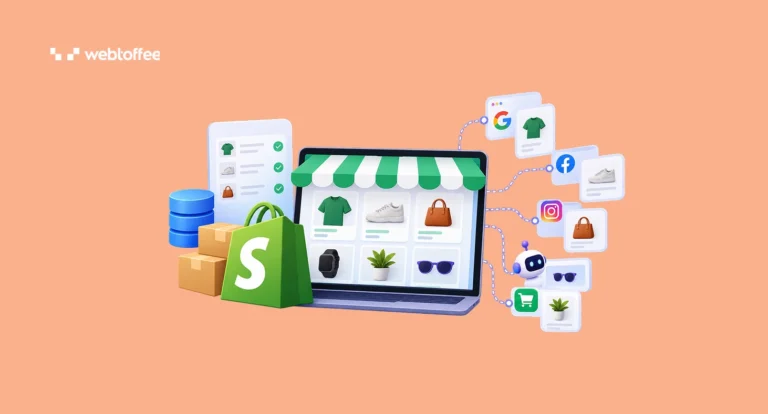
Shopify Catalog is Shopify’s global product-data system that organizes eligible products from merchants and makes that information available for product discovery across Shopify, AI shopping channels, and other supported experiences.
It gives shopping platforms and AI agents structured product information such as titles, descriptions, images, prices, variants, and availability instead of relying only on information scraped from storefront pages.
For merchants, the idea is simple: maintain your product information in Shopify, and Shopify Catalog can help make eligible products discoverable in places beyond your own storefront.
The confusing part is that Shopify uses the word catalog for several different things.
In this article, we’ll explain what Shopify Catalog is, how it works, how it differs from other Shopify catalogs, and what merchants can do to prepare their product data for AI-powered shopping.
Shopify Catalog is a structured collection of eligible products sold across Shopify stores.
It allows Shopify, supported shopping platforms, and AI agents to search and understand product information from participating Shopify stores. Instead of every shopping platform having to collect product information independently, Shopify Catalog provides structured product data directly from Shopify.
This becomes particularly useful for AI shopping.
For example, a shopper might ask an AI assistant:
“Find me a waterproof women’s hiking jacket under $150.”
Instead of relying only on web pages it has crawled, a supported shopping experience can use structured catalog data to identify products that match attributes such as product type, gender, price, availability, and other details.
Shopify Catalog therefore acts as the product discovery layer between merchant product data and many of the shopping experiences that can use it.
A merchant might naturally use the word catalog to describe all the products listed in their Shopify store.
That isn’t quite what Shopify Catalog means.
Your store’s product catalog is simply the collection of products, variants, descriptions, images, inventory, and other information you manage in Shopify admin.
Shopify Catalog is a broader system that structures eligible product information, so Shopify and supported external services can use it for discovery.
Put simply:
- Your Shopify store contains your products.
- Shopify Catalog helps make eligible product information available across Shopify’s wider commerce ecosystem.
Shopify has another feature called B2B catalogs. They control which products and prices particular business customers can access.
For example, a merchant could give wholesale buyers in one market a different product selection or price list from buyers in another market.
Shopify also lets merchants use B2B catalogs with Shopify Markets, its central area for managing international, retail, and B2B selling from one store.
So the two terms serve very different purposes:
- Shopify Catalog: Supports broader product discovery across Shopify and supported shopping and AI experiences.
- B2B catalogs: Control product availability and pricing for particular B2B customers and markets.
This article focuses on the first one.
There’s another important distinction for AI shopping: Shopify currently states that B2B-only products aren’t supported by agentic storefronts. If a product is available only through your B2B setup, you shouldn’t assume it will also be discoverable through channels such as ChatGPT.
For most Shopify merchants, there isn’t a separate catalog file that needs to be manually created and uploaded.
You continue managing your products in Shopify. When your store and products meet Shopify Catalog requirements, eligible product information can be included in Catalog and used by supported Shopify and external experiences.
The basic flow looks like this:
Merchant product data → Shopify Catalog → Shopping or AI channel → Shopper
Shopify doesn’t simply copy every field exactly as it appears.
Catalog can standardize categories, identify product attributes, organize variants, group matching items, and enrich certain product information to make products easier for shopping systems to understand.
Pricing and stock information can also stay current, which is especially useful for shopping experiences where customers expect products to actually be available at the price shown.
The shopping platform still controls the final experience.
Shopify supplies the catalog data, while each AI or shopping channel decides which products to display, how to rank them, and how to present recommendations. Inclusion in the Shopify Catalog therefore doesn’t guarantee placement in a particular result.
Shopify Catalog is only one part of Shopify’s larger push into agentic commerce. Two other terms you may come across are Catalog API and Universal Commerce Protocol (UCP).
Catalog API
Catalog API allows developers and AI applications to search and use Shopify Catalog data.
When Shopify Catalog first launched in 2025, access was more limited. That changed with Shopify’s Spring ’26 Edition.
Shopify opened its agentic commerce infrastructure to the wider developer ecosystem, and Catalog API access no longer requires the previous approval process. Shopify says access now requires an API key, making it much easier for developers to build product discovery experiences using Catalog data.
Universal Commerce Protocol
Universal Commerce Protocol, or UCP, is an open commerce standard that Shopify co-developed with Google.
Catalog handles the product-discovery side, while UCP provides a broader framework that AI agents can use across the shopping journey, including product discovery, carts, checkout, and other commerce actions.
You don’t need to understand the technical implementation to manage your Shopify store.
The main point for merchants is that Shopify isn’t building the Catalog only for its own apps. It is creating infrastructure that developers and AI platforms can use to build new shopping experiences.
Not every Shopify store or product is automatically included in Shopify Catalog. Both the store and its products need to meet Shopify’s eligibility requirements.
At the store level, you must:
- comply with Shopify’s Terms of Service and Acceptable Use Policy
- be on the Starter plan or higher
- not have your store in private mode
There is an exception for merchants using the Shopify Agentic plan. Even if they haven’t published a Shopify online store on a paid plan, their products can still be included in Shopify Catalog through agentic storefronts.
Eligible products must also:
- have a product title and at least one image
- have a price greater than zero
- be published to the Online Store, Hydrogen, or Headless channel
- have an identifiable product URL
- include an external product URL if you’re on the Agentic plan without a published Shopify store
- not have an Unlisted status
- not be hidden from search engines
- not contain sensitive content, such as mature content
If you use Hydrogen or a Headless storefront, Shopify also requires product routes to follow the correct format.
Shopify also considers your account standing and operating history. Factors such as account verification, genuine sales activity, order fulfillment, chargeback rates, payment status, and unresolved policy issues can affect eligibility. Shopify reviews this over time, so a store can become eligible later or lose eligibility if it no longer meets the requirements.
For most merchants, Shopify Catalog isn’t another dashboard they need to manage every morning. Its importance comes from where eCommerce discovery may be heading.
Products Can Be Discovered Beyond Your Store
Traditionally, merchants relied heavily on channels such as:
- Google Search
- Google Shopping
- social media
- marketplaces
- advertising
AI shopping experiences are becoming another potential discovery channel.
Shopify Catalog gives supported services structured access to Shopify product information. That could make it easier for eligible products to appear when customers search for products through AI-assisted shopping experiences.
Product Data Becomes More Important
Search engines have always benefited from clear product information. AI shopping makes structured product data even more important.
A human visiting your website can often work out what an unclear product title means by looking at the page. An automated shopping system depends much more heavily on the information provided through the product data.
Clear titles, descriptions, categories, variants, prices, and identifiers can therefore become increasingly important.
Product Information Can Stay More Consistent
Shopify Catalog uses product information stored within Shopify.
That means merchants don’t necessarily have to create a completely separate copy of basic product information for every supported catalog experience.
Shopify can provide structured product information directly from the commerce platform. This can reduce some of the problems caused by outdated prices, availability, or product details being stored across disconnected systems.
Shopify can structure and enrich some information, but it works best when the source data is already clear and accurate.
Start with the information shoppers are most likely to use when describing what they want.
- Choose the right product category. Assign each product to the most accurate Shopify category.
- Use clear titles. Make it obvious what the item is instead of relying only on brand or collection names.
- Add useful product details. Include information such as material, size, color, fit, dimensions, compatibility, and intended use when relevant.
- Set up variants clearly. Use proper options such as Size, Color, or Material instead of cramming variant information into product titles.
- Use good product images. Clear images help shoppers understand the product and can also provide useful context for multimodal product search.
- Keep prices and inventory current. Product discovery isn’t useful if the displayed price or stock information is outdated.
- Add identifiers where available. Barcodes, UPCs, GTINs, ISBNs, and similar identifiers can make products easier to identify.
- Keep shipping, return, and store policies updated. AI shopping experiences may use this information when answering customer questions.
Shopify recommends keeping product information detailed and descriptive and specifically highlights titles, descriptions, images, organization data, identifiers, variants, and external URLs for Agentic-plan stores.
A simple test is to imagine someone asking:
“Find me a waterproof hiking jacket for women under $150.”
Does your product data clearly tell a shopping system that the jacket is waterproof, intended for women, and within that price range?
If not, those are useful gaps to fix. You don’t need to update every product at once. Start with your most important or best-selling products.
No. Stores and products need to meet Shopify Catalog eligibility requirements. Shopify also offers an Agentic plan for businesses using another eCommerce platform that want to make products available through supported agentic storefronts without moving their main store to Shopify.
No. Shopify currently does not let merchants opt out of Shopify Catalog itself. However, you can control whether specific supported AI storefronts can access your product data. Disabling one channel does not remove your products from Shopify Catalog completely.
No. Collections are groups of products that merchants create inside their Shopify store to help customers browse related products. Shopify Catalog is a broader structured source of eligible product information that supported platforms can search.
No. B2B catalogs control which products and prices particular business customers can access.
Shopify Catalog is designed around broader product discovery across Shopify and supported shopping experiences.
Generally, no. If your store and products meet Shopify’s eligibility requirements, qualifying products are automatically included.
Yes. Shopify says selected AI platforms, shopping sites, and AI agents can use Shopify Catalog to search and understand eligible product information.
No. Inclusion in Shopify Catalog does not guarantee that your products will appear in ChatGPT or other AI shopping results. Each platform decides which products to show and how to rank or recommend them. The best approach is to keep your product data accurate, complete, and up to date.
Not completely. Shopify Catalog provides a shared source of product information for supported Shopify experiences and external platforms.
Product feeds are still useful when merchants need to send customized product data to specific destinations such as Google Shopping, Meta, comparison-shopping services, or other commerce channels.
Start by keeping your product titles, descriptions, images, categories, variants, product identifiers, prices, and inventory accurate and complete.
Shopify specifically recommends detailed product information because it helps AI platforms better understand and match products to shopper searches.
Wrapping Up
Shopify Catalog is part of a broader shift in how eCommerce products are discovered.
Instead of product information living only on individual storefronts or being distributed through separate feeds, Shopify Catalog provides a structured source of eligible product data that supported shopping platforms and AI agents can search.
For merchants, there isn’t necessarily another complicated catalog to create. Eligible products can be included automatically.
The more important task is making sure the underlying product data is accurate, complete, and easy to understand.
As AI-powered shopping becomes more common, that product data could play an increasingly important role in determining whether customers can discover and understand your products wherever they choose to shop.


Subcribe to our newsletter


