


Share:


Table of Contents
- Shopify apps can address specific challenges in clothing retail, such as managing complex product variants and improving size recommendations.
- Tools like Kiwi Size Chart and Varn enhance customer confidence by providing clear sizing information and visual product variants.
- Inventory management apps, such as Prediko, help retailers forecast demand and optimize stock levels, crucial for seasonal collections.
- Customer engagement tools like Loox and Omnisend enable stores to collect reviews and execute targeted marketing campaigns, driving repeat sales.
- Choosing the right apps involves evaluating your unique business needs, existing Shopify features, and potential costs associated with app usage.
- Not all stores require the same apps; the best combinations depend on factors like store size, product variety, and specific operational challenges.
Running a Shopify clothing store means managing more than just products and orders. From keeping track of sizes and colors to helping customers find the right fit and managing seasonal inventory, there’s a lot to handle.
The right Shopify apps can make these tasks easier, whether you’re running a small fashion boutique or managing a large apparel catalog.
In this guide, we’ll explore 12 of the best Shopify apps for clothing stores in 2026, including their key features, pricing, and limitations, to help you choose the right ones for your business.
Shopify provides the essential tools to create an online clothing store, add products, manage inventory, and process orders. However, clothing businesses often have requirements that go beyond these basic features.
For example, a single T-shirt might come in five sizes and six colors, creating 30 product variants. Managing inventory, images, and availability for every combination can quickly become complicated as your catalog grows.
Customers also need help choosing the right sizes, comparing styles, and finding products that match their preferences.
Shopify apps help address these challenges by extending your store’s capabilities. Depending on your needs, they can help you:
- Display detailed size guides and recommendations
- Organize clothing variants with color swatches and product images
- Improve product discovery through advanced search and filtering
- Manage seasonal inventory and bulk product updates
- Automate back-in-stock notifications and returns
- Increase sales through product recommendations, bundles, and marketing campaigns
You don’t necessarily need an app for every task. The goal is to choose the tools that solve the biggest challenges in your clothing business.
1. Kiwi Size Chart & Recommender
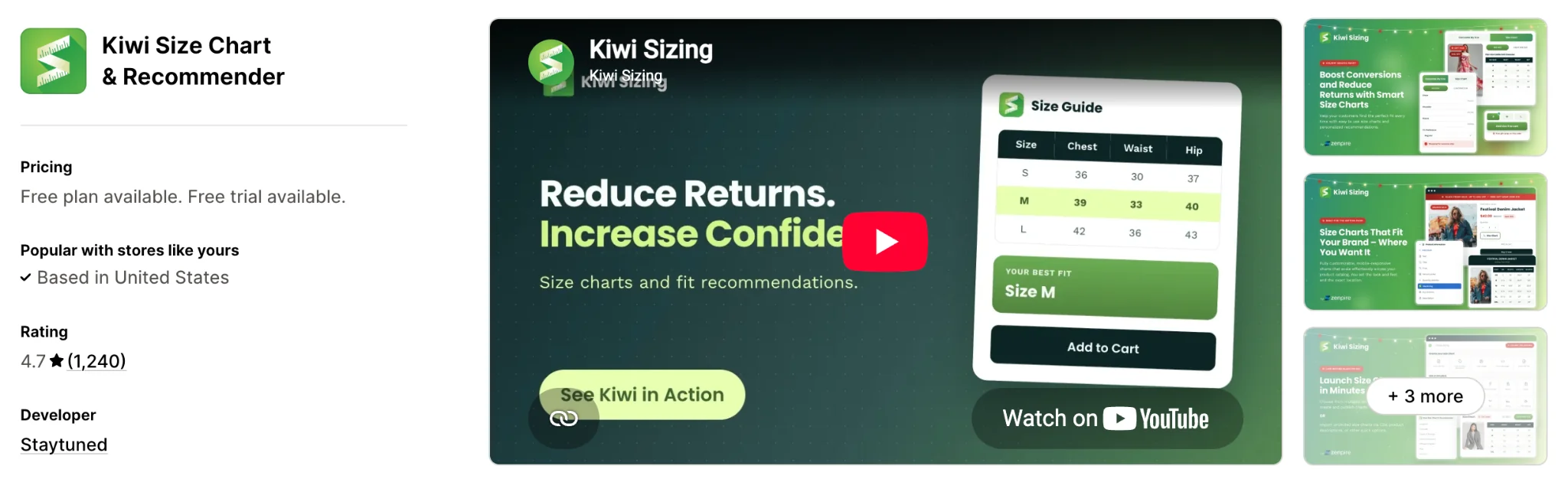
One of the biggest challenges of selling clothes online is helping customers choose the right size. Unlike shopping in a physical store, customers cannot try on clothing before purchasing. If sizing information is unclear, they may hesitate to buy or order the wrong size.
Kiwi Size Chart & Recommender helps clothing retailers create customizable size charts and provide fit recommendations. You can display size guides for different products or collections, including shirts, dresses, jeans, and footwear. The app also offers AI-powered size recommendations to help shoppers choose the right size.
Key features:
- Customizable size charts with templates and layouts
- AI-powered size recommendations
- Product-specific and collection-based size guides
- Automatic sizing unit conversion based on customer location
- Size chart imports from CSV files and product descriptions
Pricing: Free plan supports up to three published size charts. Premium plans start at $7.99/month.
Limitations: The free plan includes branding and restricts the number of published charts. Advanced size recommendations require higher-tier plans, which may also carry usage-based charges.
2. Varn – Variants & Swatches AI
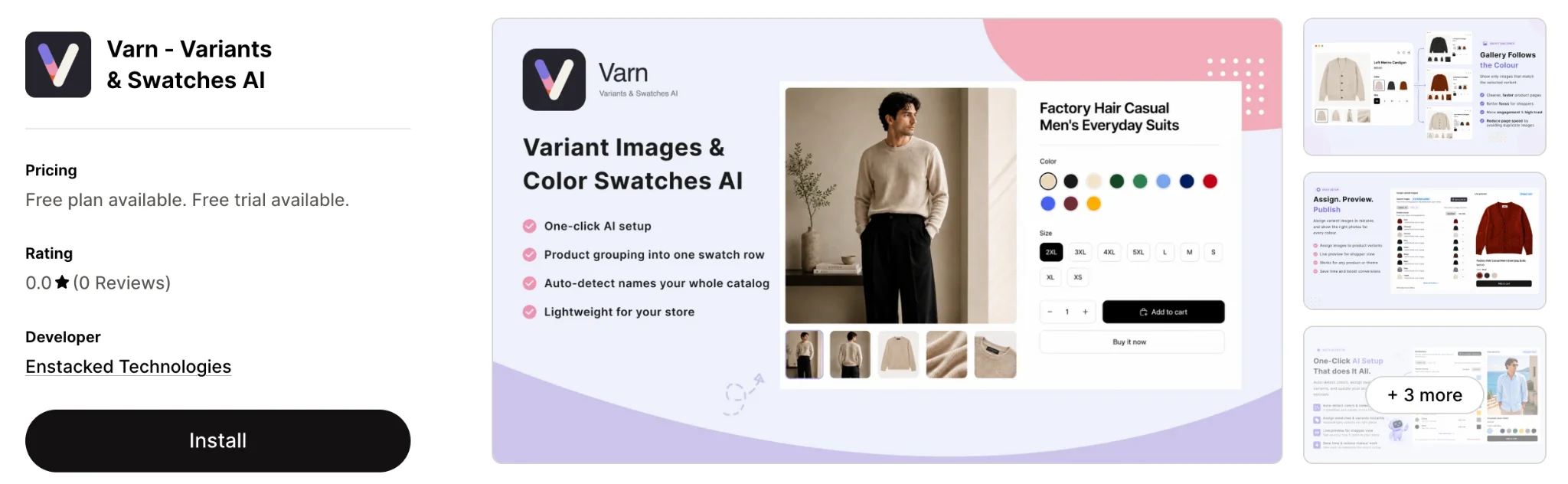
When customers shop for clothes, they often want to see how a product looks in different colors before deciding. Displaying color options as plain text dropdowns isn’t always the most convenient shopping experience.
Varn – Variants & Swatches AI helps Shopify clothing stores display product variants using visual color swatches and variant images. For example, if you’re selling a shirt in black, white, blue, and green, customers can browse the available colors visually instead of selecting them from a dropdown menu.
The app supports swatches across product pages, collections, search results, and quick-view sections.
Key features:
- Visual color swatches and variant images
- AI-assisted color detection and swatch setup
- Swatches on product and collection pages
- Customizable swatch shapes, sizes, and styles
- Integration with the theme’s existing variant picker
Pricing: Free plan supports up to five products with variant images. Paid plans start at $14.99/month.
Limitations: Varn is a relatively new app, launched in September 2026, with no published merchant reviews at the time of writing. Test its compatibility with your Shopify theme before using it across your catalog.
3. SF Product Recommendations
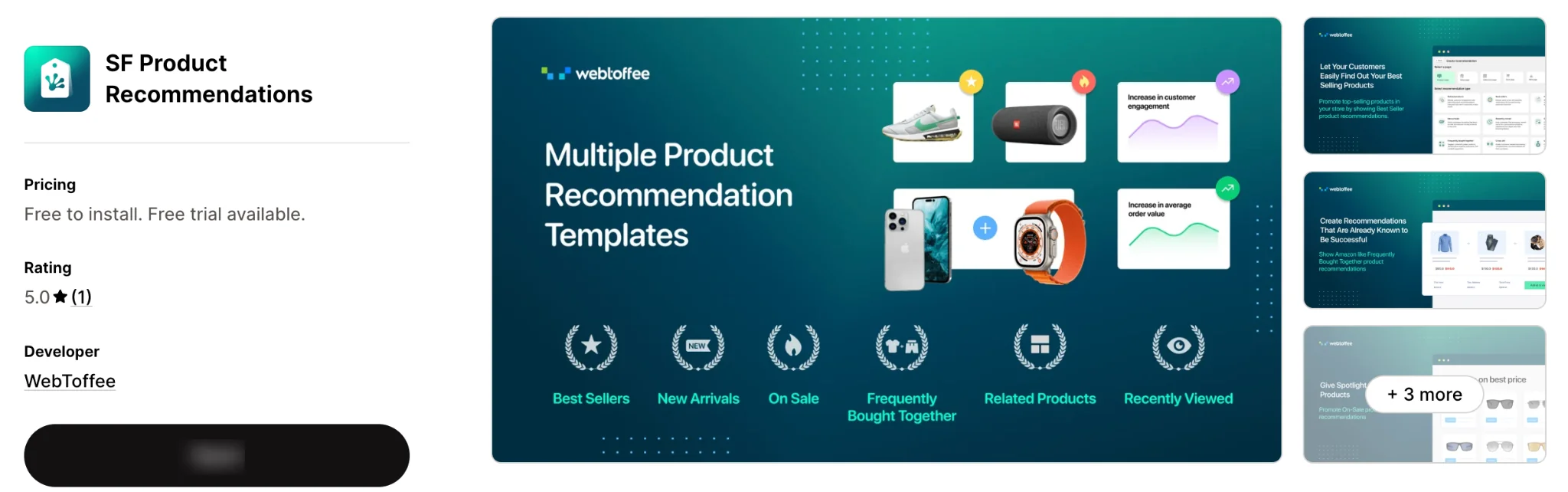
Clothing retailers have plenty of opportunities to encourage customers to purchase complementary products. Someone buying a formal shirt might also be interested in matching trousers, while a customer purchasing a dress may want accessories or footwear to complete the outfit.
SF Product Recommendations, developed by WebToffee, helps Shopify stores display relevant product suggestions throughout the shopping journey. The app supports different recommendation types, including related products, frequently bought together, best sellers, new arrivals, and recently viewed products.
For clothing stores, these recommendations can be useful for promoting matching outfits, seasonal collections, and accessories.
Key features:
- Personalized upsell and cross-sell recommendations
- Frequently bought together product suggestions
- Best-seller and new arrival recommendations
- Recommendation widgets for product, collection, cart, and thank-you pages
- Customizable widgets, promotional discounts, and performance analytics
Pricing: Free for stores with up to 50 monthly orders. Paid plans start at $10/month.
Limitations: The free plan has an order-volume restriction, so growing stores may need to upgrade.
4. Loox
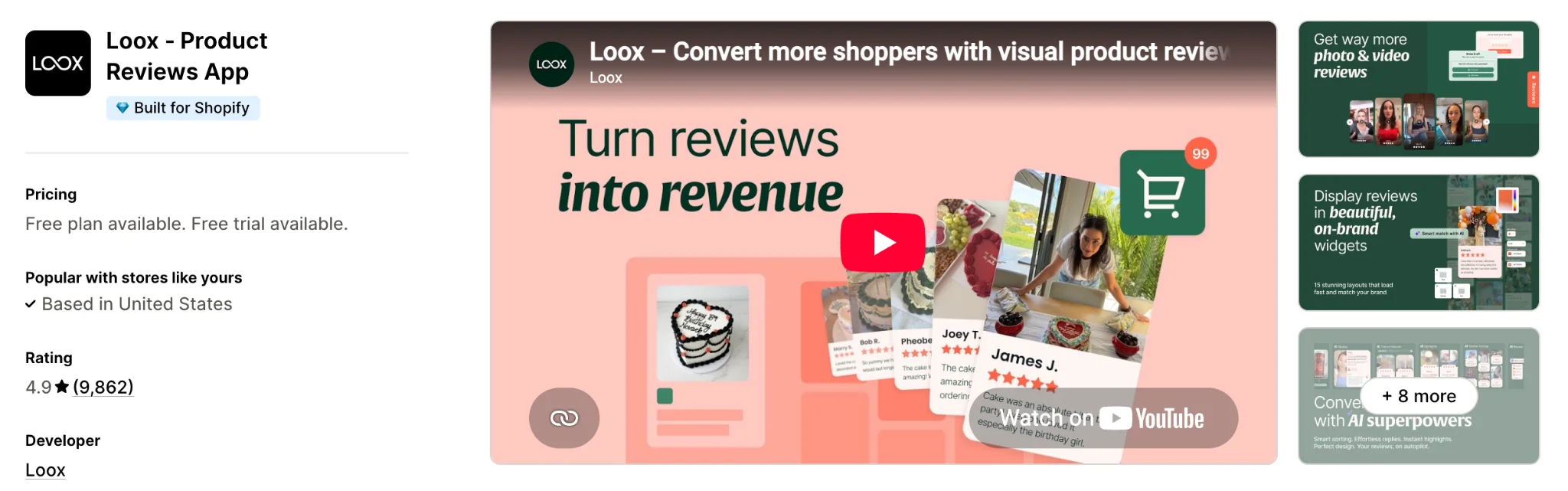
Product reviews are particularly valuable for clothing stores because shoppers want to know how clothes look and fit in real life. While professional product images showcase clothing effectively, customer photos can provide a different perspective on fit, fabric, and appearance.
Loox is a Shopify product review app that helps stores collect and display customer reviews, including photos and videos. You can automatically request reviews after purchases and showcase customer feedback using review widgets, carousels, and galleries. For example, a customer browsing a dress can see photos uploaded by previous buyers, helping them make a more informed purchase decision.
Key features:
- Automated review requests and reminders
- Photo and video review collection
- Customizable review widgets and galleries
- Discounts for customers who submit photo reviews
- Review syndication and AI-powered features on eligible plans
Pricing: Free beginner plan available. The Convert plan starts at $49.99/month, with additional charges based on order volume.
Limitations: Advanced features, including video reviews and AI review tools, are primarily available on paid plans. Costs can increase as order volume grows.
5. Boost AI Search & Filter
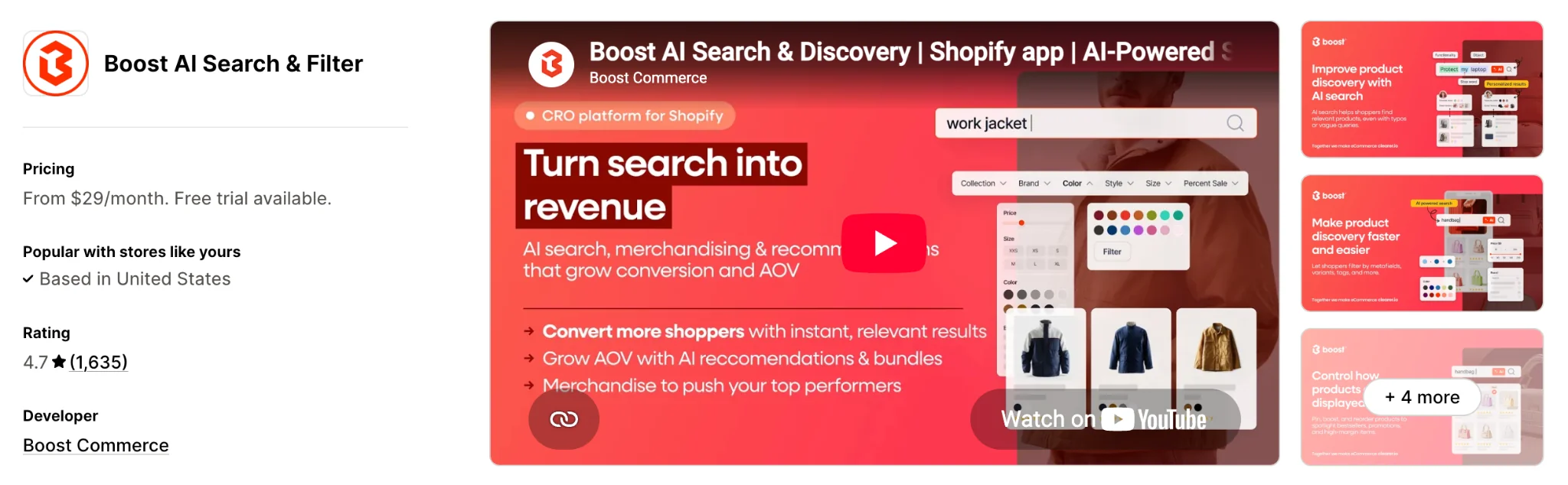
Finding the right product can become difficult when a clothing store has hundreds or thousands of items. Customers may want to narrow down products by size, color, price, style, or availability instead of scrolling through entire collections.
Boost AI Search & Filter helps improve product discovery with advanced search and customizable collection filters. For example, a customer looking for a black dress in size medium can narrow the available products using relevant filters. The app also provides AI-powered search capabilities and merchandising tools to help store owners organize how products appear in search results.
Key features:
- AI-powered product search and autocomplete
- Custom product filters for collections
- Search suggestions and typo tolerance
- Product merchandising and ranking tools
- Search and filter performance analytics
Pricing: Paid plans start at $29/month, with pricing depending on store GMV and selected features.
Limitations: Pricing can be expensive for smaller stores, and some advanced merchandising features require higher-tier plans.
6. Amp Back in Stock & Preorder +
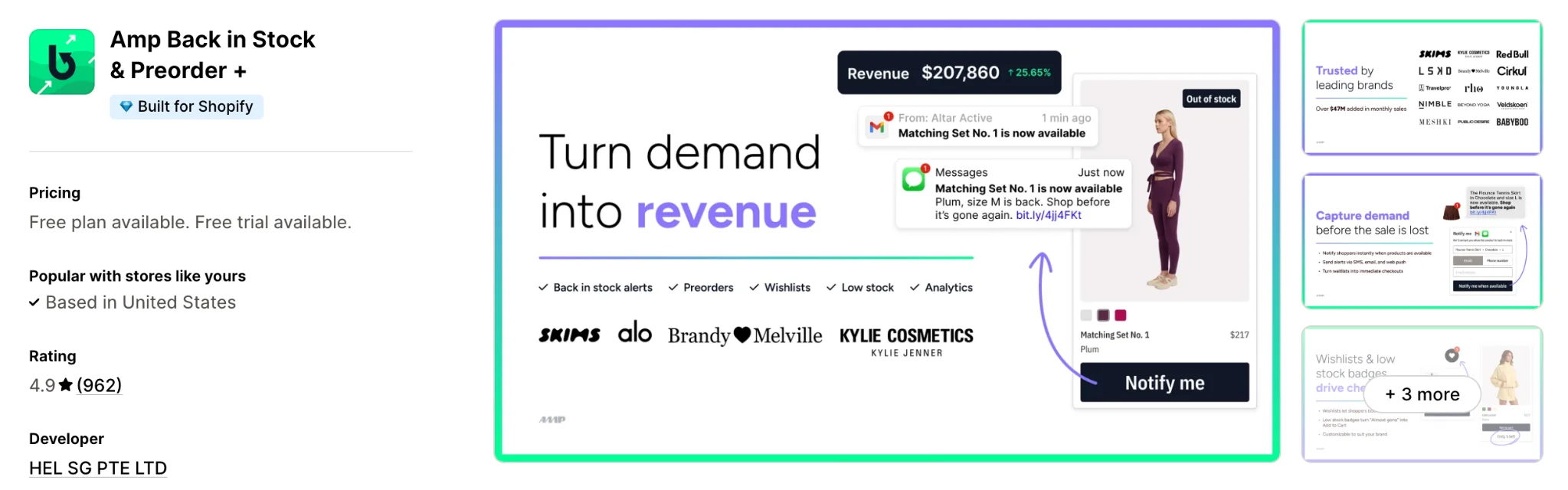
Running out of popular clothing sizes can mean missed sales opportunities. For example, a customer might find the perfect jacket, only to discover that their preferred size is unavailable. If there’s no way to receive an update, they may leave your store and shop elsewhere.
Amp Back in Stock & Preorder + helps clothing stores capture customer interest in unavailable products. Customers can sign up for restock notifications, and the app sends alerts when products become available again. It also supports preorders, wishlists, and low-stock notifications, making it useful for stores that regularly introduce new collections.
Key features:
- Automated restock notifications through email, SMS, and push
- Customizable back-in-stock signup forms
- Preorder functionality
- Wishlist and low-stock features
- Customer demand insights and activity reports
Pricing: Free plan includes 10 notifications per month. Paid plans start at $19/month, with separate SMS charges and different Shopify Plus pricing.
Limitations: Lower-tier plans have notification limits, and SMS messaging may increase overall costs.
7. Fast Bundle
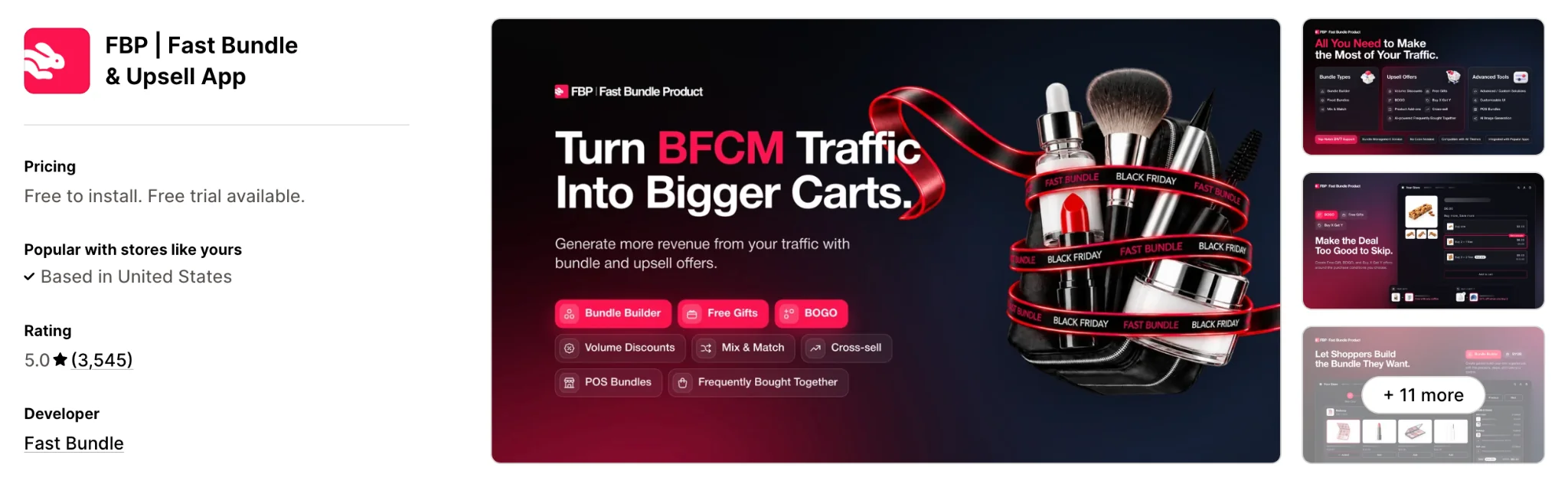
Clothing products are often purchased together. For example, customers may want to buy a matching top and bottom, a coordinated outfit, or multiple T-shirts in different colors. Instead of encouraging customers to purchase each item separately, you can offer bundled products or special discounts.
Fast Bundle helps Shopify stores create product bundles, mix-and-match offers, and quantity-based promotions. For a clothing store, this could mean offering a complete outfit at a discounted price or allowing customers to choose any three T-shirts for a fixed amount.
Key features:
- Fixed and mix-and-match product bundles
- Build-your-own-bundle options
- Volume discounts and quantity breaks
- Frequently bought together offers
- BOGO and other promotional bundle offers
Pricing: Free for development stores. Plans for live stores start at $19/month, with pricing tiers based on monthly bundle sales.
Limitations: Subscription costs increase as bundle sales grow. Stores that only need simple discounts should check whether Shopify’s native discount tools are sufficient.
8. Loop Returns & Exchanges
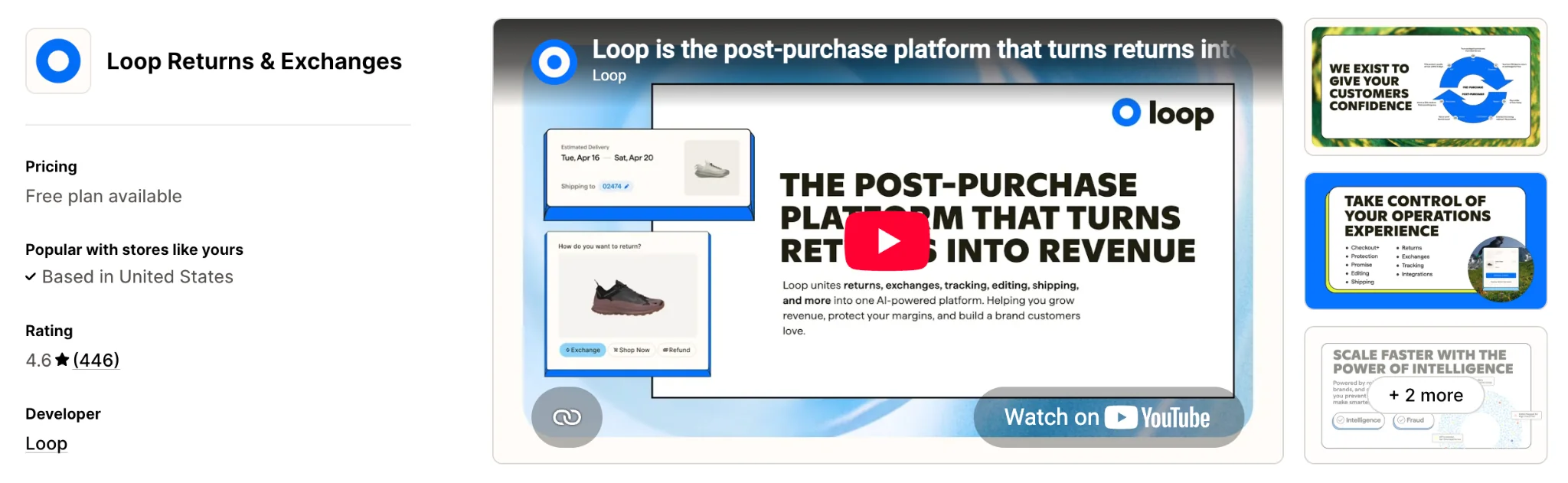
Returns are an important part of running an online clothing business. Customers may order the wrong size, discover that an item doesn’t fit as expected, or decide that a particular style isn’t suitable. Handling these requests manually can become time-consuming as order volume increases.
Loop Returns & Exchanges helps Shopify stores manage returns and exchanges through automated workflows. Customers can initiate eligible return or exchange requests, while merchants can configure return policies and manage the process more efficiently. For clothing retailers, exchange workflows are especially useful when a customer wants the same product in a different size.
Key features:
- Returns and exchange management
- Automated return policies and workflows
- Customer-facing return experiences
- Refund and store credit options
- Return analytics and fraud-prevention tools on applicable plans
Pricing: A free Checkout+ tier is available with specific conditions. The Essential plan starts at $155/month, while Advanced starts at $340/month.
Limitations: Paid plans may be expensive for smaller clothing businesses. Some advanced exchange capabilities and return services depend on the selected plan and location.
9. Prediko Inventory Management
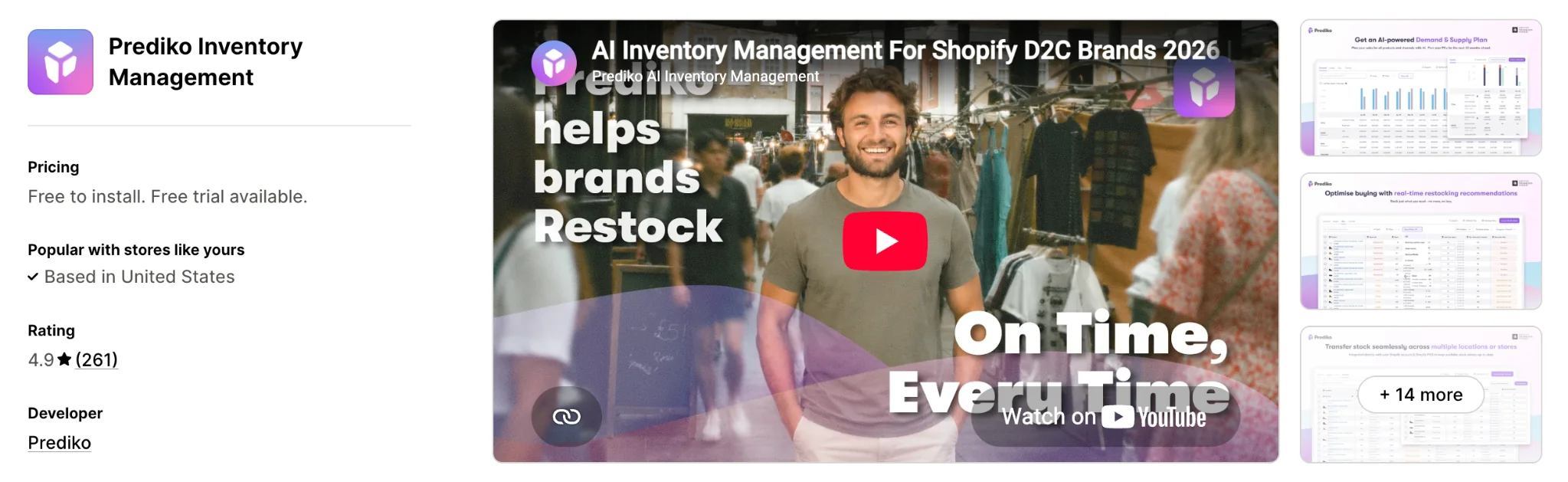
Managing clothing inventory isn’t just about knowing how many products are in stock. You also need to decide which sizes to reorder, how much inventory to purchase, and when to replenish popular styles. This becomes particularly challenging for seasonal collections, where demand can change throughout the year.
Prediko Inventory Management helps Shopify merchants forecast demand, plan inventory purchases, and manage replenishment. The app analyzes sales and inventory data to support stock planning and purchase order decisions. For example, if certain jeans sizes consistently sell faster than others, inventory forecasting can help you plan future purchases more effectively.
Key features:
- AI-powered demand forecasting
- Inventory planning at the SKU level
- Replenishment alerts and recommendations
- Purchase order management
- Inventory reporting and multi-location inventory tools
Pricing: Self-service plans start at $49/month. Enterprise pricing is handled separately.
Limitations: Forecasting depends on the quality and availability of sales data. Smaller stores with limited historical sales may not need advanced inventory planning immediately.
10. StoreRobo Import Export
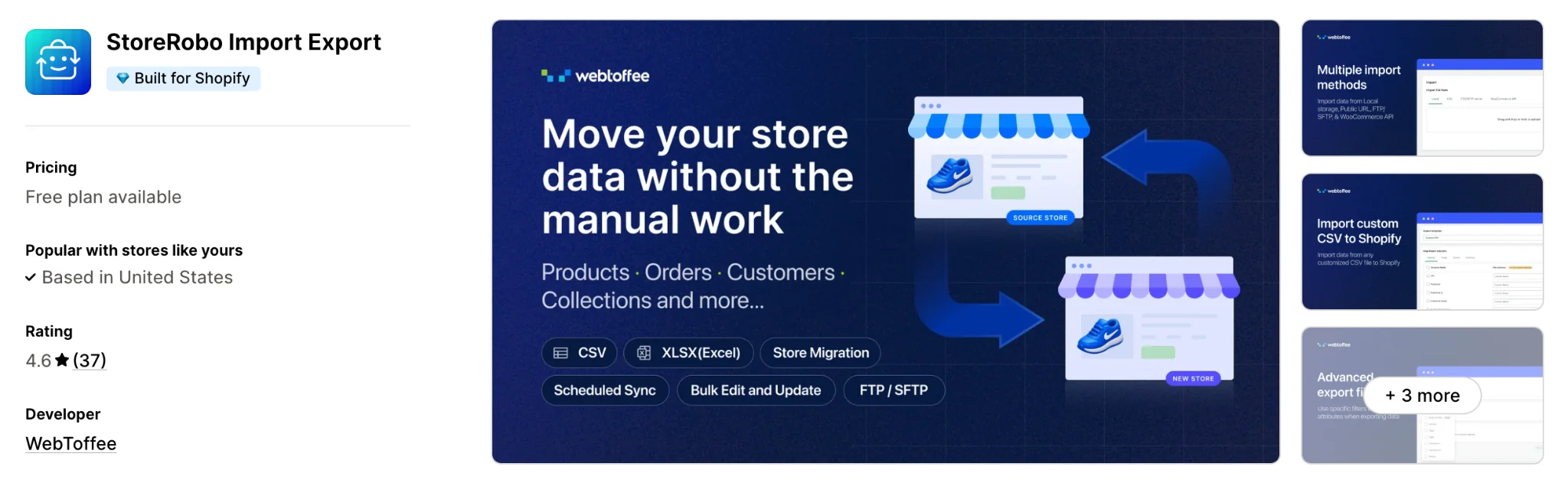
Clothing stores often manage large product catalogs containing hundreds of products and thousands of variants. Updating product information individually can become time-consuming, especially when introducing new seasonal collections or changing product details in bulk.
StoreRobo Import Export, developed by WebToffee, helps Shopify merchants import, export, and update store data in bulk. For example, a clothing retailer can export product data, update product information or SKUs in a spreadsheet, and import the modified file into Shopify.
The app supports product and variant data, collections, customers, orders, and other Shopify resources. It also provides scheduling options for stores that need recurring data transfers.
Key features:
- Bulk import and export of products and variants
- Support for CSV-based product data transfers
- Custom CSV import with column mapping on eligible plans
- Scheduled import and export operations
- Data transfers using file URLs, FTP/SFTP, and supported external sources
Pricing: Free plan allows up to 25 products per file. Paid plans start at $10/month. Advanced custom CSV mapping is available from the $20/month Pro plan.
Limitations: Import and export limits depend on the selected plan. Custom file mapping and large-scale operations require higher-tier subscriptions.
11. Omnisend
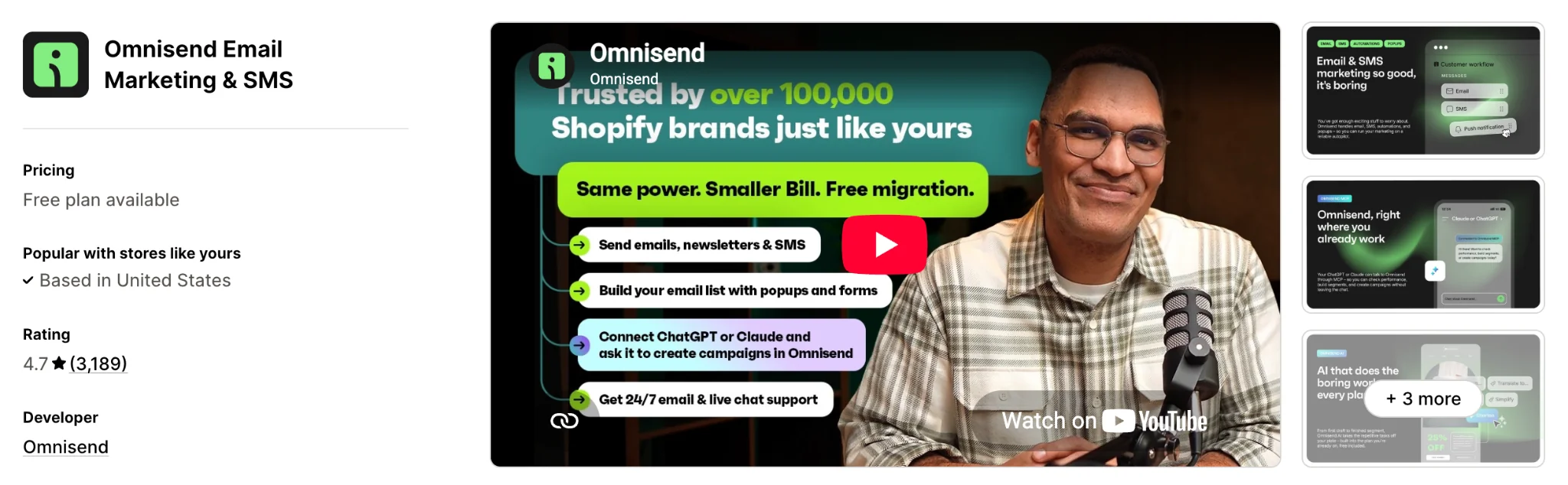
Clothing stores regularly introduce new collections, seasonal promotions, and limited-time offers. Keeping customers informed about these updates can encourage repeat purchases and help maintain customer engagement.
Omnisend is an email and SMS marketing app designed for ecommerce businesses. It helps merchants create marketing campaigns, automate customer communications, and send targeted messages based on customer activity. For example, a clothing store could announce a new summer collection, welcome new subscribers with a discount, or remind shoppers about products left in their carts.
Key features:
- Email marketing campaigns and newsletters
- Automated welcome and abandoned-cart workflows
- Signup forms and popups
- Customer segmentation
- SMS marketing and eCommerce integrations
Pricing: Free plan supports up to 250 contacts and 500 emails per month. Standard plans start at $16/month, with pricing increasing as contact lists grow.
Limitations: Free plan sending limits are restrictive for growing stores. Advanced features and larger contact lists increase subscription costs.
12. Printful
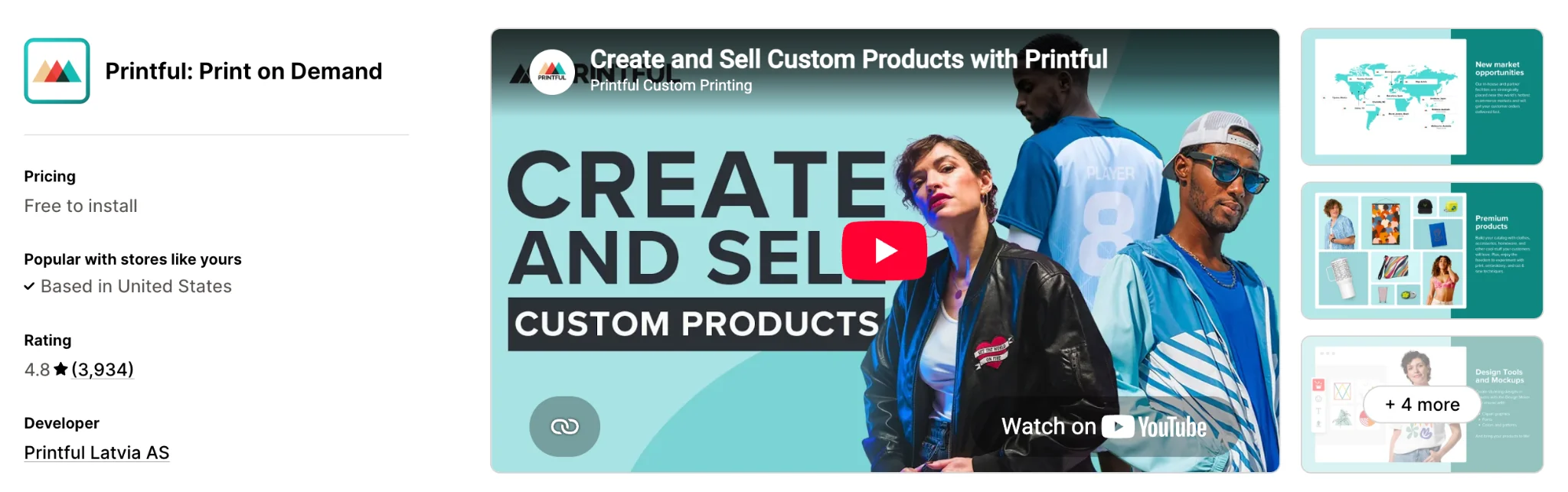
Not every clothing business wants to purchase and store inventory before receiving orders. If you’re selling custom T-shirts, hoodies, or other personalized apparel, print-on-demand can be an alternative.
Printful is a print-on-demand app that connects with Shopify and lets merchants sell customized products without managing their own printing and fulfillment operations. You can create product designs, generate mockups, and publish products to your Shopify store. When a customer places an order, Printful handles production and shipping.
Key features:
- Print-on-demand clothing production
- Custom product design tools
- Product mockup generator
- Automated order fulfillment
- Global fulfillment and shipping options
Pricing: Free to install. Merchants pay product fulfillment and shipping costs when orders are placed. An optional Growth plan starts at $24.99/month.
Limitations: Product costs, shipping expenses, and fulfillment times depend on the products and delivery locations. Merchants also have less direct control over production than with in-house fulfillment.
With so many options available, you might be tempted to install several apps at once. However, adding more apps doesn’t necessarily make your clothing store better.
The right approach is to identify what your store actually needs.
1. Start With Your Biggest Challenges
Consider the problems affecting your business.
If customers frequently ask sizing questions, a size chart app might be a priority. If popular sizes regularly sell out, back-in-stock notifications could be more useful.
For stores managing large catalogs, inventory planning and bulk product management apps may provide greater value.
Focus on the problems that consume the most time or affect your customers the most.
2. Compare Features With Shopify’s Built-in Tools
Shopify already provides features for managing products, variants, inventory, discounts, and basic product discovery.
Before installing an app, check whether Shopify’s existing tools can handle your requirements. For example, Shopify’s native inventory management features may be sufficient for a smaller clothing store.
As your business grows, you can consider advanced forecasting, automated replenishment, or bulk catalog management apps.
3. Check Pricing and Usage Limits
An app with a free plan might appear affordable initially, but its limitations could become restrictive as your store grows. Some apps charge based on monthly orders, contacts, sales volume, or the number of products managed.
Compare the cost of each app against the value it provides. Also check whether any additional transaction, messaging, or usage charges apply.
4. Review Compatibility and Performance
Before installing an app, confirm that it works with your Shopify theme and any existing apps. This is especially important for apps that modify product pages, variant selectors, or collection layouts.
Test changes on mobile devices and make sure the app doesn’t interfere with your existing shopping experience.
5. Avoid Installing Multiple Apps for the Same Purpose
Some Shopify apps offer overlapping features. For example, a product bundle app may also support frequently bought together recommendations, while a product recommendation app may provide related product suggestions and promotional offers.
Review these capabilities before installing separate apps. You may be able to meet your needs with fewer tools.
The best app combination depends on the type and size of your clothing business.
| Clothing business | Recommended apps | Main priority |
|---|---|---|
| Small fashion boutique | Kiwi, Loox, SF Product Recommendations | Sizing, trust, and product discovery |
| Growing apparel brand | Prediko, Loop Returns, Boost AI Search & Filter | Inventory, returns, and catalog navigation |
| Print-on-demand clothing store | Printful, Loox, Omnisend | Production, reviews, and marketing |
| Store with a large product catalog | StoreRobo, Prediko, Boost AI Search & Filter | Bulk updates, inventory planning, and search |
| Clothing brand with limited-edition drops | Amp Back in Stock, Omnisend, Fast Bundle | Restock alerts, product launches, and promotions |
These are starting points rather than fixed app combinations. Begin with the tools that address your most immediate requirements and add others as needed.
The best Shopify apps depend on your store’s requirements. Kiwi Size Chart is useful for sizing information, Loox helps collect product reviews, Boost AI Search & Filter improves product discovery, and Prediko supports inventory planning. Stores managing large product catalogs can also consider StoreRobo for bulk product data management.
Yes. Shopify provides built-in tools for creating product listings, managing variants, tracking inventory, processing orders, and offering discounts. You can start a clothing store without installing additional apps. However, third-party apps can help when you need more advanced features such as size recommendations, automated returns, inventory forecasting, or bulk product management.
Yes. Several Shopify apps offer free plans or free installation options. Kiwi Size Chart, Loox, StoreRobo, Omnisend, and Amp Back in Stock are examples. However, free plans often include usage limits, and some free-to-install apps charge for fulfillment or other services.
Apps that improve the shopping experience and encourage additional purchases can help increase sales. For example, Loox displays customer reviews, SF Product Recommendations suggests related clothing and accessories, Fast Bundle creates promotional product bundles, and Omnisend helps bring customers back through targeted marketing campaigns.
Conclusion
Running a successful Shopify clothing store involves much more than uploading product images and processing orders. You need to help customers find the right sizes, manage product variants, maintain accurate inventory, promote your collections, and handle returns efficiently.
The Shopify apps covered in this guide can help you manage these tasks more effectively. However, you don’t need all 12 apps to run a successful clothing business.
Start by identifying your biggest challenges, choose apps that address those needs, and evaluate their impact before adding more tools. The right combination will depend on your product catalog, customer expectations, budget, and plans for growth.


Subcribe to our newsletter


