Share:


Table of Contents
- Shopify dropshipping apps facilitate connections between merchants and suppliers, allowing for seamless product sourcing without upfront inventory costs.
- Different apps cater to various needs, such as sourcing from AliExpress, US and European suppliers, or offering print-on-demand services.
- Key features to consider include automation capabilities, inventory synchronization, and pricing structures that can adapt as your business grows.
- Free plans are available, but they often come with limitations; understanding the total cost of using an app is essential for profitability.
- Testing suppliers and their fulfillment processes before scaling is critical to ensure product quality and timely delivery.
- The best app for your store depends on your product category, target market, and specific operational requirements.
Starting a dropshipping business on Shopify is relatively easy. The harder part is finding reliable suppliers, keeping product information updated, and ensuring customers receive their orders on time.
That’s where Shopify dropshipping apps can help.
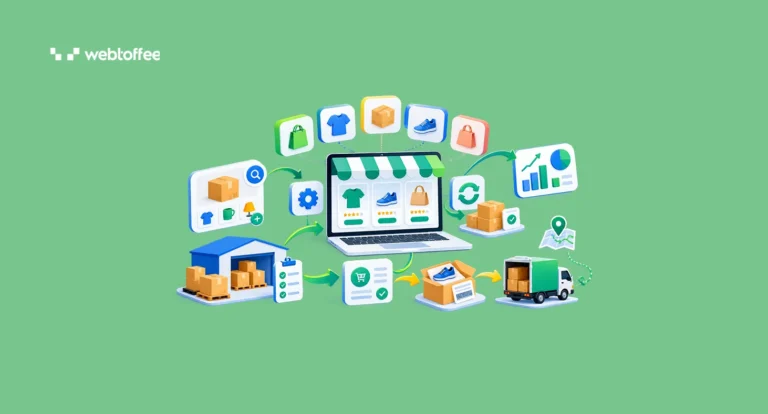
These apps connect your store with suppliers, let you import products without purchasing inventory upfront, and simplify tasks such as inventory syncing, order processing, and shipment tracking.
But not every dropshipping app works the same way. Some specialize in AliExpress products, others focus on US and European suppliers, and a few are designed for print-on-demand or branded products.
In this guide, we’ll look at 10 of the best dropshipping apps for Shopify, including their features, pricing, and limitations, to help you decide which one suits your store.
If you’re looking for a quick recommendation, here’s how the top Shopify dropshipping apps compare.
| App | Best for | Starting price |
|---|---|---|
| DSers | AliExpress dropshipping | Free plan; paid from $19.90/month |
| Zendrop | Beginner-friendly sourcing and fulfillment | Free to install; linked products from $29/month |
| CJdropshipping | Global sourcing and fulfillment | Free to install; product and service charges |
| AutoDS | Dropshipping automation | From $26.90/month |
| Spocket | US and European suppliers | Free limited plan; paid from $39.99/month |
| Syncee | Finding suppliers across different regions | Free plan; paid from $39.99/month |
| Trendsi | Fashion and clothing dropshipping | Free plan; Pro from $29.90/month |
| Printful | Print-on-demand products | Free to install; optional paid plan |
| HyperSKU | Custom sourcing and private labeling | Free to install; fulfillment charges |
| Shopify Collective | Selling products from other Shopify brands | Free for eligible Shopify stores |
Pricing is in USD and reflects publicly listed plans in October 2026. Product costs, shipping fees, and other charges may apply. Prices and plan features can change.
For most beginners, DSers is a good starting point if you want to source products from AliExpress. Spocket and Syncee are worth considering if supplier location matters to your business, while Printful is a better fit for stores selling custom-designed products.
However, the right choice depends on what you want to sell, where your customers are located, and how much control you need over fulfillment.
There are plenty of dropshipping apps in the Shopify App Store, but having a large product catalog doesn’t necessarily make an app the right choice.
For this list, we considered several factors that matter to Shopify store owners.
- Product sourcing and supplier availability: Does the app offer suppliers and products relevant to different markets and business models?
- Shopify integration: Can merchants easily import products, manage orders, and keep inventory information synchronized?
- Automation and fulfillment: Does the app reduce manual work when processing orders and tracking shipments?
- Pricing: Are there affordable options for small businesses, and how do costs change as the store grows?
- Merchant feedback: What do Shopify App Store reviews reveal about usability, support, and potential issues?
Let’s look at what each app offers, how much it costs, and which Shopify stores would benefit most from using it.
1. DSers
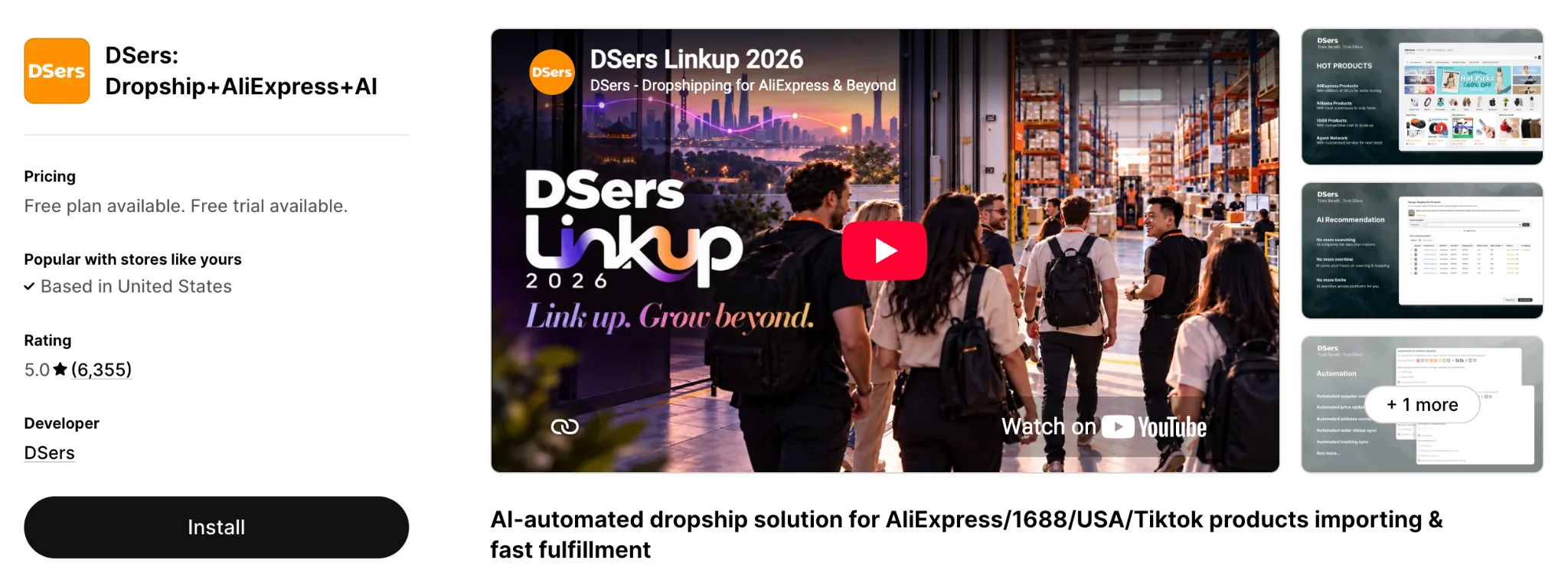
DSers is one of the most popular options for Shopify merchants who want to source products from AliExpress.
Instead of manually copying product information and placing separate supplier orders, DSers connects your Shopify store with supported sourcing platforms and helps you manage the process from one place.
You can browse products, import them into Shopify, map product variants to suppliers, and process multiple orders more efficiently. For example, if you sell phone accessories and receive 30 orders in a day, DSers can help you prepare and submit those orders in bulk rather than processing each one individually.
Key features:
- Product importing and supplier mapping for AliExpress and other supported sources
- Bulk order processing and automatic tracking updates
- Pricing rules and product inventory synchronization
- Supplier comparison and additional automation on paid plans
Pricing: DSers offers a free Basic plan. The Advanced plan starts at $19.90/month, while Pro starts at $49.90/month. Product and shipping costs are separate.
Limitations: DSers is particularly useful for AliExpress-based operations, but it doesn’t eliminate the risks associated with individual suppliers. Product quality, delivery times, and supplier communication still require attention.
Best for: Beginners and growing Shopify stores that primarily source products through AliExpress.
2. Zendrop
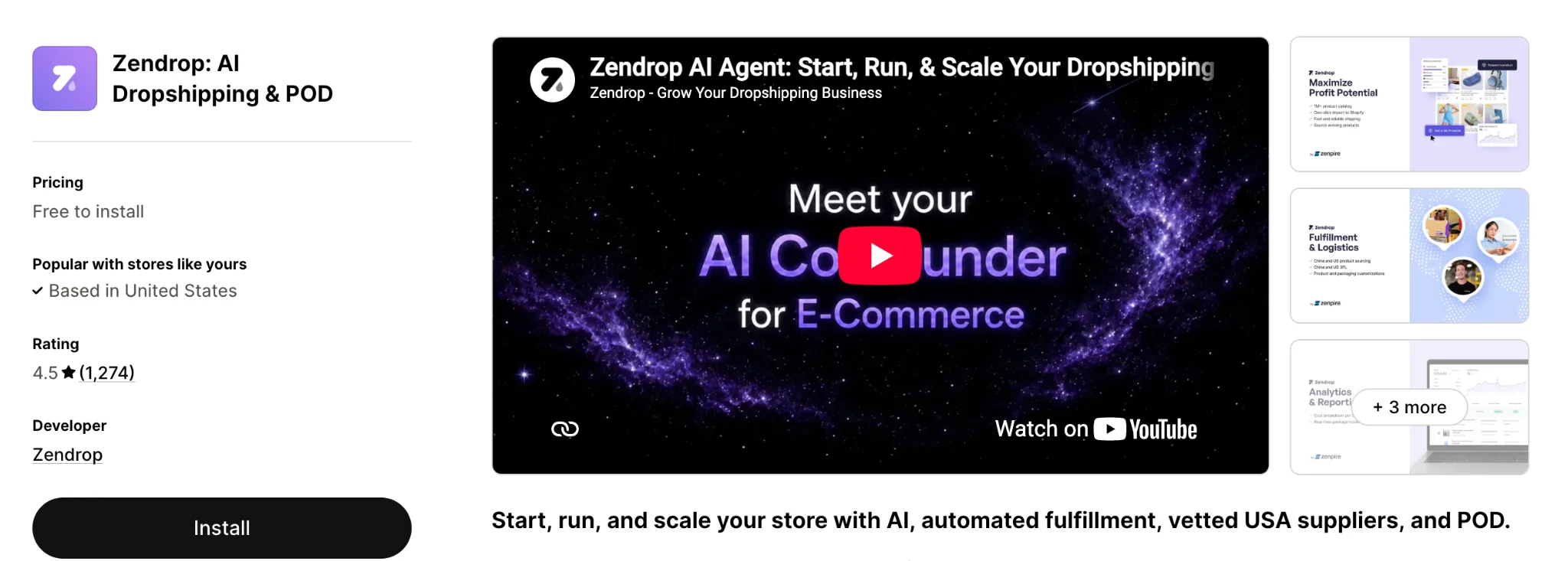
Zendrop combines product sourcing, order fulfillment, and branding services in one platform.
It offers a catalog of products from US and international suppliers and is designed to simplify the process of getting a dropshipping store running.
Once products are connected, Zendrop can help manage order fulfillment, synchronize shipment information, and provide tracking updates. It also offers product research, branding services, and educational resources.
This makes it an option for merchants who would rather work within a single sourcing and fulfillment platform than coordinate with multiple suppliers individually.
Key features:
- Product catalog with US and international sourcing options
- Automated fulfillment and shipment tracking
- Product research and AI-assisted tools
- Custom branding, print-on-demand, and additional fulfillment services
Pricing: Zendrop is free to install, but its free tier does not allow linked products. The Beginner plan costs $29/month for 1–20 linked products, while higher plans support larger catalogs. Product and shipping costs are additional.
Limitations: Despite being free to install, you need a paid plan to connect products to your store through Zendrop. The cost increases as the number of linked products grows.
Best for: Beginners looking for a guided sourcing and fulfillment experience who are comfortable paying for an ongoing subscription.
3. CJdropshipping
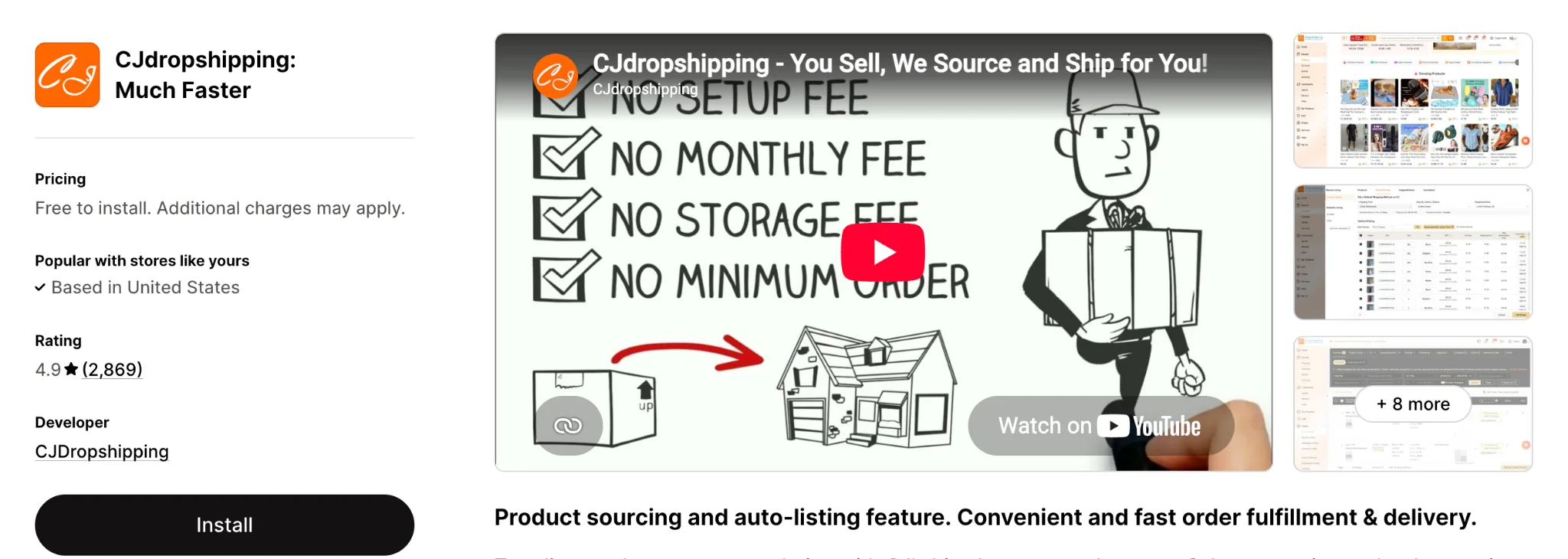
CJdropshipping is another option for Shopify merchants who want to source and sell products without maintaining their own inventory. Unlike an app that primarily connects to a third-party marketplace, CJdropshipping offers sourcing and fulfillment services through its own platform.
You can search for products, request sourcing assistance, import listings into Shopify, and have orders processed through CJdropshipping. The platform also supports services such as product customization, packaging, and inventory storage, making it useful for merchants who want more control as their businesses grow.
For example, if you find a product that’s selling consistently, you could explore custom packaging or inventory arrangements rather than continuing with basic dropshipping.
Key features:
- Product sourcing and supplier assistance
- Shopify product imports and order synchronization
- Global shipping and order tracking
- Custom packaging, print-on-demand, and inventory services
Pricing: Free to install. Merchants pay for products, shipping, and applicable additional services.
Limitations: Delivery times and fulfillment costs can vary significantly depending on the product, warehouse location, and destination. Some advanced sourcing or branding arrangements may also involve additional requirements.
Best for: Merchants looking for a combination of product sourcing, international fulfillment, and branding options.
4. AutoDS
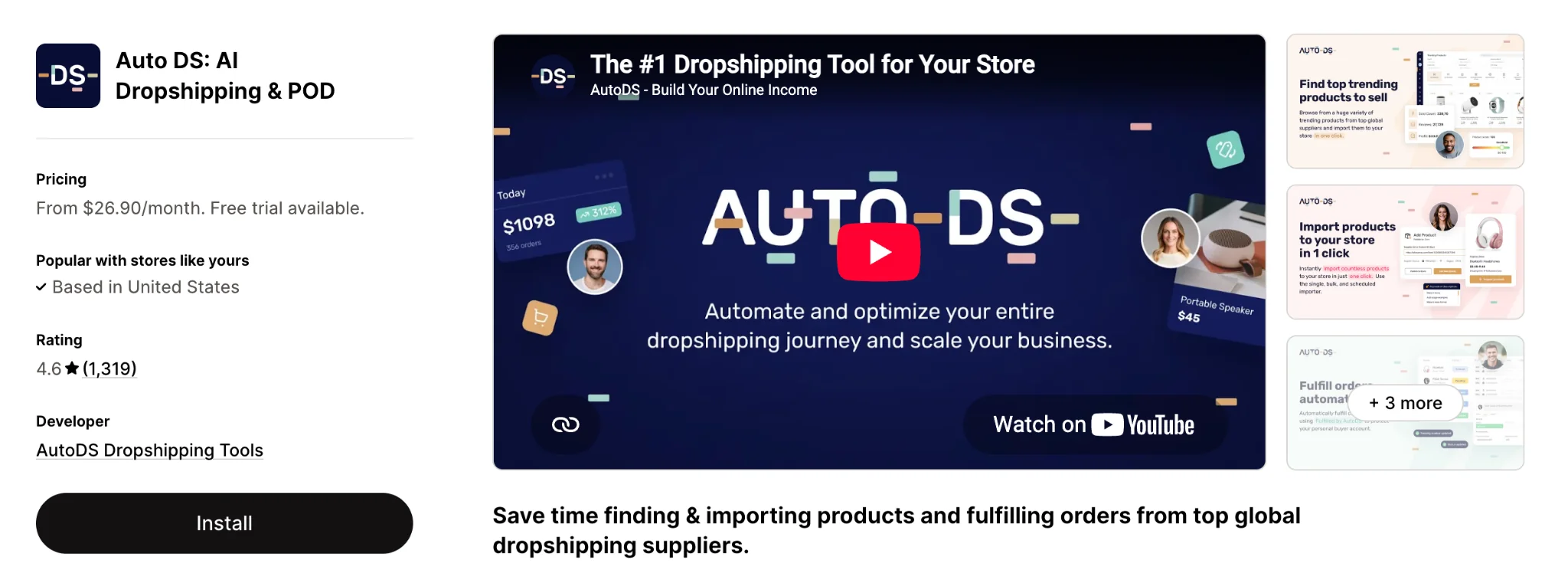
AutoDS focuses on reducing the repetitive tasks involved in running a dropshipping business.
Managing a dropshipping store often means checking supplier prices, updating inventory availability, importing new products, and processing customer orders. Doing all of this manually becomes difficult when your catalog grows.
AutoDS brings several of these activities into one platform, including product research, importing, order management, and inventory monitoring.
For example, if a supplier changes a product’s price or runs out of stock, supported monitoring features can help you identify these changes before they cause problems for your store.
Key features:
- Product importing from supported suppliers
- Price and stock monitoring on eligible plans
- Order management and fulfillment automation
- Bulk product editing and product research tools
Pricing: AutoDS starts at $26.90/month for the Import 200 plan. The Starter 500 plan costs $39.90/month and adds price and stock monitoring. Additional services and higher-tier plans can increase the total cost.
Limitations: Important automation features depend on the plan you choose. The subscription can become relatively expensive for a new store with limited sales.
Best for: Shopify merchants managing larger catalogs or looking to automate repetitive product and order management tasks.
5. Spocket
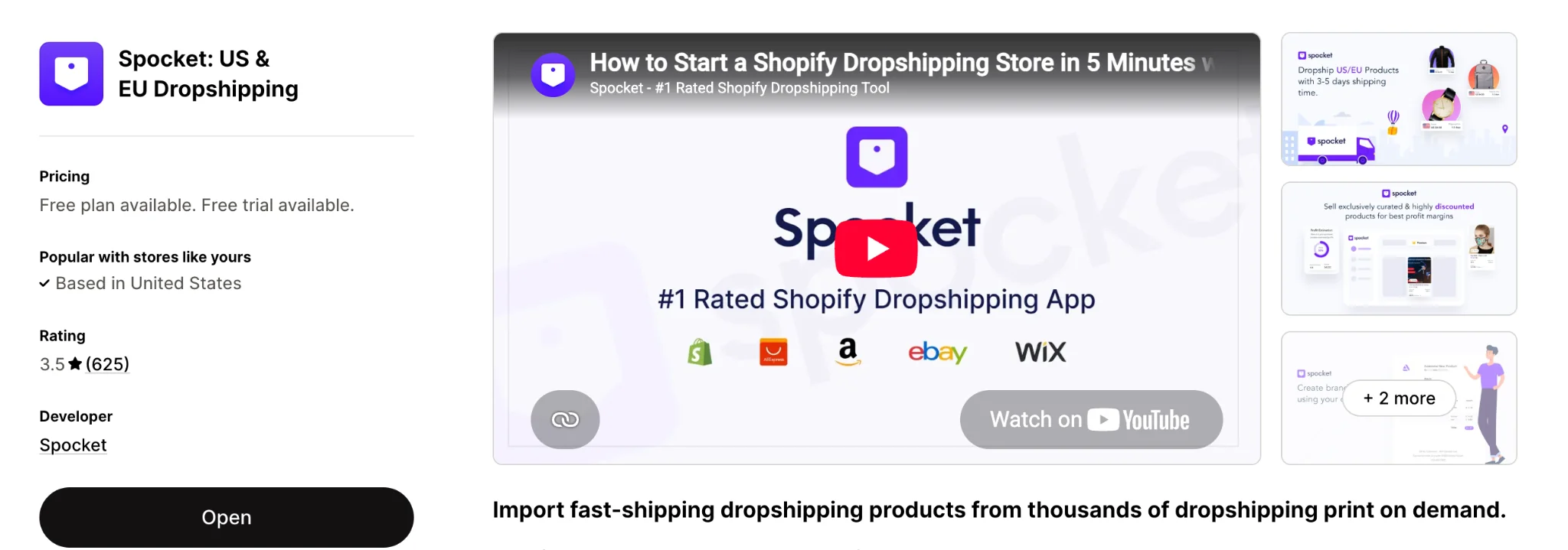
Spocket is worth considering if you want to source products from suppliers in the United States and Europe.
One of the challenges with international dropshipping is shipping time. Products sourced from distant warehouses may take longer to reach customers, which can affect their shopping experience.
Spocket helps merchants discover suppliers across different regions, including the US and Europe, so they can look for products that may be fulfilled closer to their target customers.
You can explore products, import listings into Shopify, and manage orders through its platform.
Key features:
- Supplier marketplace with US and European sourcing options
- Shopify product importing and order management
- Supplier communication on eligible plans
- Branded invoicing and other features on higher plans
Pricing: Spocket offers a limited free plan. Paid plans start at $39.99/month, with additional tiers for larger product catalogs and premium features. Product costs are separate.
Limitations: Access to its useful sourcing features requires a paid subscription. Also, choosing a US or European supplier doesn’t automatically guarantee fast delivery. Actual delivery times depend on product availability, dispatch location, and the shipping method.
Best for: Shopify stores targeting US or European customers that want to prioritize suppliers in those regions.
6. Syncee
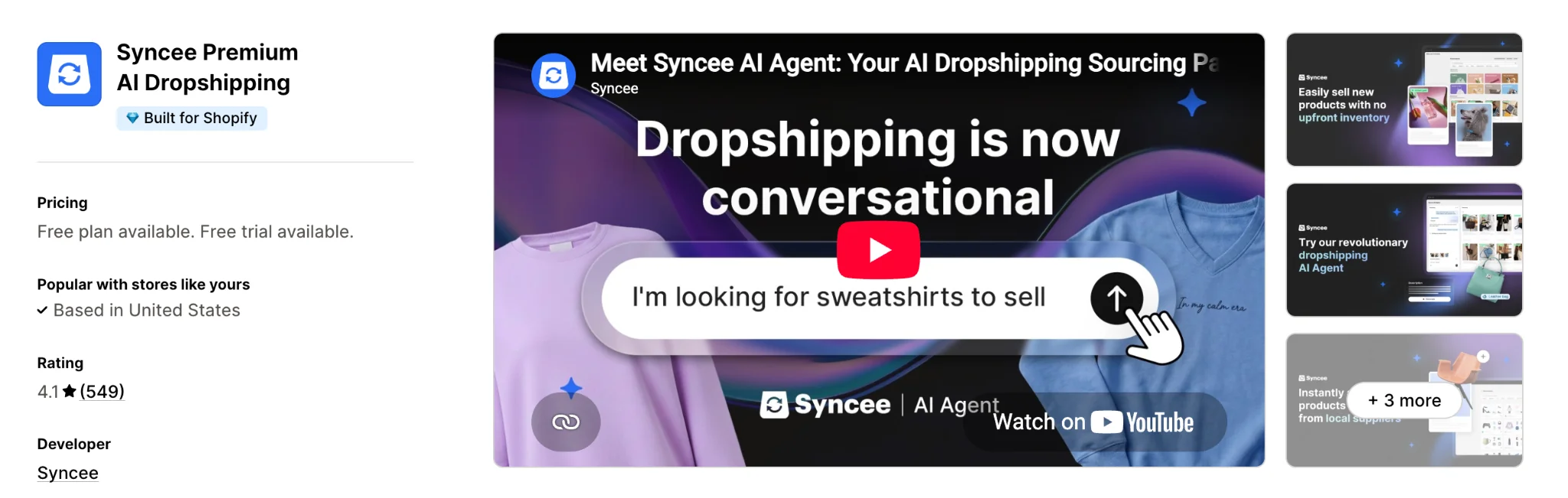
Syncee is a dropshipping and wholesale supplier marketplace that connects Shopify stores with suppliers from multiple countries. It is particularly useful for merchants who don’t want to depend on a single sourcing platform.
Through Syncee, you can browse suppliers, import suitable products, and keep product and inventory information synchronized. The platform supports dropshipping and wholesale relationships, which can also be useful if you eventually decide to purchase certain products in bulk.
For example, a home decor store could explore suppliers in different regions and choose products based on delivery availability, pricing, and catalog suitability.
Key features:
- Access to suppliers across the US, Europe, the UK, and other regions
- Product importing and inventory synchronization
- Automated order forwarding where supported
- AI-assisted product discovery and supplier connections
Pricing: Syncee offers a free plan supporting up to 25 imported products. Paid plans start at $39.99/month, with higher tiers offering larger product limits and additional supplier access.
Limitations: Product import limits, supplier access, and some advanced capabilities vary by plan. Individual suppliers may also have their own approval requirements, shipping terms, and product pricing.
Best for: Shopify merchants who want to compare suppliers across different regions or gradually expand from dropshipping into wholesale sourcing.
7. Trendsi
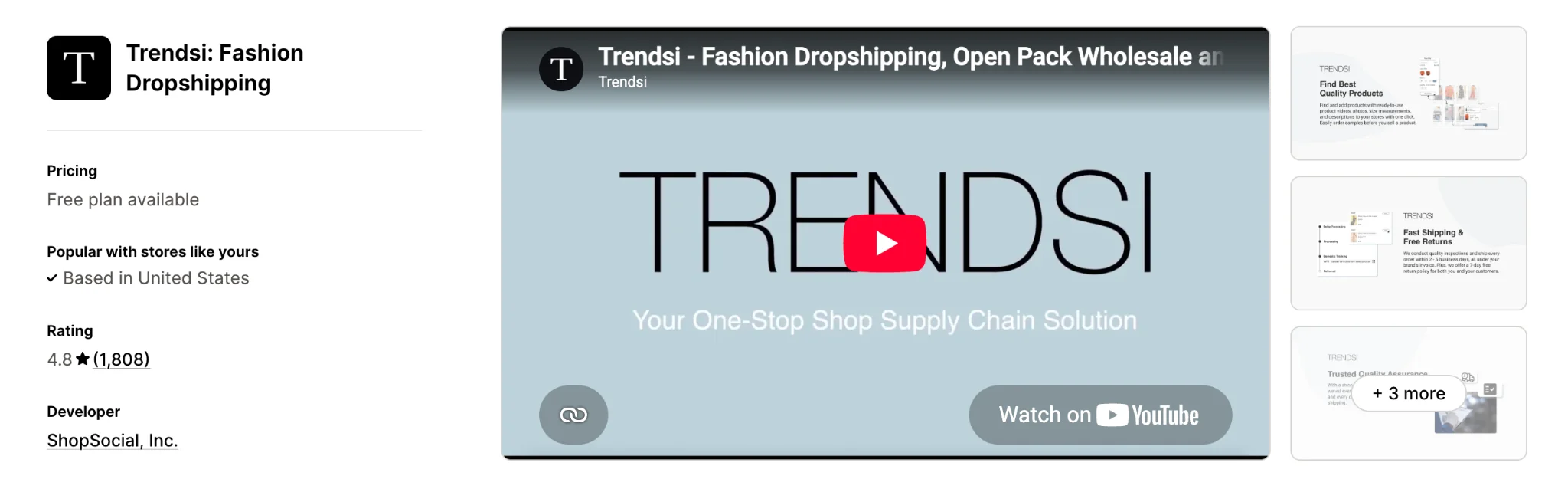
Trendsi is designed primarily for merchants selling fashion products. Rather than offering a broad catalog of unrelated products, Trendsi focuses on apparel and accessories, making it relevant for online boutiques and fashion-focused Shopify stores.
Merchants can browse available styles, import products into Shopify, and use Trendsi to handle order fulfillment. The platform also supports inventory synchronization and offers additional services for businesses interested in developing a fashion brand.
For example, if you’re launching a women’s clothing boutique, you can test different product styles without purchasing large quantities of inventory in advance.
Key features:
- Fashion and apparel product catalog
- Product importing and inventory synchronization
- Dropshipping order fulfillment
- Sample ordering and custom branding options
Pricing: Trendsi offers a free plan with up to 500 product listings. Its Pro plan costs $29.90/month and provides unlimited listings, bulk importing, and additional branding and management features. Product and fulfillment costs still apply.
Limitations: Trendsi is primarily suited to fashion-related businesses. It wouldn’t be the best choice if your store focuses on categories such as electronics, hardware, or general household products.
Best for: Fashion boutiques and Shopify merchants looking to start an apparel dropshipping business.
8. Printful
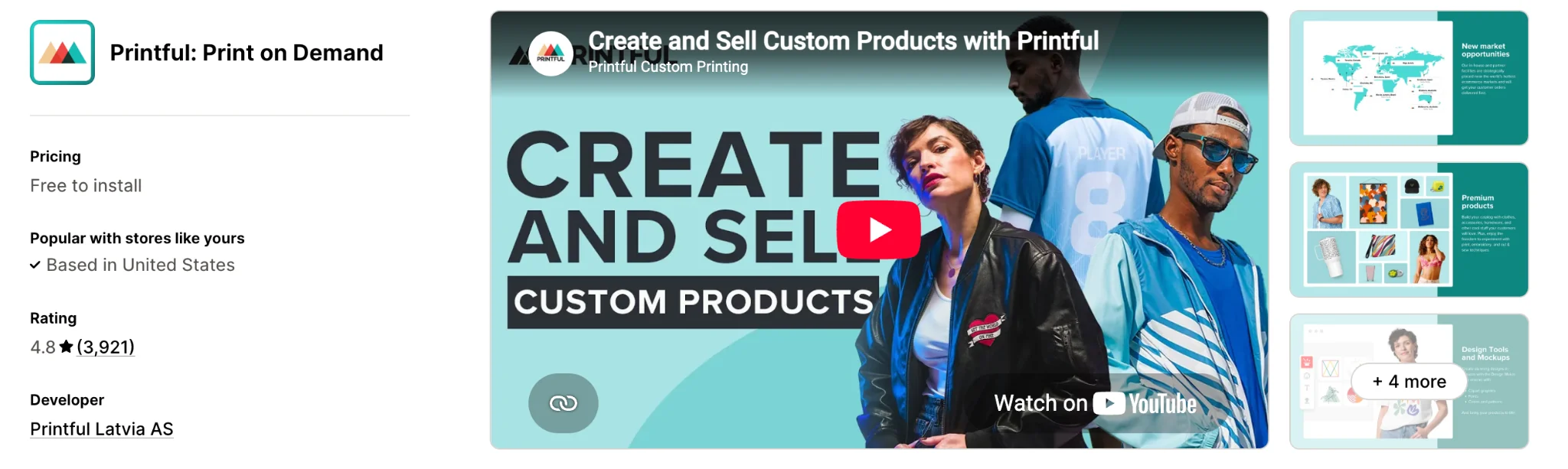
Printful works differently from traditional dropshipping platforms. Instead of choosing existing products from a supplier catalog and reselling them unchanged, Printful lets you add your own designs to products such as T-shirts, hoodies, mugs, and other accessories.
When someone purchases a product from your Shopify store, Printful produces the item and ships it to the customer. You don’t need to purchase finished inventory in advance or maintain your own printing equipment.
For example, if you’re launching a store selling custom T-shirts with original artwork, you can create the designs, generate product mockups, and publish them to Shopify.
Printful takes care of production and fulfillment when orders are placed.
Key features:
- Print-on-demand production and fulfillment
- Design tools and product mockup generation
- Shopify order integration
- Global fulfillment options and branding services
Pricing: Free to install, with production and shipping charges when orders are fulfilled. An optional Growth plan costs $24.99/month and provides additional benefits, including product discounts.
Limitations: Print-on-demand products may have higher unit costs than items purchased in bulk. Production time also needs to be considered when calculating delivery estimates.
Best for: Creators, designers, and Shopify merchants selling personalized or branded merchandise.
9. HyperSKU
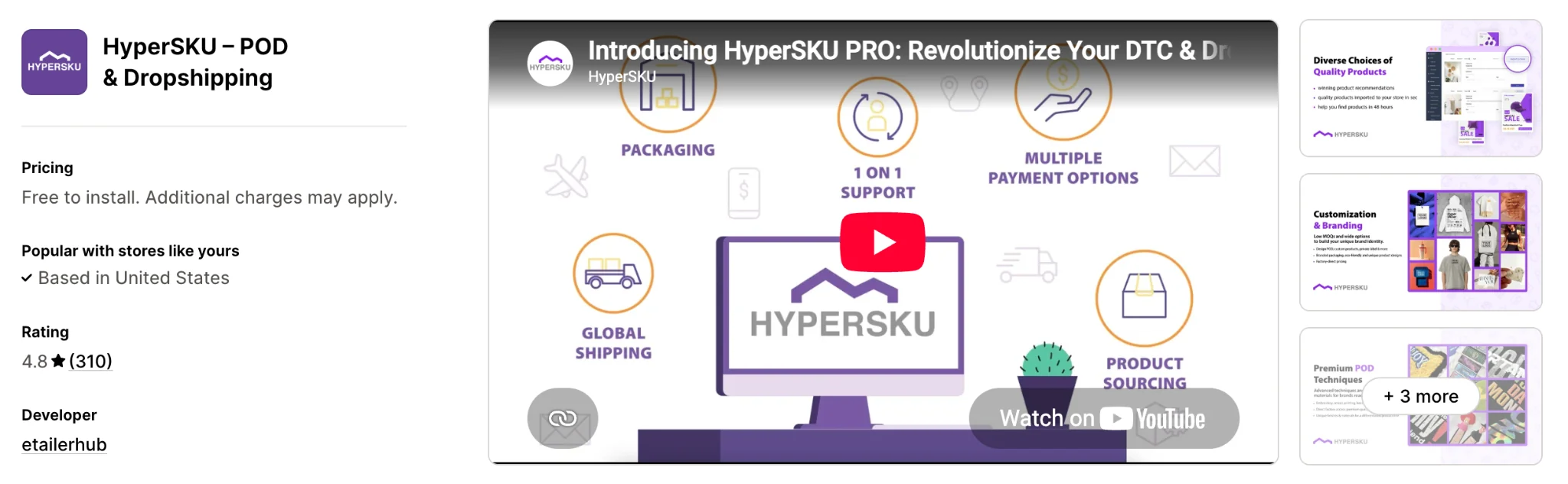
HyperSKU combines product sourcing, fulfillment, and customization services for dropshipping businesses. It is especially useful for merchants who want to move beyond reselling generic products and explore branded packaging or customized items.
The platform helps merchants source products, compare fulfillment options, manage Shopify orders, and arrange shipping. It also offers product customization and print-on-demand services.
For example, if you’ve identified a product that performs well, HyperSKU may help you explore branded packaging or product customization to make your offering more distinctive.
Key features:
- Product sourcing and supplier coordination
- Shopify order synchronization and fulfillment
- Custom packaging and private-label services
- Quality checks, sample requests, and shipping tools
Pricing: Free to install. Merchants cover product and shipping costs, with additional charges potentially applying to customization and other services.
Limitations: Pricing depends on the products and fulfillment arrangements you choose. Merchants may need to request quotes to understand their actual costs, and certain customization services may have minimum order requirements.
Best for: Growing dropshipping stores that want to develop branded products or work more closely with sourcing and fulfillment partners.
10. Shopify Collective
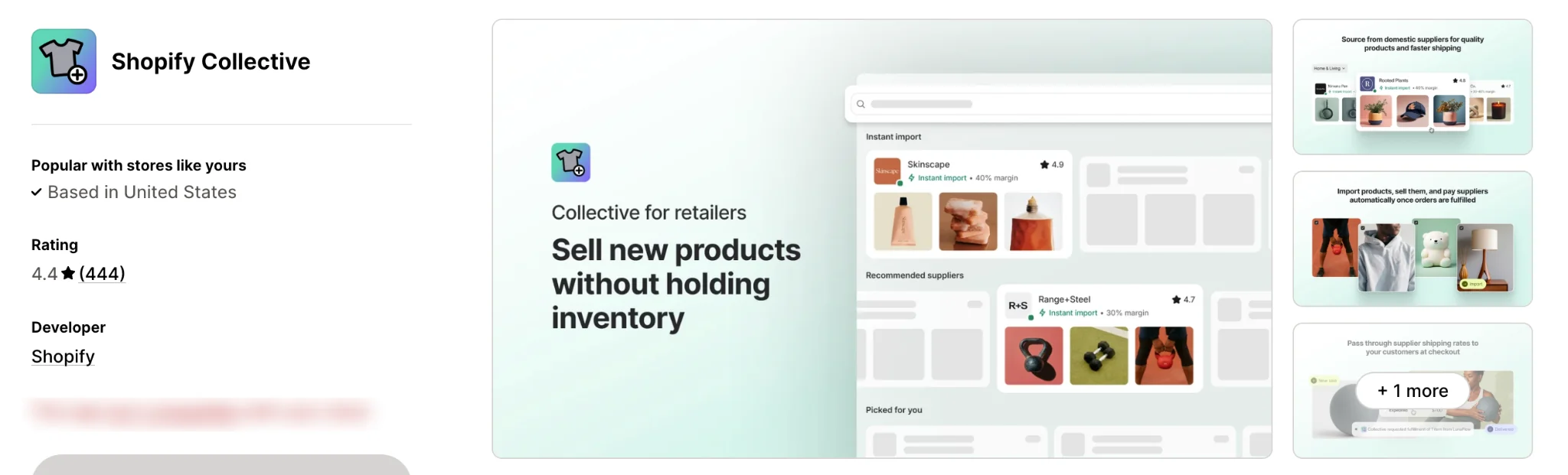
Shopify Collective is Shopify’s own solution for connecting merchants with other Shopify brands. Instead of sourcing products through a conventional dropshipping marketplace, Shopify Collective lets eligible retailers sell products supplied by other Shopify stores.
You can discover participating brands, connect with suppliers, and import approved products into your catalog. When a customer places an order, the supplier handles fulfillment, while order and tracking information are synchronized between the stores.
For example, a Shopify store selling skincare products could partner with a complementary beauty brand and offer additional products without purchasing that brand’s inventory.
Key features:
- Discover and connect with other Shopify brands
- Import supplier products into your store
- Automated order forwarding and tracking synchronization
- Supplier-defined pricing and retailer margins
Pricing: Free for eligible Shopify stores. Retailers purchase products from suppliers at the agreed cost when fulfilling customer orders.
Limitations: Shopify Collective isn’t available to every merchant. Stores must meet eligibility requirements involving supported countries, currencies, Shopify Payments, and other conditions. Retailers generally need to be in the same country and use the same store currency as their suppliers.
Best for: Established Shopify merchants who want to expand their catalogs through partnerships with complementary brands.
The best dropshipping app isn’t necessarily the one with the most products or automation features. What matters is whether it fits your business.
Here are a few things to consider before choosing an app.
1. Consider What You Want to Sell
Start with your product category.
If you’re planning to sell general products sourced through AliExpress, DSers could be a practical choice.
If you want to sell clothing, Trendsi may be more relevant. For custom-designed merchandise, a print-on-demand app such as Printful would make more sense.
Choosing a specialized app can make it easier to find suitable products and suppliers.
2. Check Where Your Suppliers Are Located
Supplier location can affect delivery times, shipping costs, and the overall customer experience.
For example, if most of your customers are in the United States, you may want to prioritize products that can be fulfilled from US warehouses.
Spocket, Syncee, and other sourcing platforms let merchants explore suppliers across different regions.
However, always check the actual shipping location and estimated delivery time for the specific product you’re considering.
3. Look at Inventory and Order Automation
As your store grows, manually checking stock availability and processing orders can take up a lot of time.
Look for apps that can synchronize inventory, update product prices, forward orders to suppliers, and send tracking information back to Shopify.
You should also check how the app handles out-of-stock products, supplier price changes, and canceled orders.
These details become particularly important when you’re managing hundreds of products or working with multiple suppliers.
4. Calculate the Total Cost
Don’t choose an app based only on its monthly subscription.
Consider the supplier’s product price, shipping costs, transaction charges, branding expenses, and any additional fulfillment fees.
For example, an app that costs $40 per month may still be worthwhile if it reduces order-processing time or helps you find better suppliers.
But paying for automation before you have consistent sales may not make sense.
5. Test Suppliers Before Committing
Before adding dozens of products to your store, place sample orders for a few items. Check product quality, packaging, delivery time, and how accurately the supplier communicates shipping updates.
It’s also worth understanding the supplier’s return and refund process.
A dropshipping app can simplify the workflow, but your store is still responsible for delivering a good customer experience.
Several Shopify dropshipping apps advertise free plans or free installation. However, free to install doesn’t mean you can run a dropshipping business without spending money.
For example, CJdropshipping and HyperSKU don’t require an upfront app subscription, but you still pay for products and fulfillment.
Printful works similarly. You can create and publish products without a monthly subscription, but you pay production and shipping costs when orders are fulfilled.
Other apps offer free plans with restrictions.
DSers provides a free Basic plan, while Syncee’s free plan limits the number of products you can import. Zendrop lets you install the app and explore its catalog for free, but linking products requires a paid plan.
It’s important to understand these differences before choosing an app.
Here are the main costs to account for:
- App subscription: Monthly or annual fees for accessing software features.
- Product cost: The amount you pay your supplier for each item.
- Shipping and fulfillment: Charges for packaging, handling, and delivering orders.
- Additional services: Optional fees for branding, custom packaging, or advanced automation.
- Store operating expenses: Shopify subscription fees, payment processing, advertising, and other business costs.
The best approach is to calculate how much profit remains after covering the cost of fulfilling each order.
For example, if you sell a product for $40, pay $18 to your supplier, and spend $7 on shipping, you have $15 left before advertising, payment fees, app subscriptions, refunds, and other expenses.
That remaining amount matters much more than whether the app itself is free.
DSers is a good starting point for beginners who want to source products through AliExpress because it offers a free plan and tools for importing products and managing orders.
Zendrop is another option for merchants who prefer a more guided sourcing and fulfillment platform, although linking products requires a paid subscription. The right choice depends on your product category and budget.
Yes. Apps such as DSers, Syncee, and Trendsi offer free plans, while CJdropshipping, Printful, and HyperSKU are free to install.
However, free plans may restrict certain features, and merchants still need to cover product and shipping costs. Always check the app’s pricing details before installing it.
Apps such as Spocket, Syncee, and Zendrop offer sourcing options that may help merchants find products fulfilled from warehouses closer to their customers.
However, no app can guarantee fast delivery for every product. Actual shipping times depend on the supplier, warehouse location, destination, and shipping service. Always verify delivery estimates for individual products.
Yes. Shopify stores can generally use multiple dropshipping apps. For example, you might use DSers for AliExpress products and Printful for custom merchandise.
However, avoid allowing multiple apps to manage the same products or variants without a clear workflow. Conflicting inventory updates, duplicated listings, or order-routing problems can become difficult to manage.
Shopify doesn’t provide one universal built-in app for all types of dropshipping. However, it offers Shopify Collective, which allows eligible stores to source and sell products from other Shopify brands.
For conventional dropshipping through external supplier marketplaces, merchants generally need to install a third-party app from the Shopify App Store.
Final Thoughts
There isn’t one dropshipping app that’s right for every Shopify store.
If you’re just getting started with AliExpress products, DSers is worth considering. For regional supplier sourcing, Spocket and Syncee provide alternatives. Printful is suitable for custom merchandise, while CJdropshipping and HyperSKU offer broader sourcing and fulfillment services.
If you already run a Shopify store and want to expand your catalog through brand partnerships, Shopify Collective could also be worth exploring.
Before committing to any app, compare its pricing, test a few products, and check how well its suppliers handle fulfillment.
A good dropshipping app should do more than help you add products to your store. It should make inventory management, order processing, and customer deliveries easier as your business grows.


Subcribe to our newsletter