Share:


Table of Contents
A credit note and a debit note are essential accounting documents that facilitate adjustments to invoices after transactions have occurred. They play a crucial role in correcting billing errors, processing returns, and maintaining accurate financial records, thereby enhancing the efficiency of business transactions.
- A debit note is issued by the buyer to inform the seller of returns or billing discrepancies, requesting an adjustment.
- A credit note is issued by the seller to reduce the amount owed by the buyer, often in response to a debit note.
- Debit notes serve as formal requests for refunds or adjustments, while credit notes act as proof of repayment or reduction in the buyer's debt.
- Understanding the distinction between these documents is vital for effective financial management and accurate record-keeping.
- Both notes help businesses manage returns and corrections without canceling the original transaction, ensuring transparency in financial dealings.
- Utilizing these documents correctly can significantly improve a company's invoicing and returns process, fostering better customer relationships.
A credit note and debit note are accounting documents used to adjust invoice amounts after a transaction. Businesses issue them to correct billing errors, record returned goods, or update the amount payable on an invoice.
A debit note (also called a debit memo) is issued by the buyer to notify the seller of returns, damaged goods, or overcharges and request an adjustment. On the other hand, a credit note is issued by the seller to reduce the amount the buyer owes.
These documents help businesses correct invoices without canceling the original transaction. Understanding the difference between a credit note and debit note helps companies track returns, handle billing corrections, and maintain accurate financial records.
A credit note and debit note are documents used in accounting to adjust the value of a previously issued invoice. Businesses issue them when there are returns, damaged goods, pricing errors, or other changes that affect the original transaction.
For example, imagine you bought school supplies worth $100 from a store, but $20 worth of items were damaged. You issue a debit note to the seller for $20, requesting that the amount be adjusted or refunded. It acts like a formal return slip.
The store gives you a credit note for $20, saying, “You don’t have to pay this part, or you can use it for future purchases.” It reduces what you owe.
As mentioned, these notes are key tools for adjusting invoices, managing returns, and maintaining accurate financial records.
The main difference between a debit memo and a credit memo is that the buyer issues the debit note to inform the seller of returns or overcharges and make refund request. The seller issues the credit note to reduce the amount owed by the buyer, adjusting the outstanding balance on an invoice.
Understanding the difference between a debit memo and a credit memo helps businesses manage invoice corrections and returns more effectively.
| Credit Note | Debit Note |
|---|---|
| The seller issues the credit memo to the buyer. | The buyer issues the debit memo to the seller. |
| Credit memos serve as proof that money is being repaid to the buyer, indicating a refund or adjustment in the amount owed. | A debit memo acts as proof of a request for repayment from the buyer’s side, signaling a refund or adjustment. |
| A debit note is issued in exchange for a credit note. | A credit note is issued in exchange for a debit note. |
| Decreases receivables | Increases payables or asks for a refund |
| Records as a sales return | Records as a purchase return |
Ready to begin a detailed comparison of debit notes and credit notes? Let’s jump in!
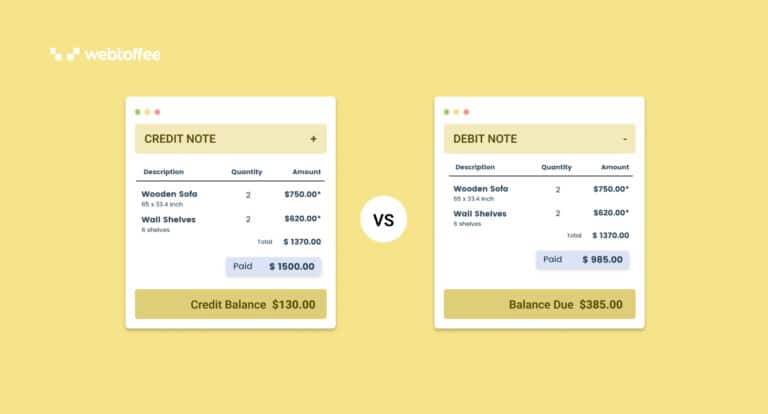
Infographics: Check out this credit note vs debit note infographic to better understand the differences.
A debit note is a document issued by a buyer to notify a seller about an adjustment required on a previously issued invoice.
Buyers typically issue debit memos when they need to request a correction to an invoice or report an issue with purchased goods.
Common reasons for issuing a debit note include:
- Returning goods to the seller
- Reporting damaged or defective items
- Requesting corrections for billing errors
A debit note usually includes details about the transaction, the items involved, and the reason for the adjustment. Once the seller reviews the debit note, they may issue a credit note to reduce the amount owed.
Is a Debit Note the Same as an Invoice?
No. Though the debit note might sound the same as an invoice, both are used in business transactions.
An invoice is used to document a sale or transaction and is often sent in advance to the purchaser as a formal request for payment. On the other hand, a debit note (or debit receipt) is not used to initiate a transaction. Instead, it’s issued after a transaction has occurred, usually to show returns, corrections, or additional charges related to an existing invoice.
A debit note works by notifying the seller that they need to pay back money to the buyer. A debit note is initiated when a buyer realizes that they have paid more money than they should have, need to return goods, or need to get a refund for some reason.
When a seller gets a debit note, they will need to review it, understand the reasons for the increase, and then make the additional payment as instructed in the note.
A debit note includes the following elements:
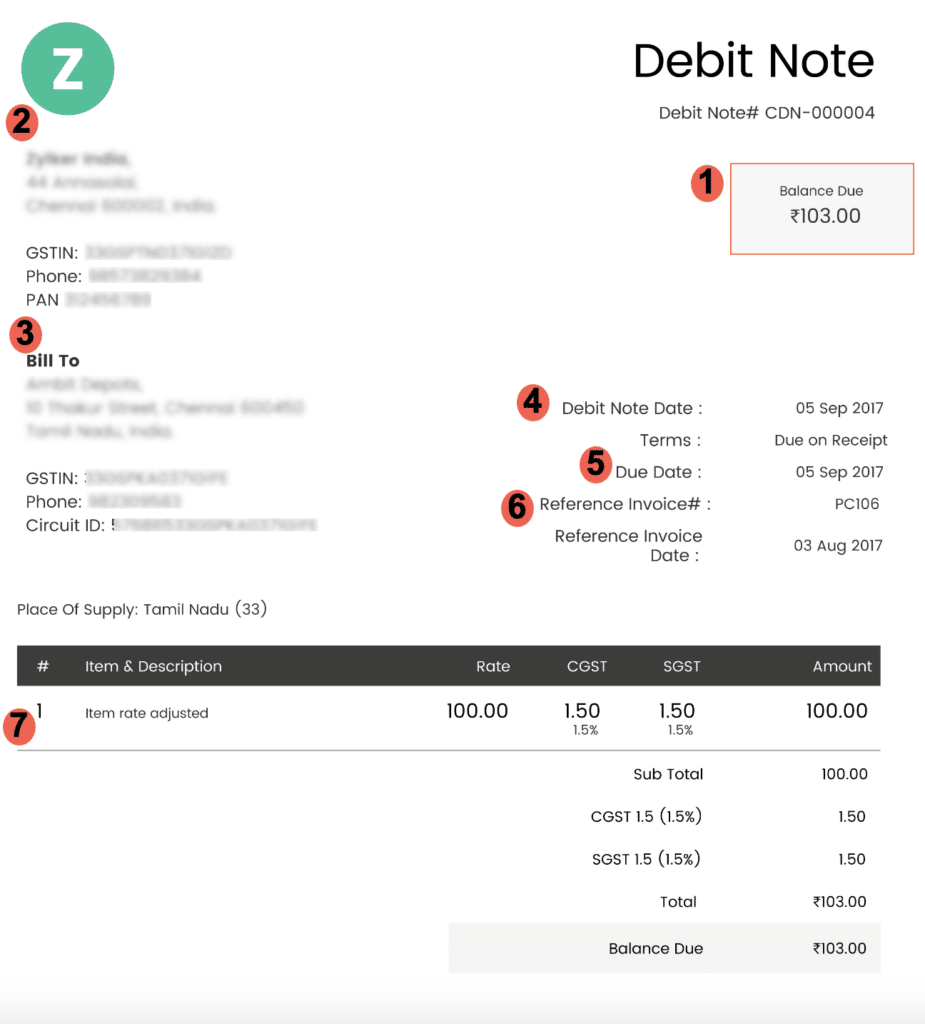
- Balance Due: The debit memo shows the amount due or the additional amount to be paid.
- Sender’s Information: This includes the name, address, and contact details of the company or individual issuing the debit note.
- Recipient’s Information: This includes the name, address, and contact details of the recipient who needs to pay the additional amount.
- Date: The date when the debit note is issued.
- Due Date: The deadline by which the recipient needs to make the payment for the additional charges mentioned in the debit note.
- Reference Details: Information about the original invoice, such as the invoice number and date, to which the debit note is related.
- Description of items: The debit memo breaks down the charges being added, including item names, quantities, prices, and any applicable taxes. A clear explanation of why the additional charges are being applied can also be added. This could include errors, additional items, price adjustments, or other relevant reasons.
A credit note is a document used in accounting to show a reduction in the amount owed by a company or individual. It’s usually provided by a seller or service provider to inform the recipient that they owe less money than originally stated.
Credit notes are often issued to fix mistakes, acknowledge returns, or adjust for discounts or refunds. In simple terms, a credit note means that the recipient owes less money to the seller than the amount initially recorded.
Is a Credit Note the Same as a Refund?
While it’s common to hear credit notes and refunds used interchangeably, they aren’t exactly the same.
A credit note doesn’t return money directly to the customer. Instead, it acts like a store-issued voucher, allowing the buyer to use the credited amount for future purchases.
In contrast, a refund involves repaying the customer through their original payment method fully or partially.
The purpose of credit notes is to formally document and communicate adjustments to financial transactions between a buyer and a seller.
Here are the key reasons credit notes are vital in an online business:
- Correction of Invoice Errors: Credit notes rectify mistakes in invoices, such as incorrect prices, quantities, or discounts. They ensure that both parties have an accurate record of the transaction.
- Returns and Refunds: When a customer returns goods or services due to defects, dissatisfaction, or other reasons, the seller issues a credit note to reflect the reduction in the amount owed. This helps maintain transparency in the accounting process.
- Overpayments: If a customer accidentally pays more than the billed amount, a credit note helps acknowledge and adjust the excess in your accounting system.
- Post-Invoice Discounts and Adjustments: In cases where a seller provides a promotional discount after sharing the initial invoice, a credit note helps document the reduced amount payable.
- Subscription Plan Adjustments: When customers update or cancel their subscription plans mid-cycle, credit notes modify the upcoming invoice amount to reflect prorated charges.
- Account Reconciliation: A credit note assists in reconciling accounts between buyers and sellers. They ensure that both parties have matching records of transactions, helping to avoid confusion and disputes.
- Legal and Regulatory Compliance: Credit notes play a role in adhering to financial and tax regulations. In many jurisdictions, including the EU and India, credit notes are a legal requirement for adjusting invoice amounts. They provide evidence of changes in financial obligations and can be important for auditing and reporting purposes.
Overall, credit notes facilitate accurate and transparent financial transactions between parties by documenting changes to invoices and ensuring that both sides have a clear understanding of the adjustments made.
A credit note works by telling customers they have received a credit or reduction in the amount they owe. It’s like a “money back” note. It’s given by a seller after they’ve already sent an invoice to show that the customer’s bill has been lowered. It’s like a way to fix things if there’s been a mistake or if the customer needs a refund.
When someone receives a credit note, they should review it, understand why the amount is reduced, and adjust their payment accordingly. It helps keep track of accurate payments and balances.
Example: Suppose you issue an invoice for $500. The customer returns a product worth $100. You issue a credit note for $100, reducing their payable amount to $400 or refunding the difference, depending on your policy.
Here’s how the credit note process unfolds:
- Invoice is Issued: The seller sends an invoice to the buyer for products or services rendered.
- Adjustment Triggered: An issue arises, such as a product return, overcharge, or cancellation, that requires a change to the original invoice.
- Credit Note is Created: The seller generates a credit note referencing the original invoice, clearly stating the amount being credited and the reason.
- Buyer Acknowledges the Credit: The customer receives the credit note, confirming that the original payable amount has been adjusted.
- Update Accounting: The credit note is logged into the accounting system, reducing the outstanding balance for that transaction.
The buyer may request a refund or apply the credit to a future purch
A credit note includes the following elements:

- Issuer’s Information: This includes the name, address, and contact details of the company or individual issuing the credit note.
- Recipient’s Information: This includes the name, address, and contact details of the recipient who is receiving the credit.
- Credit Note Number and Credit Date: A unique identification number for tracking and reference purposes and the date when the credit note is issued.
- Reference Details: Information about the original invoice, such as the invoice number, order number, and order date, to which the credit note is related.
- Description of Credit: A breakdown of the credit being applied, including item names, quantities, prices, and any applicable adjustments.
Also read: How to Create Credit Notes in WooCommerce?
Credit notes bring significant advantages for both buyers and sellers, helping to streamline business processes and maintain accurate financial records. From financial clarity to legal protection, here’s how credit notes help streamline operations and build trust in every transaction.
1. Ensure Accurate & Transparent Records
One of the key benefits of credit notes is their ability to correct errors and discrepancies in financial transactions. Whether it’s a mistake in pricing, quantity, or product details, a credit note offers a clear record of the adjustment.
This enhances transparency by ensuring both the buyer and seller are on the same page and that the transaction history remains accurate.
Credit notes prevent misunderstandings and potential disputes over financial obligations by providing a formal means to track and address changes.
2. Enhance Customer Satisfaction
Credit notes play a crucial role in boosting customer satisfaction in the case of refunds or returns. They show customers that their concerns are being addressed in a professional and timely manner. This level of responsiveness builds customer loyalty, a vital component for long-term business success.
A credit note facilitates hassle-free returns, giving customers peace of mind and reinforcing the brand’s commitment to customer service.
3. Strengthen Buyer–Seller Relationships
Issuing credit notes promptly strengthens the relationship between buyers and sellers. By offering a formal and clear resolution to discrepancies or complaints, credit notes promote trust and reliability. This helps to build a long-term, mutually beneficial relationship, making it easier to retain customers and encourage repeat business.
Customers appreciate businesses that uphold fair practices and resolve issues quickly, which can turn a potentially negative experience into a positive one.
4. Simplify Accounting Workflows
Credit notes streamline the process of adjusting transactions, significantly reducing administrative complexities. Compared to manually adjusting invoices or making multiple corrections, a credit note simplifies accounting tasks. Credit memos also allow for quicker issue resolution, saving valuable time for both the seller and the buyer.
It reduces the risk of errors, accelerates transaction processing, and helps businesses stay organized.
5. Support Tax & Audit Compliance
Credit notes provide a clear paper trail for auditing and regulatory reporting. They are critical for maintaining compliance with tax laws and accounting standards, as they document changes to transactions in an official manner.
Credit notes record adjustments in financial statements, making them valuable during audits or reviews by tax authorities.
6. Offer Legal Protection
Credit notes offer legal protection to both the buyer and seller by providing proof of agreed-upon adjustments. In case of disputes or misunderstandings, credit notes act as legal documents that validate the changes to a transaction.
A credit memo protects the rights of both parties, ensuring that any amendments to financial terms or conditions are clearly documented and agreed upon.
Conclusion
Understanding the difference between debit and credit notes is essential for maintaining transparent and accurate financial records. While the buyer issues a debit note to signal returns or corrections, a seller issues credit note to reduce the amount owed by the buyer.
These documents help businesses process returns, adjustments, and disputes efficiently, without compromising the integrity of their accounting. Using tools like the WebToffee WooCommerce PDF invoices plugin can further simplify the process by helping businesses generate and manage professional financial documents with ease.
That’s it, folks! We’ve reached the end of this guide on the key differences between a credit note and debit note. If you’ve got questions, feedback, or insights of your own on what a debit memo or credit memo, feel free to drop them in the comments section.
Thanks for reading!
Credit notes can vary based on the reason for issuance. Common types include sales return, discount adjustments, and quantity differences credit notes.
There are several types of debit notes, including purchase returns and additional charges debit notes.
A credit memo (credit note) is issued by the seller to reduce the buyer’s outstanding balance due to returns or refunds. While a debit memo (debit note) is issued by the buyer to request an adjustment from the seller.
Issuing a credit note means the seller agrees to reduce the amount payable by the buyer. On the other hand, issuing a debit note is initiated by the buyer and signals a claim for a reduction.
A buyer receives 10 damaged items out of a 100-unit order. They return the 10 items and issue a debit note to the seller for the value of those items.
A seller invoices a customer $1,000 but later realizes $150 was overcharged. The seller issues a credit note for $150, which the buyer can use to reduce their payment or apply to a future purchase.
Yes, a credit note is legally binding when it includes all required details such as invoice reference, reason, amount, issuer details, etc. It acts as official proof of an agreement between buyer and seller to amend a previous invoice.
Yes, but with limitations. You can cancel or void a credit note if you issued it in error and it hasn’t been applied to a customer account or reported in tax filings. Once it has been used in accounting records or submitted for compliance purposes, reversing it requires issuing a separate debit note or adjustment entry.


Subcribe to our newsletter