Share:


Table of Contents
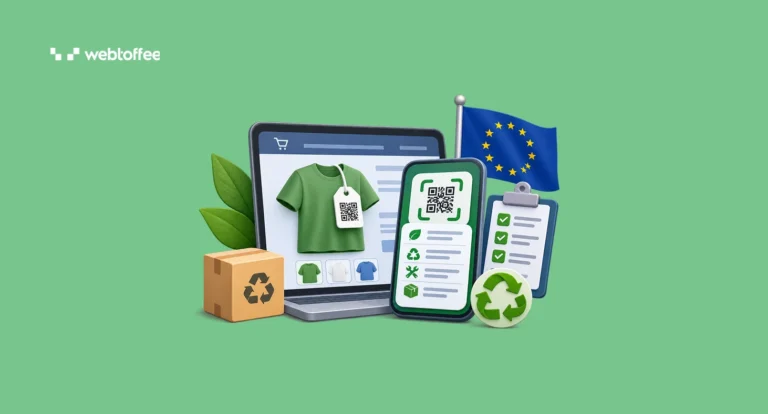
Imagine a customer shopping for a jacket online. Beyond its price, size, and color, they can access information on where it was manufactured, the materials used, its environmental impact, and how to repair or recycle it.
This is what the Digital Product Passport (DPP) aims to facilitate.
The European Union is introducing digital product passports across selected product categories to improve sustainability, transparency, and traceability. For eCommerce businesses selling to EU customers, these regulations will change how product information is collected, managed, and shared.
In this guide, we’ll explain what a digital product passport is, how it works, upcoming EU requirements, and how you can prepare your online store.
A Digital Product Passport (DPP) is a structured digital record containing information about a product, its components, materials, and environmental impact throughout its lifecycle.
It connects physical products to digital information through a data carrier, such as a QR code, allowing consumers, manufacturers, retailers, repairers, recyclers, and regulatory authorities to access relevant product information.
The European Union introduced the DPP framework through the Ecodesign for Sustainable Products Regulation (ESPR).
The initiative aims to:
- Improve transparency and traceability across supply chains.
- Help consumers make informed purchasing decisions.
- Promote product durability, repairability, and recyclability.
- Support sustainable manufacturing and circular business models.
- Help regulatory authorities verify product compliance.
Unlike a traditional product listing that primarily focuses on selling a product, a digital product passport provides information that remains relevant beyond the initial purchase.
For example, a customer could access repair instructions years after purchasing a product, while a recycling facility could use its material composition to determine how to process it.
A digital product passport connects a physical product with a digital record containing its lifecycle information.
Here’s how the process typically works:
- Product data collection: Manufacturers and other responsible businesses gather information about materials, production processes, suppliers, environmental performance, and applicable compliance requirements.
- Unique product identification: A persistent identifier connects the digital record to a particular product model, production batch, or individual item.
- Digital passport creation: The collected information is organized into a structured, machine-readable record that follows applicable standards.
- Data carrier integration: A QR code or another permitted data carrier is placed on the product, packaging, or accompanying documentation.
- Information access: Consumers and other authorized stakeholders access relevant information through the data carrier or an appropriate digital link.
- Lifecycle updates: Authorized parties update the passport when relevant product information changes.
Not everyone accessing a digital product passport will necessarily see the same information. Consumers may see sustainability and repair information, while regulators may have access to additional compliance documentation.
The system is designed around interoperable standards, enabling product information to be exchanged between different organizations and systems without relying entirely on a single technology provider.
Digital Product Passport Standards and Identifiers
DPP systems are designed around open, interoperable standards that allow information to be exchanged between different organizations and software systems.
For example, GS1 Digital Link enables businesses to connect standardized product identifiers, such as Global Trade Item Numbers (GTINs), to online information through web addresses.
The European Commission also published harmonized DPP standards through Implementing Decision (EU) 2026/1736.
Businesses evaluating DPP software should consult the Commission’s official harmonized standards list and applicable product-specific requirements. Using a QR code or GTIN alone does not establish DPP compliance.
The information included in a digital product passport will vary depending on the product category and applicable regulations.
Here are some examples of the information a DPP may contain:
| Information category | Examples |
|---|---|
| Product identification | Unique product identifier, model number, GTIN |
| Manufacturer information | Manufacturer details, production facility |
| Product origin | Country of manufacture, material sourcing |
| Material composition | Raw materials, recycled content, chemical substances |
| Environmental performance | Carbon footprint, energy consumption, resource efficiency |
| Product durability | Expected lifespan, durability information |
| Repairability | Repair instructions, spare parts availability |
| Compliance information | Applicable certifications and conformity documentation |
| End-of-life information | Recycling, disassembly, and disposal instructions |
Not all these data fields will be mandatory for every product.
For instance, a digital product passport for clothing may focus on textile composition, sourcing, and recycling information, while a battery passport may include technical performance, capacity, and battery health data.
This makes accurate and consistent product information particularly important. Businesses that already invest in eCommerce product data enrichment may find it easier to organize the information needed for future DPP requirements.
However, sustainability and compliance-related information must be supported by reliable evidence, not unverified marketing claims.
The EU is introducing digital product passports as part of the Ecodesign for Sustainable Products Regulation. Rather than requiring every product to have a passport immediately, the regulation establishes a framework for introducing requirements progressively.
Which Products Will Require a Digital Product Passport?
Priority product categories identified under the ESPR working plan include:
- Textiles and apparel
- Furniture
- Mattresses
- Iron and steel
- Aluminium
- Tyres
- Information and communication technology (ICT) products
The Commission also plans measures for energy-related products between 2026 and 2029. Specific DPP obligations will depend on the relevant product measures.
Certain batteries are subject to separate passport requirements under the EU Batteries Regulation.
Some product categories, including food, animal feed, medicinal products, and living plants and animals, are excluded from the ESPR framework.
Digital Product Passport Implementation Timeline
The following timeline is based on the European Commission’s DPP roadmap.
| Date | Regulatory milestone |
|---|---|
| July 2024 | ESPR entered into force |
| July 2026 | EU Digital Product Passport Registry launched |
| Late 2026 | Planned adoption of rules for iron and steel |
| February 18, 2027 | Mandatory battery passports for specified battery categories |
| 2027 | Planned adoption of rules for textiles, aluminum, and tires |
| 2028 | Planned adoption of rules for furniture |
| 2029 | Planned adoption of rules for mattresses and certain other requirements |
Under Article 77 of the EU Batteries Regulation, electric vehicle batteries, light means of transport batteries, and industrial batteries exceeding 2 kWh require battery passports from February 18, 2027.
The remaining planned adoption dates should not be interpreted as compliance deadlines. ESPR delegated acts generally provide a transition period of at least 18 months from their entry into force, subject to exceptions.
The roadmap remains subject to change.
What Is the EU Digital Product Passport Registry?
The European Commission launched the Digital Product Passport Registry on July 20, 2026.
The registry provides a central infrastructure for registering product identifiers and required metadata. The underlying passport information is stored in a decentralized manner.
Businesses should monitor official regulatory announcements to understand the registration requirements and compliance deadlines applicable to their products.
Consider an online clothing retailer selling organic cotton T-shirts to EU customers.
Here’s an illustrative example of how passport information could be organized and where the retailer would obtain it.
| Data field | Example | Data source |
|---|---|---|
| Product identifier | Manufacturer-assigned GTIN | Manufacturer |
| Product model | Cotton T-Shirt CT-001 | Manufacturer |
| Material composition | 100% organic cotton | Manufacturer or material supplier |
| Manufacturing origin | Portugal | Manufacturer |
| Supporting certification | Verified organic textile certification | Supplier or certification body |
| Care instructions | Machine wash at 30°C | Manufacturer |
| Repair guidance | Instructions for repairing seams | Manufacturer |
| Recycling guidance | Textile collection instructions | Manufacturer or recycling partner |
| Passport URL | Manufacturer-provided DPP link | Responsible operator or DPP provider |
The retailer can associate this information with its internal SKU in WooCommerce or Shopify and display the appropriate passport link on its product page.
However, the store’s internal SKU is a catalog management field, not necessarily an official passport identifier.
This example is illustrative. Final mandatory textile passport fields will depend on the applicable delegated act, and organic material claims must be substantiated.
1. Your Responsibilities Depend on Your Role
DPP requirements can apply to products placed on the EU market, including products sold online by businesses located outside the EU.
Your responsibilities depend on your role in the supply chain.
| Business model | What you should do |
|---|---|
| Manufacturer or private-label brand | Prepare product documentation and establish compliant passport creation processes. |
| Importer | Verify manufacturer compliance, passport availability, and applicable registration requirements. |
| Retailer or reseller | Obtain valid passport identifiers or links and prepare to make them accessible to customers. |
| Dropshipping business | Identify the responsible manufacturer or importer and verify compliance before listing covered products. |
Retailers selling products under their own brand may assume manufacturer obligations, even if another company produces the goods.
2. Non-EU Sellers Need to Identify an EU-Based Responsible Operator
Under Article 16 of the General Product Safety Regulation (GPSR), covered products require a responsible economic operator established in the EU. This could be an EU manufacturer, importer, authorized representative, or qualifying fulfillment service provider, depending on the circumstances.
If you sell covered products from outside the EU, identify who fulfills this responsibility. Article 19 also requires relevant responsible-person information in online product offers where the manufacturer is outside the EU.
This is an existing product safety obligation that operates alongside DPP requirements.
3. Product Pages May Need to Display Passport Information
Article 9(2)(e) of the ESPR requires product-specific delegated acts to define how customers access digital product passports before purchasing, including during distance selling.
Online retailers will therefore likely need to make passport information or links accessible through product pages or other suitable points in the purchasing journey.
The exact presentation requirements will depend on the applicable delegated act.
4. Product Data and Supplier Coordination Become More Important
Retailers will need reliable access to manufacturer information, product identifiers, sustainability documentation, and passport updates.
For stores with multiple suppliers or large catalogs, maintaining consistent information across sales channels will become an increasingly important part of product experience management.
Digital product passports are part of a broader shift toward sustainable consumption and greater product transparency.
| Regulation | What eCommerce businesses should know |
|---|---|
| Packaging and Packaging Waste Regulation (PPWR) | Harmonized packaging material labels are scheduled from August 2028 at the earliest. Digital data carriers for applicable reusable packaging are scheduled from February 2029 at the earliest. |
| ESPR destruction ban | Destruction of covered unsold apparel, clothing accessories, and footwear is prohibited for large enterprises from July 19, 2026, and medium-sized enterprises from July 19, 2030, subject to exceptions. |
| Right to Repair Directive | National rules were required to apply from July 31, 2026, strengthening repair rights for covered consumer products. |
| Empowering Consumers for the Green Transition Directive | Applicable from September 27, 2026, through national implementing laws. It restricts misleading environmental claims and unsupported sustainability labels. |
Merchants should review sustainability claims on product pages, packaging, and marketing materials alongside their DPP preparation.
Having a digital product passport does not automatically substantiate every environmental claim made about a product.
Even if your products are not currently subject to mandatory DPP requirements, preparing your product data and internal processes early can make future implementation easier.
1. Identify Which Products Fall Under DPP Requirements
Start by reviewing your product catalog against the EU’s priority product categories.
Identify which products are already covered, which may be affected by upcoming regulations, and your business’s responsibilities within the supply chain.
Prioritize products with the earliest applicable compliance deadlines.
2. Audit Your Existing Product Catalog
Review the information you currently maintain for each product.
Check whether your product records contain consistent identifiers, manufacturer information, material specifications, country of origin, and relevant supporting documentation.
Identify missing or outdated information and create a plan to address these gaps.
3. Collect Product Information From Suppliers
Contact manufacturers and suppliers to determine what product lifecycle and sustainability information they can provide.
Establish standardized data collection templates and request supporting documents where necessary.
Consider including product information and update requirements in future supplier agreements.
4. Standardize and Centralize Your Product Data
Avoid maintaining important product information across disconnected spreadsheets, emails, and supplier documents.
Consider using a Product Information Management (PIM) system or another centralized data management solution.
For WooCommerce stores, WebToffee’s Product Import Export Plugin for WooCommerce can help you export product information, review catalog data, and update existing products in bulk. Similarly, Shopify merchants can use StoreRobo Import Export to bulk manage product data and metafields.
These tools can support product data preparation but are not dedicated DPP generation or compliance solutions.
5. Evaluate Digital Product Passport Solutions
Look for specialized DPP solutions that support your industry’s applicable requirements.
Evaluate their ability to manage product identifiers, exchange structured data, integrate with existing systems, control information access, and support registry requirements.
Also consider data portability and long-term passport availability.
6. Prepare Your WooCommerce or Shopify Product Pages
For WooCommerce stores:
- Use structured product attributes for material composition and other relevant specifications.
- Store manufacturer-assigned GTINs in WooCommerce’s global identifier fields.
- Create dedicated custom product fields for passport URLs and identifiers.
- Display passport links through suitable product page templates or custom blocks.
- Configure catalog exports to include relevant passport fields for integration with external systems.
For Shopify stores, use product and variant metafields to store passport references, structured product information, and URLs. Display relevant information using compatible theme sections or blocks.
These configurations provide a technical foundation. The final implementation must satisfy applicable product-specific requirements.
7. Establish a Process for Keeping Product Data Updated
Product information can change when suppliers, materials, or manufacturing processes change.
Assign responsibility for reviewing product information, validating supplier updates, and maintaining accurate records across your systems.
Make sure these changes reach the appropriate passport records through authorized processes.
8. Monitor EU Regulatory Developments
Digital product passport requirements are still evolving.
Regularly review the European Commission’s official announcements, finalized delegated acts, technical standards, and industry-specific requirements.
If you sell internationally through tools such as Shopify Markets, assess how these developments affect your EU product catalogs.
Digital product passports will become mandatory for specific product categories as relevant EU regulations take effect. There is currently no universal requirement covering all products.
The first major deadline is February 18, 2027, for specified battery categories. Compliance deadlines for other products will depend on their respective regulations.
You need to collect required product information, establish compliant identifiers, create a structured digital record, register the passport where required, and provide an appropriate data carrier.
Yes, where applicable. Requirements can cover products placed on the EU market, irrespective of where the manufacturer or retailer is located.
The requirements depend on the products sold, the markets served, and the merchant’s role, rather than the eCommerce platform used.
No. A QR code is a data carrier that connects users to passport information. The passport itself is the underlying structured digital record.
Costs vary depending on catalog size, data collection requirements, software providers, integrations, and ongoing maintenance. There is no universal implementation cost.
Getting Started: Your First 30 Days of DPP Preparation
You don’t need to implement a complete digital product passport system immediately to begin preparing. Start with this 30-day action plan:
- Week 1: Identify affected products, applicable regulations, and your responsibilities.
- Week 2: Audit your product catalog and document missing information.
- Week 3: Contact suppliers and verify responsible economic operators and supporting documentation.
- Week 4: Evaluate data management solutions and test passport fields and links on a small selection of products.
Preparing your product data now can reduce future compliance challenges while helping your business build a more transparent and reliable shopping experience for EU customers.


Subcribe to our newsletter