


Share:


Table of Contents
Shipping is the backbone of any eCommerce business. No matter how great your products are or how smooth your website experience is, if your shipping process is slow, expensive, or unreliable, customers will look elsewhere.
Fast, cost-effective, and hassle-free shipping isn’t just a perk; it’s an expectation. Efficient shipping plays a huge role in customer satisfaction and retention. A smooth delivery experience builds trust, encourages repeat purchases, and can lead to positive word-of-mouth marketing. Conversely, delays, high shipping costs, or lost packages can lead to abandoned carts, negative reviews, and lost revenue.
However, mastering eCommerce shipping isn’t always straightforward. Most businesses often struggle with balancing speed and affordability, handling international shipping complexities, managing returns, and choosing the right carriers. With so many options, rules, and logistics to navigate, it’s easy to feel overwhelmed.
In this guide, we’ll break down everything you need to know about eCommerce shipping, from selecting the proper shipping methods to optimizing costs and improving fulfillment processes. Our goal is to help you develop an efficient shipping strategy that ensures customer satisfaction and supports the growth of your business.
Let’s get started.
Key Takeaways:
- Fast, reliable delivery builds trust and boosts repeat sales, while delays or high costs can hurt your business.
- Finding the right shipping strategy is crucial, especially for international orders and returns.
- Optimizing shipping methods and fulfillment processes ensures happier customers and a more substantial business.

eCommerce shipping is more than just placing an item in a box and dispatching it; it includes various steps that work harmoniously to ensure a smooth shopping experience.
It’s the bridge between your business and customers, getting products from your warehouse (or supplier) to their doorstep.
What is eCommerce Shipping?
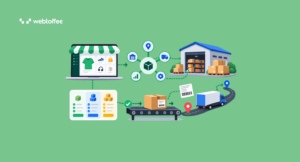
eCommerce shipping refers to the entire process of getting products to customers after they place an order online. This includes choosing the correct shipping method, packaging the product properly, ensuring safe and timely delivery, and even handling returns if needed.
For example, if a customer orders a phone case from an online store, the store needs to:
- Process the order (Confirm payment and prepare the product for shipping)
- Package it securely (Use protective wrapping to prevent damage)
- Select a shipping carrier (FedEx, UPS, USPS, DHL, or a local courier)
- Deliver it on time (Fast and affordable shipping matters!)
- Handle returns if necessary (Make it easy for customers to send items back if needed)
Key Components of eCommerce Shipping

eCommerce shipping has a few essential moving parts:
Order Fulfillment: This is the process of picking, packing, and preparing an order for shipping. Some businesses handle fulfillment in-house, while others use third-party logistics (3PL) providers like Amazon FBA or ShipBob to handle everything for them.
Packaging: Proper packaging protects the product and enhances the customer experience. For example, a premium brand might use custom-branded boxes with eco-friendly packaging, while a budget-friendly retailer might use basic poly mailers to keep costs low.
Delivery: Choosing the correct delivery method is key. Standard shipping (5-7 days) is affordable but slow, while express shipping (1-2 days) is fast but more expensive. Offering multiple options helps customers choose what works best for them.
Returns & Reverse Logistics: No matter how great your product is, some customers will need to return items. A simple and hassle-free return policy builds trust and encourages more sales. For example, Zappos offers free 365-day returns, making it risk-free for customers to buy shoes online.
Domestic vs. International Shipping Considerations
When shipping within your country (domestic shipping), things are usually simpler—fewer regulations, lower shipping costs, and faster delivery times. Local carriers like USPS, Royal Mail, or Australia Post are great for these shipments.
However, when shipping internationally, businesses must consider:
- Customs & Duties: Some countries charge import taxes that customers must pay upon delivery.
- Longer Delivery Times: International shipping can take weeks instead of days. Offering tracked shipping helps ease customer concerns.
- Higher Costs: Shipping fees, currency conversion, and potential tariffs can increase the total cost.
Pro Tip: Be transparent about customs fees, delivery times, and costs to avoid surprises. Offer tracked shipping for peace of mind and consider DDP (Delivered Duty Paid) to streamline the buying experience, reduce cart abandonment, and boost customer satisfaction!

Choosing the right shipping method is essential for finding the right balance between speed, cost, and what customers expect. While not every shopper requires super-fast delivery, they do value reliability and clear communication.
By providing various options, you allow customers to select what suits them best, whether they focus on saving money or getting their items quickly.
Let’s break down the most common shipping methods and when to use them.
1. Standard Shipping: Budget-Friendly but Slower
This is the most cost-effective option, ideal for customers who don’t mind waiting a few extra days. Delivery time usually ranges from 5-7 business days, depending on the destination and carrier.
- Best for: Non-urgent items, budget-conscious shoppers, and businesses looking to keep costs low.
- Example: A small online bookstore may offer free standard shipping on all orders, knowing customers are okay with waiting a few days to get their books.

2. Expedited Shipping: Faster but Costs More
Expedited shipping gets orders to customers quicker than standard shipping, often within 2-3 business days. It’s more expensive, but customers who need their items urgently are willing to pay for speed.
- Best for: Customers who want faster delivery without the high cost of express shipping.
- Example: A clothing store offering “2-Day Shipping for $5” can appeal to last-minute shoppers who need their outfits quickly.

3. Same-Day & Next-Day Shipping – For High-Demand Products
Some businesses thrive on speed. Same-day or next-day delivery is perfect for industries where immediacy matters, like groceries, electronics, or medicine. However, it requires efficient inventory management and a strong logistics network.
- Best for: High-demand industries, urgent items, and customers who expect instant delivery.
- Example: Amazon Prime’s “One-Day Delivery” has set high expectations, making customers more likely to choose sellers that offer fast shipping.

4. Dropshipping and Self-Fulfillment
What is Dropshipping?
Dropshipping is a low-risk, hands-off fulfillment method where you don’t keep inventory. Instead, when a customer places an order, you forward it to a supplier, who then packs and ships the product directly to the customer.
- Best for: New entrepreneurs, low-budget startups, businesses without storage space.
- Example: Imagine you start an online store selling trendy sunglasses. Instead of buying and storing hundreds of sunglasses, you partner with a supplier who ships them on your behalf. When a customer buys a pair, the supplier handles everything from packing to shipping.
What is Self-Fulfillment?
Self-fulfillment (or in-house fulfillment) means you handle everything, storing inventory, packing orders, and shipping them to customers. This method gives you full control but requires more effort and resources.
- Best for: Businesses selling custom or handmade products, brands focused on unique packaging and branding.
- Example: Say you run a handmade candle business. You store the candles in your home or warehouse, pack them with your branding, and ship them using carriers like UPS or USPS. Since you control the process, you can add personalized notes, eco-friendly packaging, or gift wrapping to enhance the customer experience.
5. Carrier-Based Shipping

Carrier-based shipping is the method of sending orders through established courier services like FedEx, UPS, DHL, USPS, and other local carriers. Instead of managing the delivery process yourself, you work with a shipping carrier that handles the transportation of your products to customers, providing tracking, logistical support, and a range of delivery speed options.
Different carriers offer different pricing, speed, and reliability levels. The key is choosing the best fit for your business:
- FedEx & UPS: Known for fast, reliable shipping, especially for express and international orders.
- USPS & Royal Mail: Best for cost-effective domestic shipping and small, lightweight packages.
- DHL: Ideal for global shipping, with strong international coverage.
Example: An online boutique may use USPS First-Class Mail for small domestic orders and DHL for international shipments to ensure cost-effective and reliable delivery.
Shipping costs can make or break an eCommerce business. Charge too much, and customers abandon their carts. Offer free shipping without planning, and your profits take a hit. The key is finding the right balance between cost and customer satisfaction.
Let’s break down how shipping costs are calculated and different pricing strategies that can work for your store.
How Are Shipping Costs Calculated?
Carriers like FedEx, UPS, USPS, and DHL calculate shipping costs based on:
- Weight & Dimensions: The heavier and bulkier an item, the more expensive it is to ship. Some carriers use dimensional weight (DIM weight), meaning large but lightweight packages can still cost more.
- Shipping Distance: Shipping locally is cheaper than internationally. Domestic orders typically have lower shipping costs, while cross-border shipping includes customs fees, duties, and taxes.
- Delivery Speed: Standard shipping is cheaper, while express or same-day shipping costs significantly more.
- Extra Services: Features like tracking, insurance, and signature confirmation can add to the cost.
Pro Tip: Reduce shipping expenses by improving your packaging, picking the right carrier, and offering different delivery speed choices. If you’re shipping high-value items, add tracking and insurance for extra safety!
Mastering Shipping Costs: Pricing Strategies That Work
Shipping costs can make a huge difference in whether a customer completes their purchase or abandons their cart. Price shipping too high, and they might leave. Offer free shipping without a plan, and your profits could take a hit. So, how do you strike the right balance?
The key is to choose a pricing strategy that works for both your business and your customers. Let’s break down the most common shipping pricing models and how they can impact your sales.
Flat Rate Shipping
With flat rate shipping, you charge the same shipping fee regardless of the order’s size, weight, or destination. This makes pricing simple and predictable for customers.
- Best for: Stores with similar-sized products (e.g., books, clothing, small accessories).
- Potential downside: You might lose money on heavier shipments or overcharge for lighter ones.
Free Shipping
Customers love free shipping. It reduces friction and increases conversions. But offering it without a strategy can can hurt your profit margins.
Ways to Offer Free Shipping Without Losing Money:
- Increase Product Prices: Factor shipping costs into your product pricing.
- Set a Minimum Order Value: Offer free shipping on orders over $50 or $75 to encourage bigger purchases.
- Limit It to Certain Locations: Keep free shipping for domestic orders and charge for international shipping.
Real-Time Carrier Rates
With this model, customers see live shipping rates from carriers (FedEx, UPS, USPS, etc.) at checkout. This ensures they’re paying the exact cost of shipping, based on their location and package details.
- Best for: Stores with varied product sizes and international shipping.
- Potential downside: Customers might abandon their carts if rates seem too high.
Local Pickup & Same-Day Delivery
If you have a physical store or local warehouse, offering local pickup or same-day delivery can help customers save on shipping costs while increasing convenience.
- Best for: Businesses with a local customer base.
- Potential downside: Requires efficient logistics to handle same-day orders.
Shipping is often one of the largest costs for an eCommerce business, but reducing expenses doesn’t have to come at the expense of quality. The aim is to ship efficiently, satisfy customers, and preserve healthy profit margins.
Here are some effective strategies to reduce shipping costs while still providing an excellent delivery experience.
1. Use Multiple Carriers

Not all carriers charge the same rates for every package. Some are cheaper for small, lightweight items, while others are better for international or bulky shipments. Instead of sticking with one carrier, compare rates across USPS, FedEx, UPS, and DHL to find the best deals.
2. Optimize Packaging
Shipping costs are often based on dimensional weight (DIM weight), meaning that larger but lightweight packages can still be expensive. Using oversized boxes or unnecessary packaging materials can drive up your costs.

How to optimize packaging:
- Use right-sized boxes to avoid paying for extra space.
- Choose lightweight but sturdy materials to reduce weight.
- Consider poly mailers instead of boxes for soft goods like clothing.
3. Negotiate Bulk Discounts
If you ship a high volume of packages, don’t be afraid to ask for better rates. Many carriers offer discounted shipping rates for businesses that send out a large number of orders.
How to do it:
- Contact your carrier and ask about business shipping discounts.
- If you ship internationally, look for consolidated shipping options to cut costs.
- Use a shipping platform like ShipStation or EasyPost, which negotiates discounted rates for businesses.
4. Offer Local Pickup

If you have a physical store or warehouse, offering local pickup is a great way to eliminate shipping costs. Customers can simply place an order online and pick it up in person, which is both convenient and cost-effective.
5. Use Fulfillment Centers Closer to Customers

The farther a package needs to go, the more expensive the shipping will be. By utilizing third-party fulfillment services (3PLs) such as Amazon FBA, ShipBob, or Deliverr, you can keep your inventory closer to your customers, which helps to lower both delivery times and costs.
Shipping can often be one of the most time-consuming and costly aspects of managing an eCommerce business. However, with the help of technology and automation, you can simplify your entire shipping process, minimize errors, and even cut costs while ensuring customer satisfaction.
Integrated Shipping Software
Integrated shipping software links your eCommerce store with various shipping carriers, such as FedEx, UPS, USPS, and DHL. This automation streamlines order processing, label printing, rate comparisons, and tracking. Rather than managing shipments manually, the software takes care of everything.
Here’s how it simplifies the shipping process:
- Syncs Orders Automatically: Pulls order details directly from your eCommerce platform (WooCommerce, Shopify, Amazon, etc.).
- Compares Carrier Rates in Real Time: Helps you choose the most cost-effective shipping option for each order.
- Generates Shipping Labels Instantly: No need to manually enter addresses or order details.
- Provides Real-Time Tracking Updates: Sends tracking information to customers automatically.
- Manages Returns Efficiently: Automates return label generation and processing.
Automated Label Printing & Order Tracking
Manually printing shipping labels can be incredibly time-consuming, particularly when you have to manage numerous orders each day. Automated label printing makes sure that every package has the correct details, which cuts down on errors and enhances fulfillment speed.
The WebToffee Shipping Label Plugin for WooCommerce makes this even simpler. By adding this plugin to your eCommerce store, you can automatically generate fully customized shipping labels without hassle.
With this plugin, you can:
- Generate labels in bulk for faster fulfillment.
- Customize labels with your logo and branding.
- Bulk download and print shipping labels.
AI-Driven Shipping Predictions & Route Optimization
Artificial Intelligence (AI) is reshaping eCommerce logistics, making shipping faster, smarter, and more cost-efficient. AI-driven shipping tools evaluate large datasets to predict demand, foresee delays, and enhance delivery routes. By analyzing historical trends, weather patterns, and traffic conditions, AI can provide more accurate delivery time estimates, allowing businesses to manage customer expectations better.
It also recommends the most effective carriers for different destinations, ensuring that shipments arrive at customers’ locations quickly and economically. Moreover, AI optimizes delivery routes by identifying the fastest and least congested paths, helping to shorten transit times and lower shipping costs.
Mastering eCommerce shipping might initially seem overwhelming, but with the right strategy, it becomes much more manageable. By choosing the best shipping methods, optimizing costs, and streamlining fulfillment, you can create a smooth, efficient process that keeps customers happy and encourages repeat business.
As your business grows, continuously refining your shipping strategy will help you stay competitive, improve customer satisfaction, and boost conversions. With the right approach, shipping can go from being a challenge to a powerful asset for your business success!
Hope this article has provided a clear understanding of eCommerce shipping and its key aspects. If you have any questions or suggestions, feel free to comment!

Got any query? Please leave a comment or reach out to our support
Got any query? Please leave a comment or reach out to our support

Subcribe to our newsletter




Comment (1)
MAls
January 12, 2026
Great breakdown of eCommerce shipping essentials! As we also review different SaaS tools at TheSoftReview, we found that integrating the right shipping software can significantly streamline operations and improve customer experience.