


Share:


Table of Contents
The world of invoicing is going digital, and it’s happening fast. More and more countries are adopting e-invoicing mandates, requiring businesses to shift from traditional paper or PDF invoices to structured electronic formats.
E-Invoicing isn’t just about following rules; it’s about making your business run smoother. By digitizing invoices, you reduce manual work, cut down on errors, and ensure that every transaction is recorded correctly. It also helps you save time and money while keeping your business tax-compliant, preventing potential fines or penalties.
With the global shift towards digital transactions, understanding e-invoicing now will set you up for long-term success and hassle-free financial management. Whether you’re selling locally or across borders, being prepared means keeping your business future-proof.
In this article, we’ll delve into everything you need to understand about global e-invoicing mandates – why they are being put in place, which regions are involved, and how they affect eCommerce businesses. Additionally, we’ll look at ways to maintain compliance, find the right invoicing solution, and set your store up for success in 2026 and beyond.
Key Takeaways:
- More countries are shifting from traditional invoices to structured digital formats, making compliance essential for businesses.
- Digital invoicing reduces manual work, minimizes errors, and ensures smooth tax reporting, saving businesses time and money.
- Understanding global e-invoicing mandates and adopting the right invoicing solution will help you stay compliant and competitive in 2026 and beyond.

E-invoicing, or electronic invoicing, is a digital way of generating, sending, and processing invoices in a structured format. Unlike traditional invoices, which are typically PDFs or paper-based, e-invoices follow standardized formats like XML or UBL that allow seamless processing across different systems.
This structured format ensures invoices can be automatically read, validated, and recorded without manual data entry.
How is it Different from Traditional Invoicing?
Think of a traditional invoice. It’s usually a PDF or a printed document that requires manual work.
Someone has to create and email it to the customer and then enter the details into accounting software. On the receiving end, the buyer may have to extract data and input it into their system manually. This process is time-consuming and prone to errors.
Now, imagine an e-invoice. Instead of a static PDF, it’s generated in a structured format (like XML), which can be instantly processed by both the sender’s and receiver’s systems. No manual entry, no human errors. Just smooth, automated transactions.
Why Do Structured Formats Matter?
Structured formats like XML and UBL (Universal Business Language) ensure that all invoice details, such as buyer and seller information, tax details, and payment terms, are presented in a machine-readable format. This means that accounting software, tax authorities, and financial platforms can easily interpret and process the data without extra effort.
For example, if you run an eCommerce store and send an invoice to a corporate buyer using an e-invoicing system, their software can automatically extract the necessary details and log the transaction without requiring anyone to enter the data manually. This speeds up payment processing and reduces administrative overhead.
Also Read: How to Create UBL Invoices in WooCommerce?
The Role of Automation in Modern Invoicing
E-invoicing is not just about going paperless; it’s about automation. Modern invoicing systems integrate with accounting platforms, ERP systems, and tax authorities, ensuring compliance and accuracy. Many businesses now use automation to:
- Generate invoices instantly when a purchase is made.
- Send invoices directly to customers or tax authorities in the required format.
- Automatically match invoices with purchase orders for quicker approval.
- Track payment status and send reminders for overdue invoices.
For instance, if you use WooCommerce for your eCommerce store, an e-invoicing plugin can generate invoices automatically and send them to customers in the correct format.

Governments around the world are pushing for e-invoicing, and for good reason. The shift from traditional invoices to digital, structured formats isn’t just about modernizing business processes. It’s about improving tax compliance, reducing fraud, and making financial transactions more efficient for everyone.
Let’s break it down.
1. Strengthening Tax Compliance and Preventing Fraud
One of the biggest reasons governments enforce e-invoicing is to crack down on tax evasion and fraudulent invoicing practices.
Traditional paper or PDF invoices can be easily altered, faked, or misreported, making it difficult for tax authorities to track transactions accurately.
With e-invoicing, invoices are generated and sent in a standardized, machine-readable format (like XML) and often reported directly to tax authorities in real-time. This means:
- Less room for manipulation or human error
- More accurate tax reporting and collection
- Faster detection of suspicious transactions
For example, countries like Italy and India have implemented strict e-invoicing mandates that require businesses to report invoices to the government before sending them to customers. This ensures transparency and prevents tax fraud before it even happens.
2. Standardizing Financial Transactions
Every business handles invoices differently – different formats, layouts, and ways of storing data. This lack of standardization creates confusion, delays, and extra work when businesses need to exchange invoices, especially across borders.
E-invoicing solves this by enforcing a uniform invoice structure, making it easier for businesses, banks, and tax authorities to process them efficiently. A standardized system:
- Ensures invoices can be automatically read and recorded by accounting software
- Makes cross-border transactions smoother and more reliable
- Helps businesses avoid costly invoicing errors
Think of it like digital payments. When you use a credit card or online payment system, it follows a standard format that works everywhere. E-invoicing is doing the same for invoices.
3. Reducing Administrative Burden and Boosting Efficiency
Let’s face it. Manual invoicing is time-consuming and prone to mistakes. Processing paper invoices or even PDF invoices often requires multiple steps, from creating and sending the invoice, manually entering details into accounting systems, etc.
With e-invoicing, much of this process is automated. The invoice is created in a structured format, sent instantly, and integrated into financial systems with minimal human involvement. This means:
- Faster processing and approval times
- Fewer errors and disputes
- Reduced paperwork and administrative workload
For businesses, this translates to faster payments, improved cash flow, and less time spent on tedious invoice management. For governments, it means tax revenues are collected more efficiently with fewer discrepancies.

E-invoicing is becoming the new norm worldwide, with governments rolling out mandates to improve tax compliance, streamline business transactions, and reduce fraud. If you’re running an e-commerce store, it’s crucial to understand how these regulations may impact your operations, especially if you sell internationally.
Here’s a concise overview of how different regions will approach e-invoicing in 2026.
1. European Union – ViDA and Country-Specific Mandates
The EU is pushing forward with its VAT in the Digital Age (ViDA) initiative, which aims to modernize the tax system and make e-invoicing a standard across member states. Several countries are already enforcing their own mandates:
- Germany: Starting January 1, 2025, Germany requires all businesses to be capable of receiving e-invoices compliant with the European Norm (EN) 16931. While sending e-invoices is optional initially, it becomes mandatory in phases in the coming years.
- Denmark: As of January 1, 2025, medium and large companies must use digital bookkeeping systems that comply with the Danish Business Authority’s requirements, including support for standardized e-invoicing.
- Portugal: The B2G (business-to-government) e-invoicing mandate now applies to all companies, expanding from its previous focus on large enterprises.
- Romania: Mandatory B2C (business-to-consumer) e-invoicing has been enforced nationwide since January 1, 2025, aiming to improve tax compliance and reduce the shadow economy.
2. United States – Voluntary Adoption on the Rise
Unlike many other regions, the U.S. does not have a federal e-invoicing mandate, at least not yet. However, businesses are increasingly moving towards digital invoicing to improve efficiency and reduce costs.
Major corporations and government agencies are starting to adopt Peppol, a global e-invoicing network, for standardized transactions. While e-invoicing is currently voluntary, many businesses are shifting towards it to stay ahead of future regulations.
3. Latin America – A Pioneer in E-Invoicing
Latin America has been at the forefront of e-invoicing mandates for years, with Brazil, Mexico, and Argentina leading the way. Governments in these countries require businesses to issue invoices in XML format and submit them in real time to tax authorities.
- Mexico: Mexico’s CFDI system continues to be one of the most advanced e-invoicing models, requiring companies to verify invoices with the tax authority before sending them to customers.
- Brazil: Brazil’s Nota Fiscal Eletrônica (NF-e) ensures transparency in transactions and is integrated with the country’s tax system.
- Argentina: Argentina mandates electronic invoicing for nearly all businesses, helping the government track economic activity more effectively.
4. Asia-Pacific – Rapid Expansion of E-Invoicing
Countries in Asia-Pacific are accelerating their e-invoicing programs to improve tax compliance and streamline business processes.
- India: India has been rolling out e-invoicing requirements in phases. In 2026, more businesses including smaller companies are required to adopt e-invoicing for tax reporting and GST (Goods and Services Tax) compliance.
- China: China is expanding its electronic VAT invoice (e-fapiao) system, making it easier for businesses to handle tax invoices digitally.
- Malaysia: Malaysia made e-invoicing mandatory in January 2025 for businesses with an annual turnover above €5 million.
- Singapore: Singapore has strengthened its Peppol e-invoicing framework, making cross-border invoicing easier and more standardized.
5. Middle East & Africa – Steady Progress in Compliance
The Middle East and parts of Africa are actively rolling out e-invoicing mandates to modernize their tax systems and reduce fraud.
- Saudi Arabia: Saudi Arabia implemented its e-invoicing system (FATOORA) in two phases, requiring businesses to issue e-invoices and integrate with government tax platforms.
- UAE: United Arab Emirates (UAE) is enhancing its tax compliance framework with expanded e-invoicing requirements for VAT-registered businesses.
- Egypt & South Africa: Other countries in the region, like Egypt and South Africa, are working on phased implementations of e-invoicing to improve transparency in business transactions.
What This Means for Your Business
E-invoicing is no longer just an option. It’s becoming a global standard.
Whether it’s mandatory in your country or not, adopting e-invoicing now can help streamline operations, reduce manual work, and improve financial accuracy.
If you’re an eCommerce store owner, now is the time to:
- Check your country’s e-invoicing requirements.
- Invest in an invoicing solution that supports structured formats like XML or UBL.
- Automate your invoicing process to save time and ensure compliance.
e-invoicing mandates are becoming more common worldwide, and ensuring compliance is essential to avoid penalties, streamline operations, and keep your business running smoothly.
If you’re an eCommerce store owner, following the right steps will make the transition seamless.
Here’s what you need to do:
1. Understand Country-Specific Regulations
The first and most crucial step in e-invoicing compliance is understanding the rules in your country or any country you do business.
E-invoicing is not a one-size-fits-all system; each region has different formats, submission methods, and compliance requirements. Staying informed about these regulations will help you avoid penalties, ensure smooth transactions, and maintain good standing with tax authorities.
Pro Tip: Keep an eye on regulatory updates, as e-invoicing rules are evolving quickly. You can check government tax authority websites or consult an expert if you’re unsure.
2. Choosing the Right E-Invoicing Solution
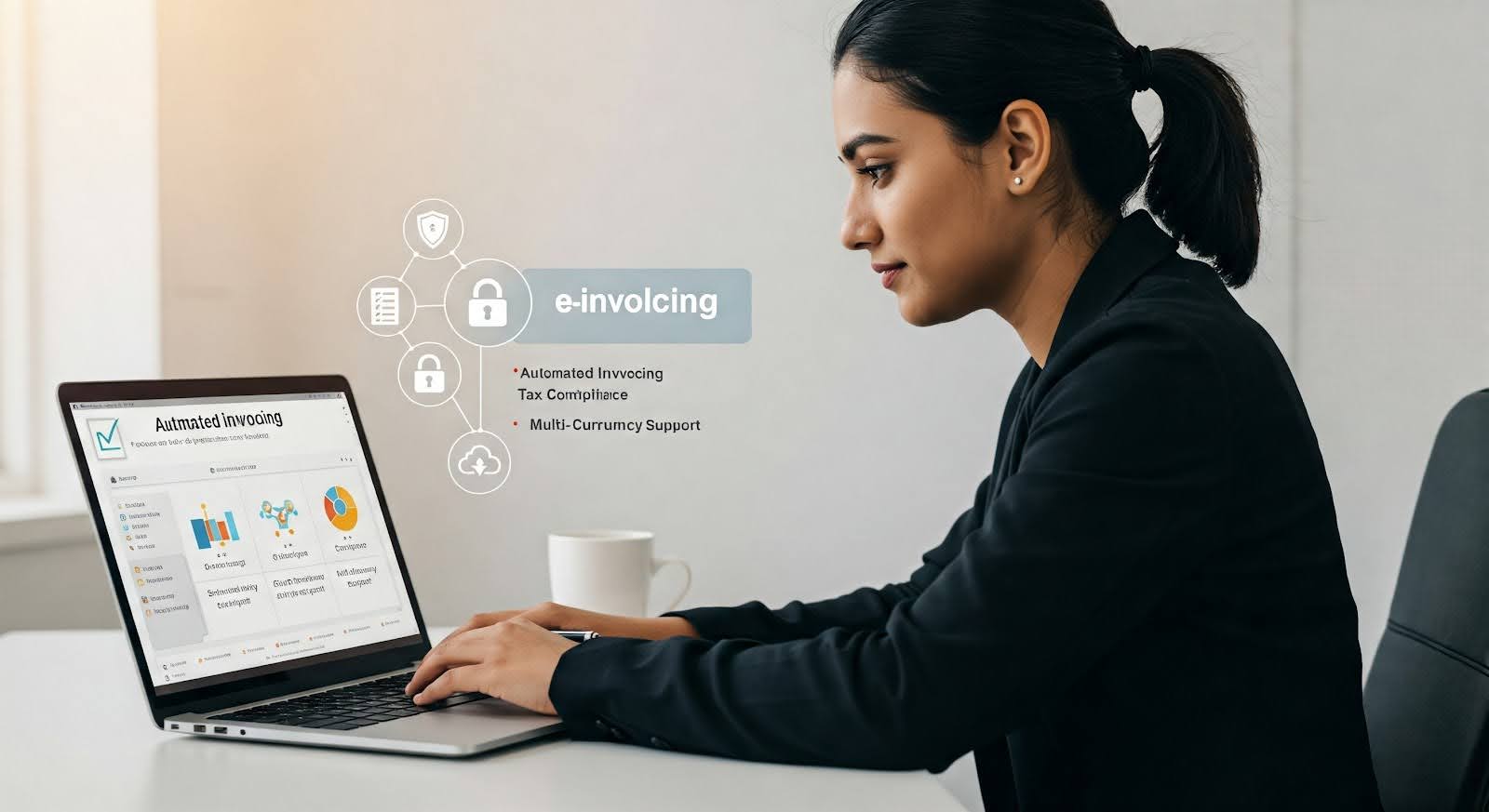
With e-invoicing becoming a global standard, choosing the right invoicing system is more important than ever. The right solution can save you time, keep your business compliant, and make financial management effortless.
But with so many options out there, how do you pick the best one for your eCommerce store?
Here’s what to consider.
Key Features to Look for in an E-Invoicing System
Not all invoicing tools are created equal.
A good e-invoicing system should do more than just generate invoices. It should automate processes, ensure compliance, and integrate with your existing setup.
Look for these essential features:
- Automated Invoice Generation – The system should automatically generate and send invoices once an order is completed, saving you from manual work.
- Compliance with Local Regulations – Ensure the software supports the required formats (like XML, UBL, or Peppol) and complies with tax regulations in your country.
- Tax Calculation and Reporting – A built-in tax calculation feature makes it easier to manage VAT, GST, or sales tax without errors.
- Customizable Templates – Your invoices should reflect your brand with custom layouts, logos, and design elements.
- Multi-Currency & Multi-Language Support – If you sell internationally, your e-invoicing system should handle different currencies and languages.
- Audit Trail & Security Features – A secure system should track changes and store invoices safely to meet legal requirements.
- Recurring Billing & Subscription Support – If you offer subscriptions, your invoicing system should handle automated recurring invoices.
Integration with WooCommerce, Shopify, and Other Platforms
If you run an eCommerce store, integration with your platform is key. A standalone invoicing system that doesn’t sync with your sales platform will create extra work and potential errors.
- WooCommerce: Look for an invoicing plugin that connects directly with WooCommerce and automatically generates invoices for each order. Bonus points if it includes features like packing slips and credit notes.
- Shopify: Shopify has built-in invoicing features, but third-party e-invoicing apps can offer more customization and compliance options.
- Other Platforms (Magento, BigCommerce, etc.): Choose an invoicing tool that integrates smoothly with your eCommerce backend to streamline order processing.
Pro Tip: Many invoicing solutions offer API integrations, allowing you to connect them with multiple platforms, accounting tools, and tax authorities for automated reporting.
3. Ensure Security and Data Protection Compliance
E-invoicing isn’t just about automation and compliance. It also involves handling sensitive financial data, making security a top priority. Here’s how you can keep your e-invoicing secure and legally compliant.
Use Secure Storage to Protect Invoice Data
Invoices contain critical details like customer names, addresses, tax IDs, and payment information. If this data falls into the wrong hands, it could lead to fraud or financial loss. To prevent this:
- Store invoices in a cloud-based invoicing system with end-to-end encryption to ensure secure access.
- Avoid saving invoices on personal computers or unsecured devices where they can be easily lost or hacked.
- Regularly back up invoice data to protect against accidental loss or cyberattacks.
Follow GDPR and Local Data Protection Laws
If you operate in the European Union (EU) or sell to EU customers, your invoicing system must comply with GDPR (General Data Protection Regulation). Many other regions also have strict data protection laws that businesses need to follow.
- GDPR Compliance: Ensures that customer and financial data is collected, stored, and processed securely.
- Local Data Laws: Countries like Brazil (LGPD), the U.S. (CCPA), and India (DPDP) have their own data protection regulations that may impact how invoices are stored and shared.
- Data Retention Policies: Some regions require businesses to store invoices for a specific number of years (e.g., 6 years in the UK and 10 years in Germany). Make sure your invoicing system can handle long-term storage.
Set Up an Audit Trail for Transparency
An audit trail is like a digital record of all invoice-related actions—who created it, who modified it, and when it was sent. This is especially important for tax compliance and fraud prevention.
- Make sure your invoicing system logs every invoice change to track edits, approvals, and submissions.
- Store timestamped records of all invoices, including payment confirmations and tax authority submissions.
- If there’s ever a dispute or audit, a detailed invoice history can help you prove compliance.
Pro Tip: Many e-invoicing plugins for WooCommerce and Shopify include audit trail features, making it easier to track transactions.
Limit Access to Sensitive Invoice Data
Not everyone in your business should have access to financial records. Limiting access to invoicing data helps protect against internal fraud and accidental changes.
- Role-Based Access Control (RBAC): Assign roles so that only authorized employees can view, edit, or send invoices.
- Multi-Factor Authentication (MFA): Add an extra layer of security when logging into your invoicing system.
- Restrict Downloads and Exports: Prevent unauthorized users from exporting or printing invoices without approval.

The world of e-invoicing is evolving rapidly, and the future promises smarter, faster, and more secure invoicing solutions.
Let’s take a look at what’s coming beyond 2026 and how these trends will shape the future of digital invoicing.
1. AI-Powered Invoicing Automation
Artificial intelligence (AI) is transforming how invoices are generated, processed, and analyzed.
Imagine having an invoicing system that automatically categorizes invoices, flags potential fraud, and even suggests tax-saving strategies, all without human intervention. AI will not only make invoicing more accurate and efficient but also reduce workload for business owners.
Example: AI-driven chatbots will soon handle invoice-related queries, allowing businesses to automate customer support for billing and payment issues.
2. Blockchain for Secure and Tamper-Proof Transactions
One of the biggest concerns with invoicing is fraud and document tampering. Blockchain technology is set to revolutionize digital invoicing by ensuring that invoices are secure, immutable (cannot be altered), and transparent.
Each invoice will be stored as a digital record on a decentralized blockchain ledger. Once an invoice is recorded, it cannot be modified, preventing fraud and unauthorized changes.
Blockchain makes invoices more secure by preventing duplicates and ensuring they can’t be altered. It also creates a clear history of each invoice, reducing disputes between buyers and sellers. Plus, it speeds up international transactions by removing middlemen, making invoicing faster and more reliable.
3. Real-Time Tax Reporting & Digital VAT Compliance
Governments are moving towards real-time tax reporting, meaning businesses will need to submit invoices instantly to tax authorities instead of filing reports weeks or months later.
For example, the EU’s VAT in the Digital Age (ViDA) initiative is pushing for real-time VAT reporting across member states, ensuring that businesses stay compliant automatically.
E-invoicing is no longer just a trend. It’s becoming a global standard. As more governments enforce regulations, businesses need to adapt to stay compliant and streamline their operations.
E-invoicing helps reduce manual work, minimizes errors, enhances security, and ensures smoother tax compliance.
Adopt an e-invoicing solution that automates invoicing, integrates with your eCommerce platform, and meets compliance requirements in your region. Whether you’re a small business or a large enterprise, making the switch now will future-proof your operations and keep your business running smoothly.


Subcribe to our newsletter


