Share:


Table of Contents
Purchase orders and invoices are critical documents in B2B transactions, serving distinct but complementary roles. A purchase order (PO) is issued by the buyer to authorize spending and detail the terms of an order, while an invoice is sent by the seller to request payment for goods delivered, making the understanding of both essential for effective financial management and fraud prevention.
- A purchase order is a buyer's formal request for goods, establishing terms before any transaction occurs.
- An invoice is a seller's document requesting payment after goods have been delivered, often referencing the corresponding PO number.
- The timing of these documents is crucial; a PO is issued before delivery, while an invoice follows it.
- Three-way matching involves comparing the purchase order, goods receipt, and invoice to ensure accuracy before payment is made.
- Skipping a purchase order can lead to financial risks, including fraud, overpayments, and budget overruns.
- Clear documentation and adherence to PO processes streamline accounts payable and help prevent payment disputes.
Purchase orders and invoices appear in almost every B2B sale, and they often carry the same buyer details, line items and totals. That overlap is why the purchase order vs invoice is often confusing to so many new business owners.
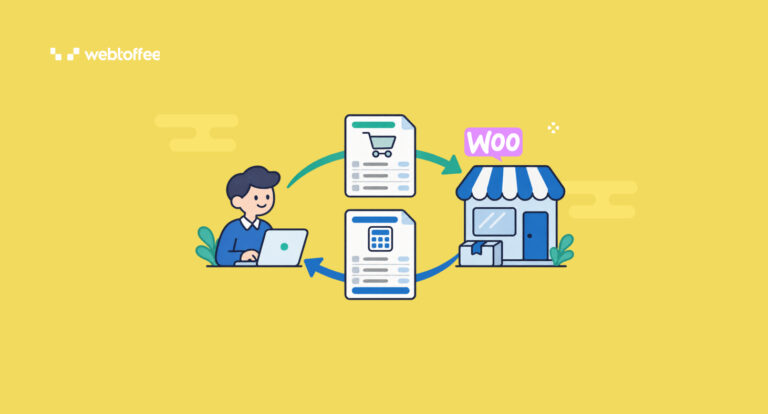
Buyers use purchase orders to approve spending before it happens. Sellers use invoices to collect payment after delivery. Both describe the same deal from opposite sides, and payments stall when the two don’t match.
Buyers have their own reasons to care. In a recent survey, 76% of US organizations reported attempted or actual payments fraud in 2025. A purchase order gives finance teams a record to test every incoming bill against.
In this guide, we’ll explain how the invoice and purchase order differ, walk through the order in which they appear in a B2B deal, show how three-way matching works, and cover the risks of skipping the PO.
Buyers send a purchase order to a seller to place an order. It lists the products, quantities, agreed prices, delivery date and payment terms, and carries a unique PO number. Once the seller accepts it, the PO becomes a binding agreement on those terms.
The key purpose is to establish control. It gives the company’s management and finance team visibility into upcoming expenses before an invoice arrives.
What Does a Purchase Order Include
Most POs carry the same core fields:
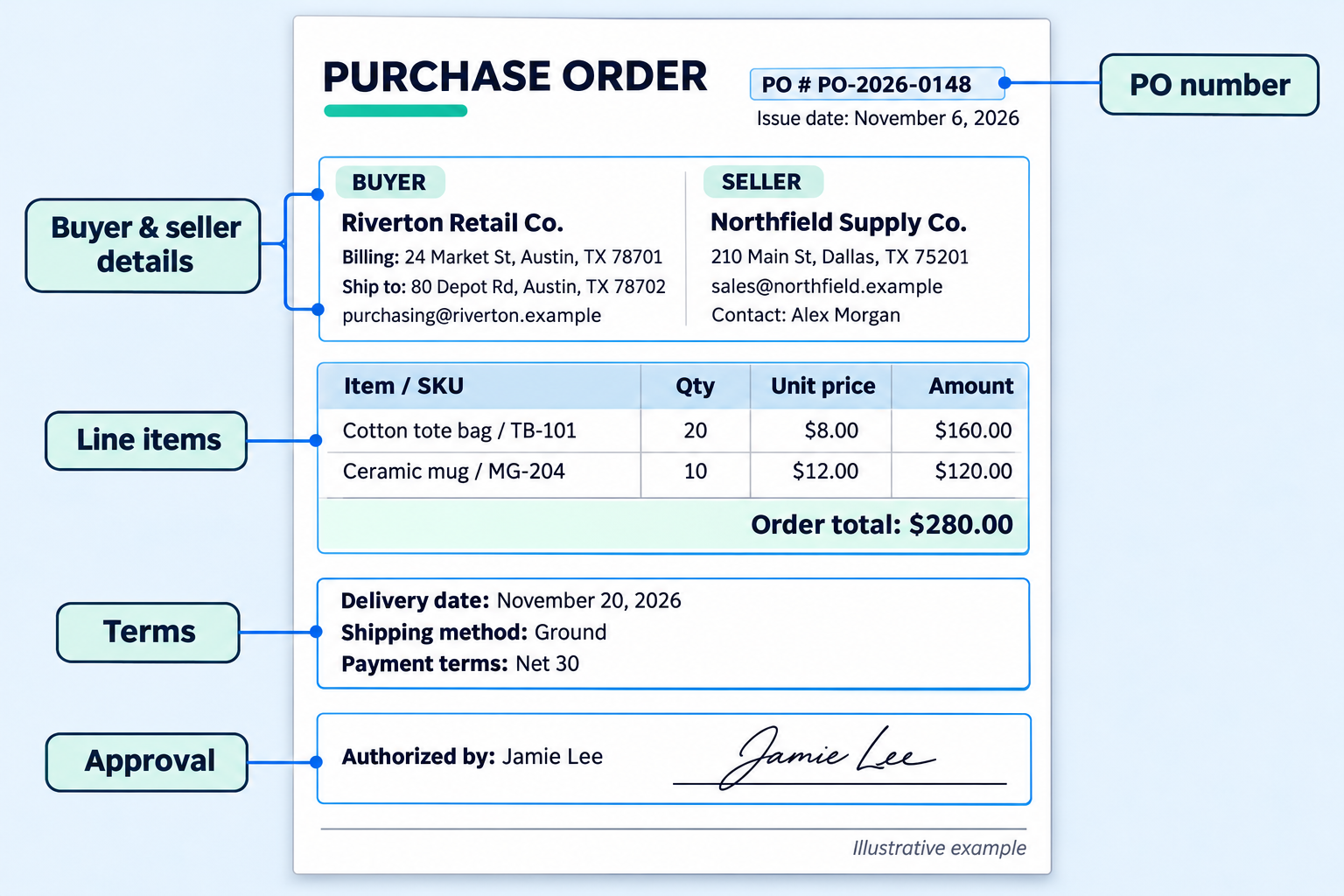
- PO number: a unique reference the buyer uses to follow the order through delivery and payment.
- Buyer and seller details: company names, billing and shipping addresses, and contact info.
- Line items: product names or SKUs, quantities and unit prices agreed in advance.
- Terms: delivery date, shipping method and payment terms such as Net 30.
- Approval: the name or signature of the person who authorized the purchase.
When Businesses Use Purchase Orders
POs show up most in B2B, wholesale, manufacturing, government and education purchasing. Many organizations set a spending threshold: anything above, say, $500 needs a PO, while small items like office celebration go on a company card.
Some buyers also issue a blanket PO that covers repeat orders from one supplier over a set period.
For a seller, the PO is the buyer’s green light to ship.
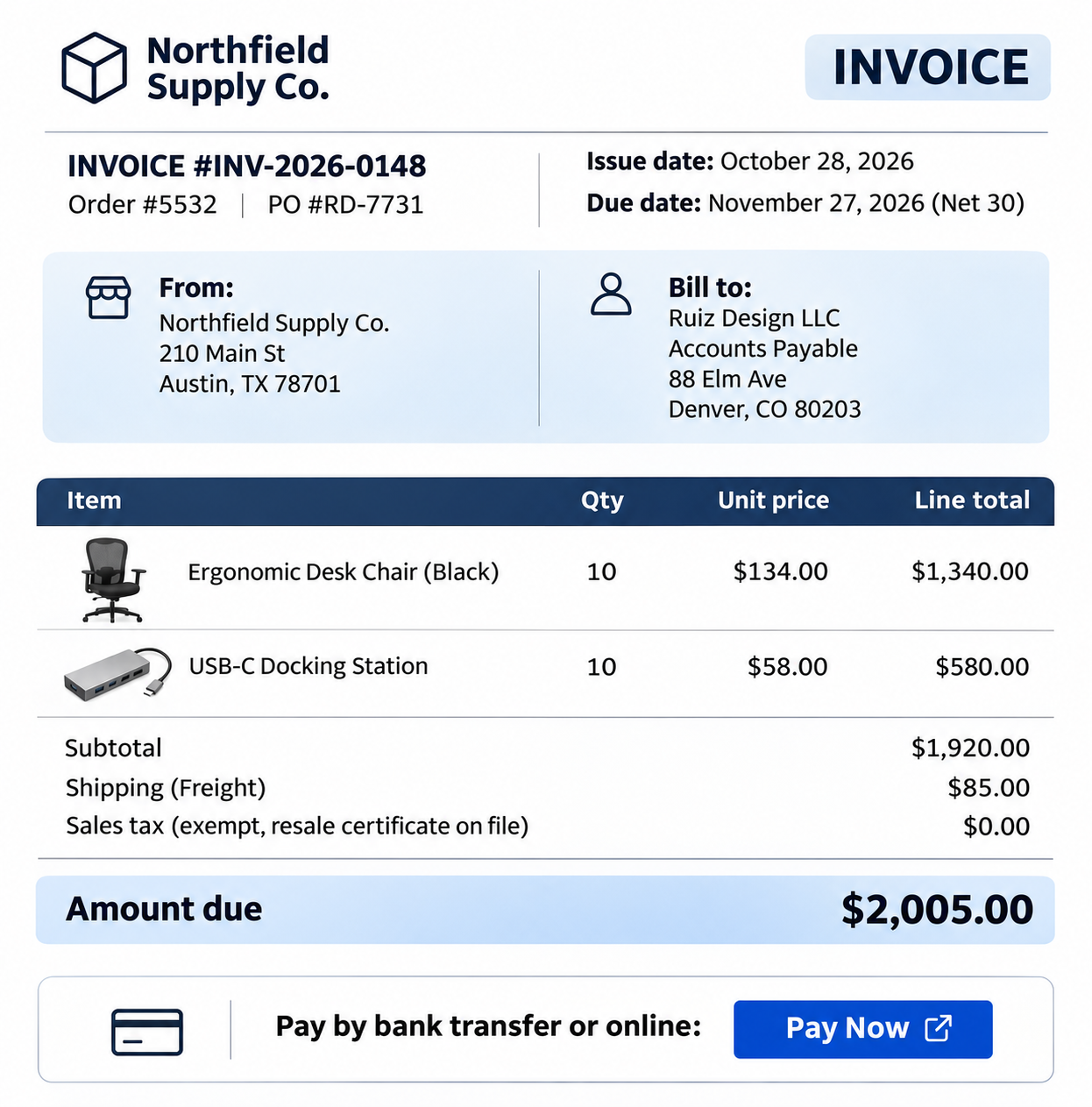
An invoice is a document a seller sends to a buyer to request payment for the goods bought. It shows an invoice number and date, the items supplied, prices, taxes, the total due, the payment due date and how to pay. In B2B sales, it usually lists the buyer’s PO number too. Invoices also double as tax records, so it contains details such as tax IDs and tax amounts.
For the seller, an invoice records a sale and money owed (accounts receivable). For the buyer, the same document becomes a bill to pay (accounts payable). That’s why accountants sometimes call it a sales invoice on one side and a purchase invoice on the other.
WooCommerce doesn’t create PDF invoices out of the box. A plugin such as WooCommerce PDF Invoices, Packing Slips and Credit Notes generates one for each order and attaches it to the order email.
The main difference between a PO and an invoice is who sends it and why. A buyer sends a purchase order to request goods and commit to a price. A seller sends an invoice after delivery to request payment. The PO authorizes spending; the invoice asks for the money.
| Factor | Purchase Order | Invoice |
| Issued by | Buyer | Seller |
| Sent to | Seller | Buyer |
| Timing | Before goods ship or work starts | After delivery or at an agreed milestone |
| Purpose | Place and authorize an order | Request payment |
| Reference number | PO number | Invoice number, plus the PO number |
| Payment details | Payment terms only | Amount due, due date, payment methods |
| Accounting effect | Tracked as a commitment | Accounts receivable (seller), accounts payable (buyer) |
| Legal status | Binding once the seller accepts it | Formal payment request and tax record |
The two documents also overlap on purpose. Both list the buyer, the seller, the same line items and the PO number, so accounts payable team can compare them line by line.
Other Documents in the Procurement Workflow
Three other documents often appear around a PO,
- Quote: the seller’s price offer before any order. It tells the buyer what the goods will cost, so they can raise a PO for that amount.
- Proforma invoice: a preliminary bill the seller sends before delivery. It looks like an invoice but isn’t a demand for payment. Buyers use it for internal approval, prepayment or import paperwork.
- Receipt: proof of payment that the seller hands over once the buyer settles the invoice.
A purchase order always comes before the invoice. The buyer raises a PO to order the goods, the seller ships them, and the seller bills for them afterward with an invoice that references the PO number.
In prepaid deals, a seller may send a proforma invoice before delivery, but the final invoice still follows the PO.
Here’s how a typical B2B order moves from request to payment, with both companies taking part:
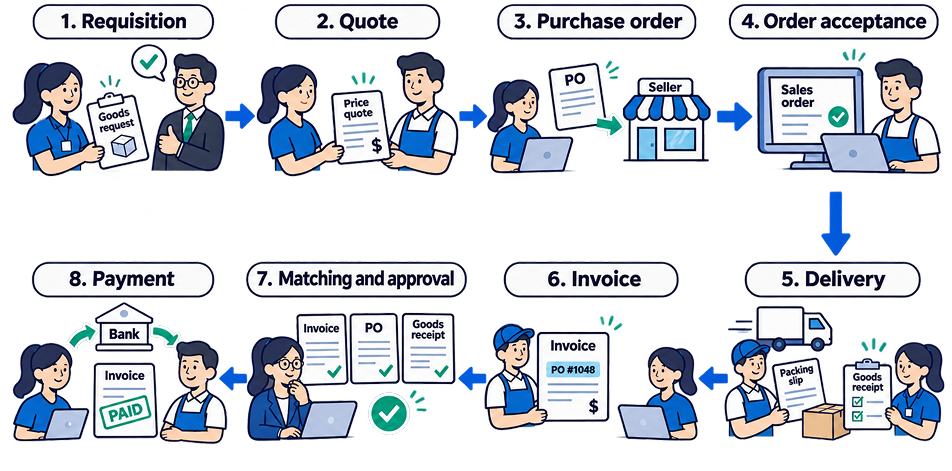
- Requisition: an employee at the buying company asks for goods, and a manager approves the request.
- Quote: the buyer asks one or more sellers for prices, and each seller replies with a quote (sometimes with a proforma invoice).
- Purchase order: the buyer turns the accepted quote into a PO and sends it to the seller.
- Order acceptance: the seller confirms the PO, often by creating a sales order in its own system.
- Delivery: the seller ships the goods with a packing slip, and the buyer’s receiving team counts the shipment and records a goods receipt.
- Invoice: the seller sends an invoice that references the PO number.
- Matching and approval: the buyer’s accounts payable team compares the invoice with the PO and the goods receipt.
- Payment: the buyer pays within the agreed terms, and the seller marks the invoice as paid.
Three-way matching is an accounts payable check where the buyer compares three documents before paying: the purchase order (what they ordered), the goods receipt (what arrived) and the invoice (what the seller is charging). If quantities, prices and totals agree, accounts payable approves the invoice for payment.
What the Buyer Compares
Accounts payable, or its software, checks four things:
- References: the vendor and PO number on all three documents.
- Quantities: units billed match units received, not just units ordered.
- Prices: the invoice unit price matches the PO price.
- Totals: taxes, shipping and the total amount due.
Many companies allow a small tolerance, such as a few dollars or a small percentage, so rounding differences don’t block payment. Anything outside that range goes to a person for review.
PO vs Invoice Example
Say a buyer orders 200 units at $12 each, for a PO total of $2400. The warehouse receives 190 units because 10 are on back order.
If the seller invoices all 200 units, the match fails on quantity and the invoice goes on hold. If the seller invoices 190 units for $2280, all three documents agree and the invoice moves to payment. The seller bills the remaining $120 when the last 10 units ship.
Matching With Two or Four Documents
For services with no physical delivery, some buyers compare only the PO and the invoice. Others add a fourth document, an inspection report, for goods that need a quality check.
For sellers, the lesson is simple: invoice exactly what you shipped, at the PO price, with the PO number on it. When the PO step is missing, the problems get bigger.
Skipping the purchase order removes the buyer’s main reference to approve spending. It leaves room for overpayments, fraud and budget surprises. Sellers feel the effects too, through slower payments and more disputes.
Duplicate Payments
A supplier might resend an invoice by mistake. With a PO in place, the system shows that the seller already billed the order and the buyer paid it.
Without a PO system, if the supplier changes the invoice date or invoice number on the reminder copy, both documents look legitimate requests for money.
Fake Invoices and Payment Fraud
Fraudsters send invoices for goods nobody ordered, or pose as a real supplier and ask for payment. A strict “no PO, no payment” policy immediately flags fake invoices and reduces invoice fraud.
Untracked Spending and Budget Overruns
Bypassing POs delays financial visibility until the invoice arrives, leading to unmanaged spending and unexpected budget overruns.
Price and Quantity Disputes
A PO records the agreed price and quantity in writing. Without it, an argument about a discount or a partial delivery comes down to whose email thread is clearer.
Slower Payment for Sellers
Many large buyers follow a “no PO, no pay” policy. An invoice without a valid PO number goes back to the seller or sits in an exception queue, which can stretch your payment cycle well past the agreed terms.
WooCommerce doesn’t include a purchase order workflow. With WebToffee plugins, you can do half of the process: the documents your buyer needs before raising a PO, and the invoice they’ll check against it afterward.
- Send formal quotes: WebToffee WooCommerce Request a Quote adds a quote button to your store and sends PDF quotations by email. Your buyer can raise a PO for the quoted amount, and you can convert the accepted quote into an order.
- Issue proforma invoices: WooCommerce Proforma Invoices creates, prints and emails proforma invoices for orders, which buyers can use for internal approval before goods ship.
- Generate invoices and packing slips: WooCommerce PDF Invoices, Packing Slips and Credit Notes creates invoice PDFs, attaches them to order emails and produces packing slips your customer’s receiving team can count against.
- Print the buyer’s PO number on the invoice: the invoice plugin lets you add a custom checkout field, such as “PO Number”, from Invoice/Packing > Invoice > Advanced, then display it on invoices through the Order meta fields option.
- Add a payment link: for buyers paying on terms, you can include a pay now link on the invoice.
With the PO number on every invoice and quantities that match what you shipped, your bills are far more likely to clear the buyer’s matching step without a hold.
No. The PO is the buyer’s order and spending approval. The invoice is the seller’s bill for what was delivered, and it normally quotes the PO number so the two matches.
Yes, if the buyer doesn’t use POs or the purchase falls below their PO threshold. Buyers that require POs will usually send the bill back or park it until someone confirms who approved the purchase.
Yes, in most cases. After acceptance, the PO records the goods, prices and terms both sides agreed to, and either party can point to it if a dispute comes up.
A blanket PO is a single PO that sets prices and terms for repeat purchases from one supplier over a fixed period. Instead of raising a new PO for every restock, the buyer places smaller orders, called releases, against it. The seller still invoices each release separately and quotes the blanket PO number on every invoice.
The buyer assigns the PO number to follow its order, while the seller assigns the invoice number from its own numbering sequence to follow the bill. A B2B invoice normally shows both, so each company can find the transaction in its own records.
A proforma invoice comes from the seller and previews the cost of an order before delivery. A purchase order comes from the buyer and confirms they want to buy on those terms. Sellers often send the proforma first, and the buyer issues the PO in response.
The difference between purchase order and invoice comes down to direction and timing. The buyer’s PO sets the terms before anything ships, the seller’s invoice asks for payment afterward, and the three-way match ties both to what actually arrived.
For sellers, the practical step is to make every invoice easy to match: quote the PO number, bill only what you shipped and keep prices in line with the PO.
Ready to get started? Install the free WebToffee WooCommerce PDF Invoices plugin to create and automate PDF invoice for every order. Upgrade to the premium version for advanced PDF invoice template customizations, pay now links, and credit notes.


Subcribe to our newsletter