


Share:


Table of Contents
What’s the difference between a proforma invoice and a quotation? A quotation provides an estimated price for goods or services and may be open to negotiation, while a proforma invoice presents agreed or expected transaction details before the final invoice is issued.
Before confirming a sale, businesses often rely on these two important documents. Although they may appear similar, a quotation and a proforma invoice serve different purposes at different stages of the sales process.
A quotation helps a buyer review estimated costs, compare options, and negotiate terms before making a commitment. A proforma invoice is generally issued later, once the buyer has shown an intention to proceed, and outlines details such as the products or services, quantities, prices, payment terms, and delivery information.
Understanding the proforma invoice vs quotation difference helps buyers and sellers avoid confusion, set clear expectations, and communicate more effectively. This article explains when to use each document, what information they contain, and how they influence business decisions.
Ready to dive deeper into the quote vs invoice comparison? Let’s begin!
A quotation or quote is a preliminary document that a seller provides to a potential buyer. It serves as an initial estimate of the cost of goods or services and outlines the terms and conditions under which the transaction may occur.
Essentially, a quotation is the first step in initiating a discussion between parties, offering a snapshot of pricing, product details, quantities, and relevant terms. Unlike more formal documents, a quotation is often flexible and subject to revision during negotiations.

Think of it as a detailed “price tag” tailored to a specific job or request. It helps customers understand how much they can expect to pay before committing to anything.
Why Do Businesses Issue Quotations?
Businesses issue quotations when a customer asks, “How much will this cost?” but the answer depends on the details.
For example, if someone wants a website built, a house painted, or 500 custom mugs printed, the business needs to understand the scope of the job before giving a price. Once they have the info, they’ll send a quotation so the customer can decide if they want to proceed.
Key Elements of a Quotation
A well-prepared quotation usually includes:
- Price – The cost estimate for the requested products or services.
- Scope of Work – What is offered (and sometimes what’s not included).
- Validity Period – How long the price is reasonable for (e.g., “Valid for 30 days”).
- Terms & Conditions – Payment terms, delivery timelines, cancellation policies, etc.
Is a Quotation Legally Binding?
This is where it starts to get a bit complex, but it’s really important to know.
A quotation isn’t necessarily a legally binding document. Generally, it’s considered an offer instead of a contract. It’s only when the customer agrees to the quotation, and both parties decide to move forward, that it can turn into a legally binding agreement, especially if a contract or invoice follows.
Now that you understand what a quotation is and when to use one, the next question is how to actually implement quoting in your store. If you’re running a WooCommerce store, you’ll want a system that lets customers request quotations directly from your product pages, without the back-and-forth of manual emails.
The WebToffee WooCommerce Quotes plugin does exactly this. It adds an “Add to Quote” button to your product pages, lets buyers suggest their preferred pricing, and attaches PDF quote documents to order emails automatically. You can also control which products show the quote option and protect your forms with reCAPTCHA to prevent spam.
A proforma invoice is a quotation in an invoice format that provides a comprehensive description of a potential transaction. Buyers sometimes refer to it as a proforma quotation and request it to apply for an import license or to contract for pre-shipment inspection.
It is kind of like a preview or a “practice invoice.” It’s a document that shows a customer what the final invoice will probably look like—but it’s not the real deal just yet. It gives a detailed cost breakdown, but it’s not a demand for payment.
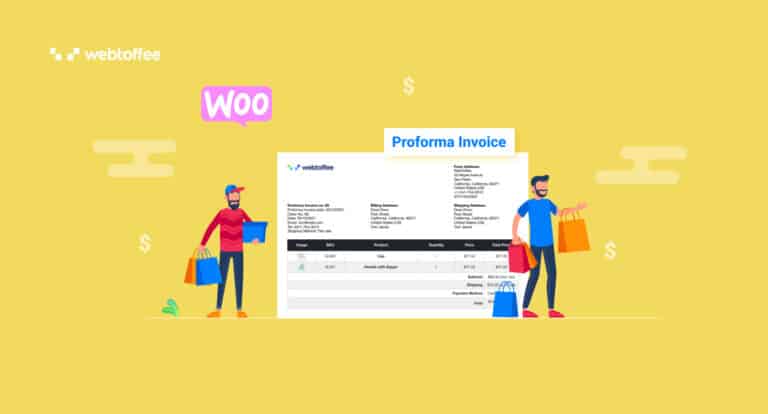
Here’s a proforma invoice example that shows exactly what to include in your proforma invoice template.

A proforma invoice includes not only the cost of goods or services but also outlines the terms of the sale, such as payment details, shipping information, and any applicable taxes or duties.
Unlike a quotation, a seller issues a proforma invoice as a commitment to sell, offering a more concrete representation of the forthcoming transaction.
Key Elements in a Proforma Invoice?
A good proforma invoice will usually include:
- Estimated Costs – The total amount due, including product prices, shipping, handling, etc.
- Descriptions of Goods or Services – What’s being sold, in detail.
- Terms & Conditions – Payment terms, delivery timeframes, currency used, etc.
- Shipping Info – Destination, method of transport, expected delivery date.
- Taxes and Duties – If known, any applicable sales tax, VAT, or customs duties.
Is a Proforma Invoice Legally Binding?
A proforma invoice is not a legally binding document. It doesn’t mean a sale has been made or that the buyer is obligated to pay. It’s more of a commitment to provide the goods or services under the listed terms—if the buyer accepts and proceeds.
Also, unlike a commercial invoice (which is used after a sale is confirmed), a proforma invoice is issued before any official transaction takes place. Customs authorities may use it to assess duties, but they won’t treat it as the final word – only the actual invoice matters at that point.
Creating proforma invoices manually, especially for a growing store with dozens of orders can quickly become a bottleneck. If you’re using WooCommerce, you can automate this entirely.
The WebToffee WooCommerce Proforma Invoices plugin auto-generates proforma invoices for your orders, lets you choose from multiple templates to match your branding, and attaches PDF copies directly to customer emails. You can also set up a separate numbering sequence for proforma invoices to keep your documentation organized.
Send a quotation at a strategic point in the sales process – ideally when a potential customer shows interest in your product or service.
The primary motivations behind sending a quote are:
- Responding to Customer Inquiry: When a customer expresses interest or inquires about a product or service, the business sends a quotation in response to provide the requested information, including pricing and terms.
- Cost Estimation: The business sends a quotation to provide a clear and detailed estimate of the cost associated with purchasing goods or services. It helps the potential customer understand the financial aspect of the transaction. Getting that estimate right depends on accurate financial data. Many teams turn to accounting dashboard reports in Power BI to consolidate revenue, outstanding invoices, and margins into one view — helping price consistently across quotes, proforma invoices, and final invoices.
- Facilitating Negotiations: Quotations serve as a starting point for negotiations. They are often flexible, allowing for adjustments to terms and pricing based on further discussions between the buyer and seller.
- Decision-Making Support: For the potential customer, a quotation provides essential information for decision-making. It allows them to assess the affordability and value of the offering before committing to a purchase.
When to Send a Proforma Invoice?
Issue a proforma invoice once both parties agree on the prices and terms of a transaction. Businesses typically send it after completing negotiations to confirm that no outstanding questions remain about the pricing and conditions of the deal.
However, always confirm the final details with a valid invoice, which is the official document for accounting and payment purposes.
Here are some of the primary purposes of a proforma invoice:
- Terms of Sale: It outlines the terms and conditions of the sale, including payment terms, delivery terms, and any other relevant information. This helps in avoiding misunderstandings between the buyer and the seller.
- Confirmation of Order: It serves as a confirmation of the buyer’s order and the seller’s commitment to delivering the goods or services as per the agreed-upon terms. This can be useful in establishing a formal agreement between the parties involved.
- Funding or Financing: Some buyers may use a proforma invoice when seeking financing or funding for a purchase. It can be presented to banks or financial institutions as proof of a pending transaction.
- Record Keeping: Both buyers and sellers use proforma invoices for record-keeping purposes. It helps maintain a systematic record of potential sales, including the details of the products or services, prices, and other terms.
| Aspect | Quotation | Proforma Invoice |
|---|---|---|
| Purpose | To estimate the price for goods/services | To declare intent to sell under specified terms |
| Timing | At the inquiry or proposal stage | Before shipment or delivery, once details are agreed upon |
| Level of Detail | Often brief, with a focus on price and basic terms | More comprehensive, including full costs, shipping, taxes |
| Binding Nature | Usually not binding; open to negotiation | Semi-formal; can serve as a commitment to sell |
| Can It Be Revised? | Quotes are flexible and typically revised multiple times before final agreement. | Revisions are rare; changes usually require issuing a new proforma invoice. |
| What Happens After Acceptance | Once accepted, it leads to a proforma invoice or directly to a purchase/commercial invoice. | Once accepted, the seller fulfills the order and issues a final commercial invoice for payment. |
| Use in International Trade | Rarely used in cross-border transactions | Commonly used for customs, duties, and import processes |
| Validity/Expiry | Includes a set validity period (e.g., 30 days), after which prices may change. | May include a validity period, but terms generally hold until order confirmation or expiry. |
Manufacturing and Wholesale Trade
- Quotation Usage: A manufacturer receives an inquiry from a wholesale distributor for a bulk order of a specific product. The manufacturer provides a detailed quotation outlining the unit prices, bulk discounts, and shipping terms.
- Proforma Invoice Usage: Once the distributor agrees to the terms in the quotation, the manufacturer issues a proforma invoice with comprehensive details, including product specifications, shipping costs, and payment terms. This can be used by the distributor to calculate the estimated cost and raise funds accordingly.
Service-Based Business
- Quotation Usage: A consulting firm is approached by a potential client for a project. The firm provides a detailed quotation to the client, specifying the scope of work, hourly rates, and any additional expenses.
- Proforma Invoice Usage: Once the client approves the quotation, the consulting firm issues a proforma invoice, detailing the agreed-upon services, the total project cost, and payment terms.
Retail Sales
- Quotation Usage: A customer shows an interest in a large order of customized products from a retailer. The retailer provides a quotation with the prices for each item, any applicable discounts, and estimated delivery costs.
- Proforma Invoice Usage: Upon the customer’s acceptance of the quotation, the retailer issues a proforma invoice with detailed descriptions of the products, total costs, and any customization charges.
No. A quotation is an initial price estimate provided before the buyer commits to a purchase. A proforma invoice is a more detailed document usually issued after the buyer has shown an intention to proceed, confirming the expected costs and transaction terms before the final invoice.
The main difference between a proforma invoice and a quotation is their stage and purpose in the sales process. A quotation helps the buyer review and negotiate estimated prices, while a proforma invoice records the expected products, quantities, prices, payment terms, and delivery details for a proposed transaction.
No. A proforma invoice is not a payment request. It’s just an estimate or confirmation of terms. Payment should be made only against a commercial invoice.
– Send a quotation when a customer first inquires, and you’re estimating costs.
– Send a proforma invoice once the customer agrees to proceed. You need to confirm the transaction details formally, especially for international sales.
Yes. In many cases, a signed or acknowledged proforma invoice serves as order confirmation, but it still isn’t a final invoice or contract.
Not necessarily. For simple or domestic sales, a quotation might be enough. In more formal or international transactions, businesses often use both—first, a quotation and then a proforma invoice once terms are agreed upon.
Conclusion
Understanding the difference between a quotation and a proforma invoice is essential for businesses that want to keep their sales process clear and professional. While quotations introduce pricing estimates and allow for negotiation, pro forma invoices offer a structured preview of the finalized price and terms.
Knowing when to send a quotation vs a proforma invoice helps avoid confusion, supports informed decision-making, and improves communication between buyers and sellers. Each document plays a key role at a specific stage in the purchase flow.
With the WebToffee WooCommerce PDF invoices packing slips plugin, businesses can easily create, manage, and automate pre-sale and post-sale documents. Whether you’re sending a flexible quotation or a formal proforma invoice, these tools help streamline your WooCommerce workflow and improve customer communication, ensuring that every sale starts on the right foot.


Subcribe to our newsletter


