


WooCommerce users and customers can be exported in bulk using the Import Export Suite for WooCommerce plugin. By selecting Users/Customers as the post type, choosing the appropriate export method, optionally applying filters, and configuring advanced options such as file format or scheduling, user data can be downloaded in CSV or XML format for migration, backup, or reporting.
This article explains how to export WooCommerce users and customers step by step.
Export Users
To export WordPress users / WooCommerce customers, click on WebToffee Import/Export(Pro) > Export.
Step 1: Select a post type
As a first step, you need to choose the post type as Users/Customers.

Step 2: Select an export method
Choose from the below options to continue with your export:
- Quick export from DB
- Based on a pre-saved template
- Advanced export
Let us have a look at each of these export methods:
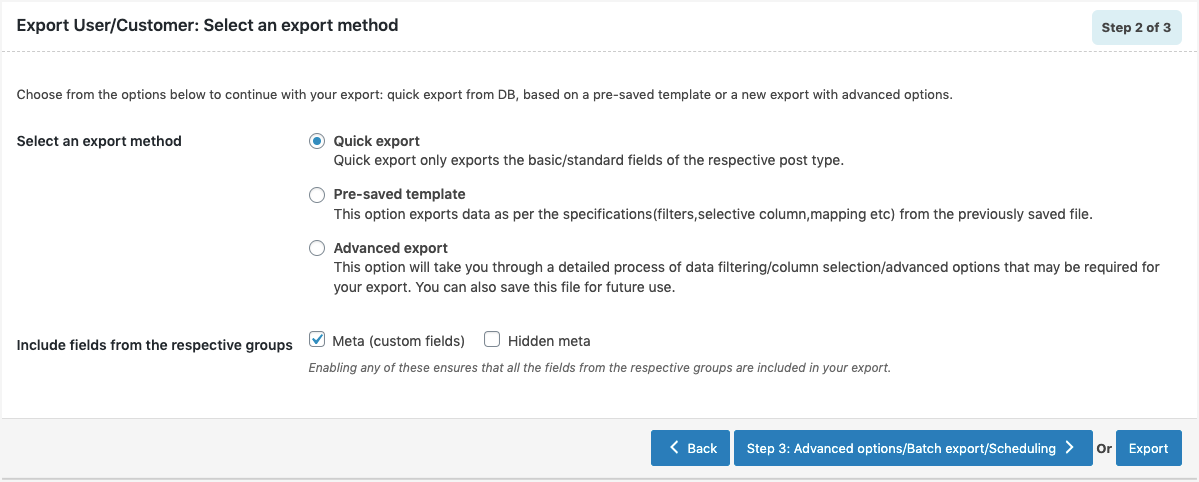
Quick Export
- exports the basic/standard fields of the respective post type.
- To include fields from Meta(custom fields) and Hidden meta select the respective group’s checkboxes.

- Click the Export button to complete the action or proceed to Step 3 for advanced options.

- Navigate to Step 5 to know more about Advanced options/ Batch export/ Scheduling.

Pre-saved template
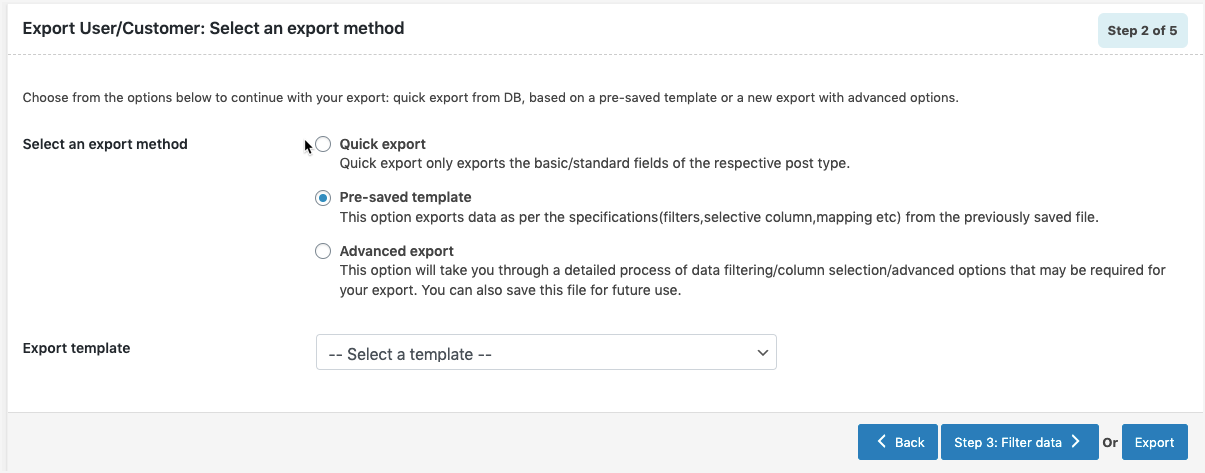
- exports data as per the specifications(filters, selective column, mapping.. etc) from the previously saved file.

- By selecting this option, one can choose a previously saved template from the Export template drop-down.Note: The template will be listed in the drop down only if you have saved it in previous exports, if you go through the Advanced export, at Step 5 you will get an option to save the template. Once you save that, next time when you want to export a pre-saved template, it will be populated within the drop down.
- Click the Export button to complete the action or proceed to Step3 to filter data.
- Navigate to Step 3 to know more about filtering options.
Advanced Export
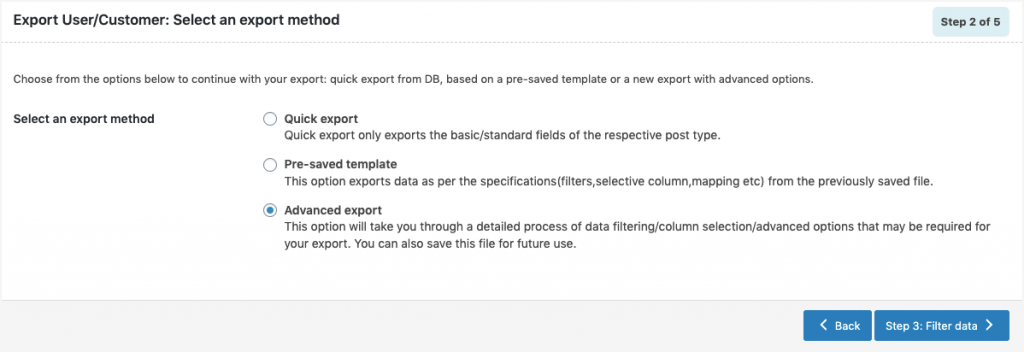
- This option will take you through a detailed process of filtering/column selection/advanced options that may be required for your export.
Step 3: Filter data
Use this step to filter the data that needs to be exported.
Apply one or more filters by specifying the following:
- Element – Select the field based on which the data should be filtered.
- Condition – Define how the selected field should be evaluated.
- Value – Choose or enter the value used for filtering the data.
You can add multiple filters using Add new filter or remove an existing filter using the delete icon.

- Click on Step 4 to proceed further.
Step 4: Map and reorder export columns
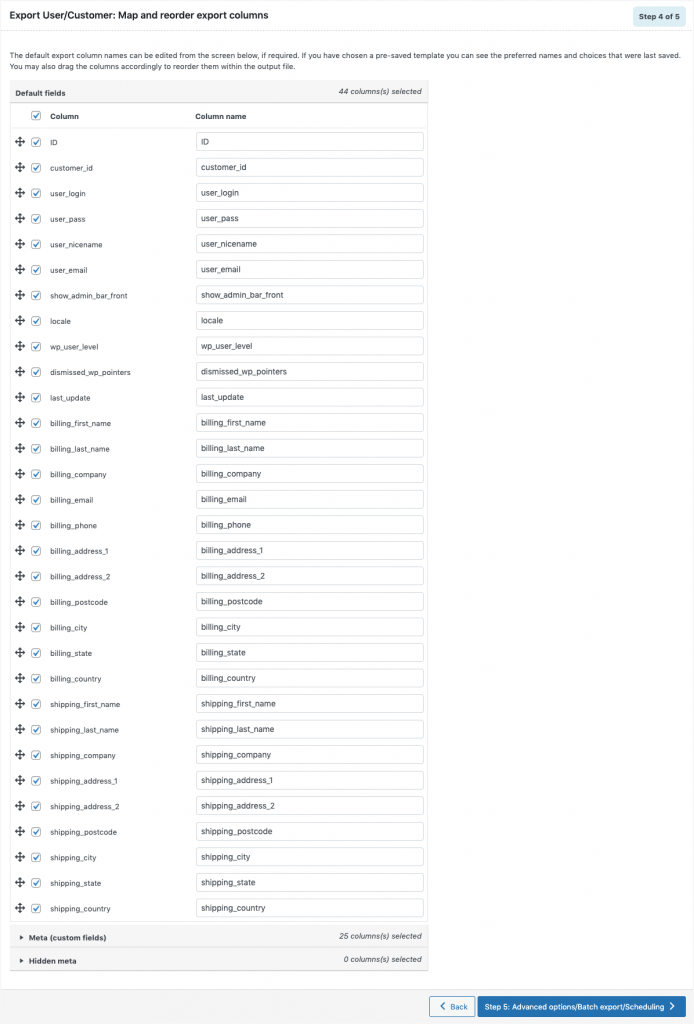
Here, one can map and reorder the export columns under the following 3 fields:
- Default fields: The column names appearing in this section can be edited if required. The preferred names and choices that were last saved can be viewed on choosing a pre-saved template. One can also move the columns to reorder the arrangement.
- Meta(custom fields)
- Hidden meta
- Click on Step 5 to proceed.
Step 5: Advanced Options/Batch Export/Scheduling
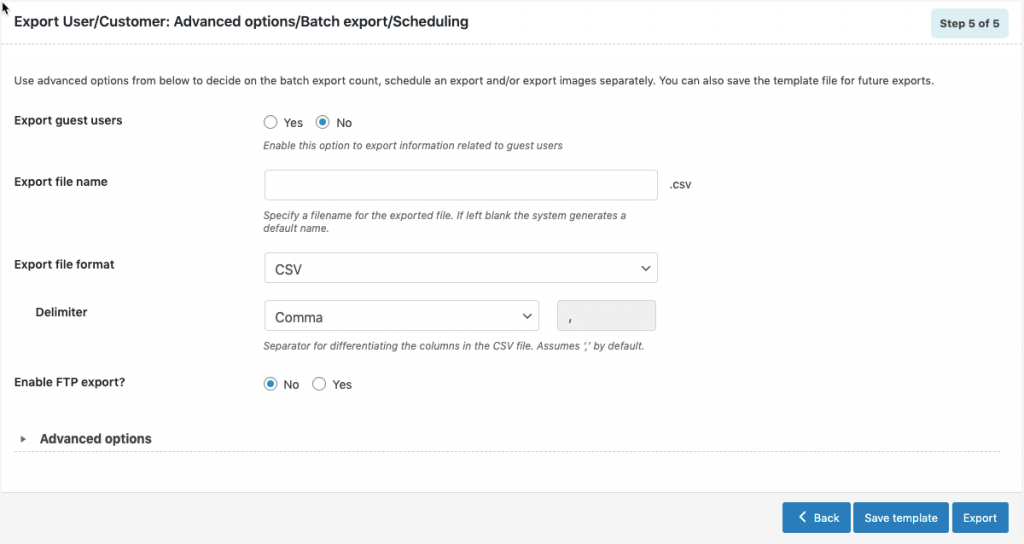
- On reaching Step 5, the following window will appear, from where one can:
- Export guest users: Exports information related to guest users.
- Export file name: Specify a filename for the exported file. If left blank, the system generates a default name.
- Export file format: Both CSV and XML are available.
- Delimiter: Separator for differentiating the columns in the CSV file. Assumes ‘,’ by default.
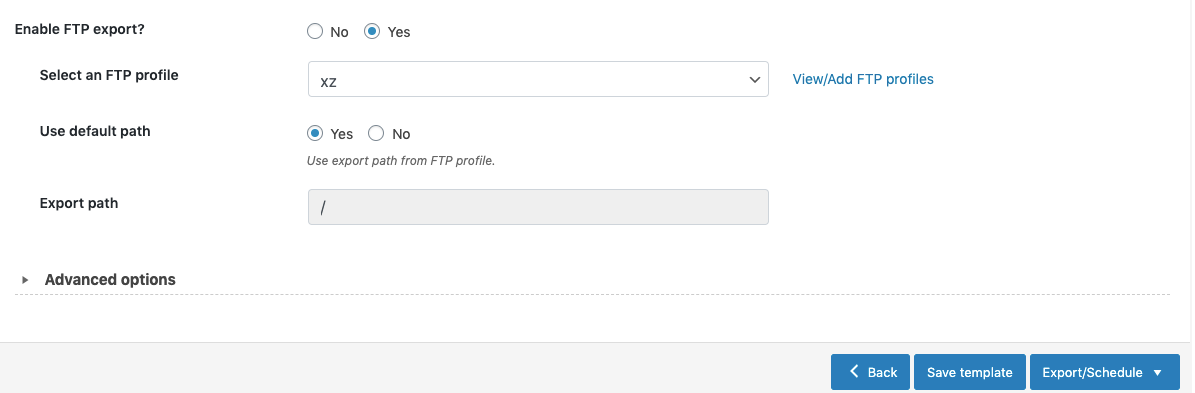
- Enable FTP export: On opting ‘Yes’, choose an FTP profile and specify the export path or use default path.

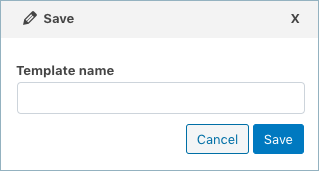
- Save the template file for future export as shown below(if needed).
- Click on Export and export or schedule the export to finish.

Vincenzo
February 6, 2026
Oops, precedente ticket (92289) da annullare.
Vedo adesso la documentazione, allora vorrei avere qualche informazione in più sul cron-job.
In pratica, a tempo, ogni ora, x minuti, dovrebbe leggere la cartella con i nuovi prodotti o nuove giacenze e importarle. Allo stesso tempo dovrebbe, sempre a tempo, esportare i nuovi ordini e eventuali nuovi clienti in una cartella del server remoto raggiungibile via FTP.
I file i-o saranno in CSV.
Dove e come è possibile impostare questi robot con la suite import-export?
Grazie
Yuval
February 9, 2026
Hi Vincenzo,
Thank you for reaching out. The Import Export Suite supports automation using scheduled imports and exports. You can configure these jobs while setting up an import or export by choosing the Schedule option and using Server Cron with FTP as the source or destination.
This allows you to periodically import new products or stock files from an FTP folder and export new orders or customers to a remote FTP location in CSV format.
You can refer to this documentation for setting up Server Cron: https://www.webtoffee.com/docs/product-imp-exp/import-and-export-woocommerce-products-using-server-cron/
Peter James
July 25, 2024
When creating a scheduled export of users I want to be able to report on users added within the last day – is it possible to create a scheduled export with relative from dates e.g. Date from = Yesterday or -1
thanks
Hema
August 2, 2024
Hello Peter,
Thanks for reaching out. It seems we need more information to process your query. Kindly contact customer support for further assistance.